Beowulf
One Old English poem
Open
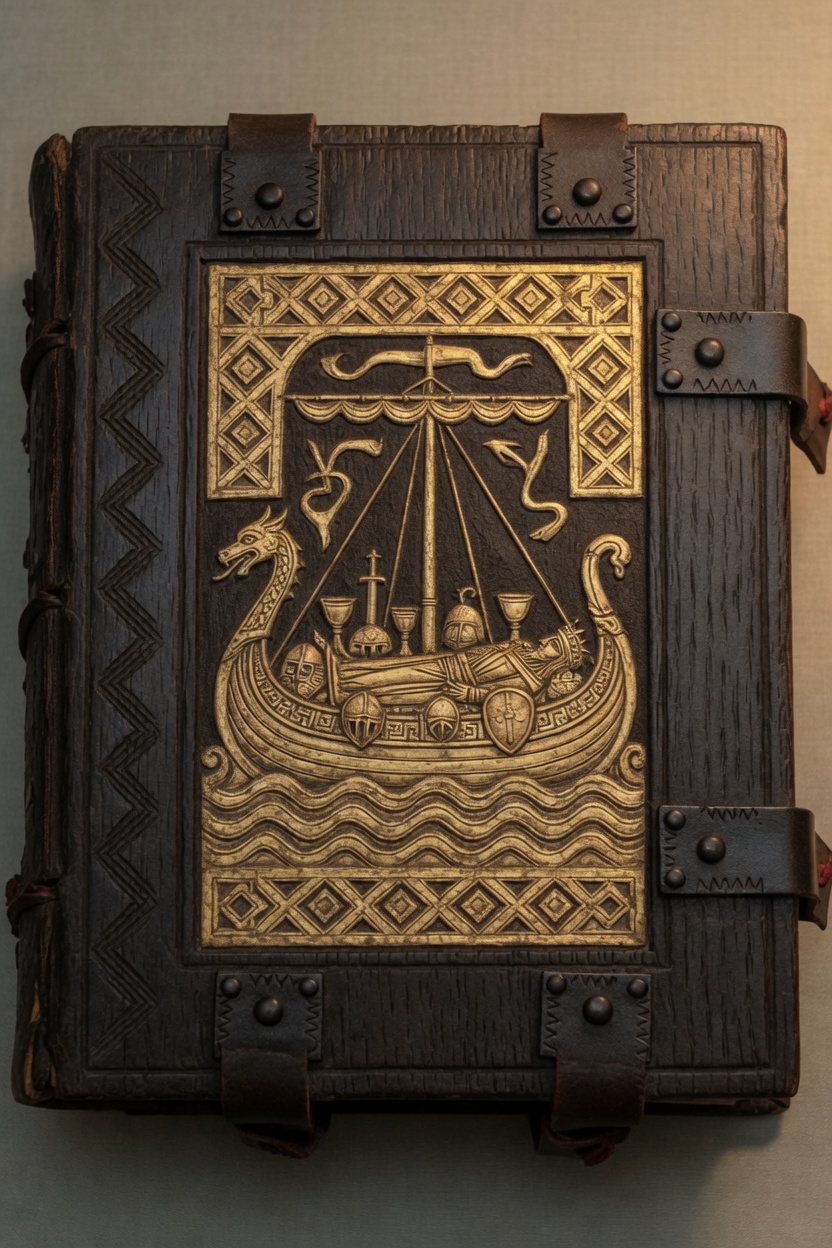
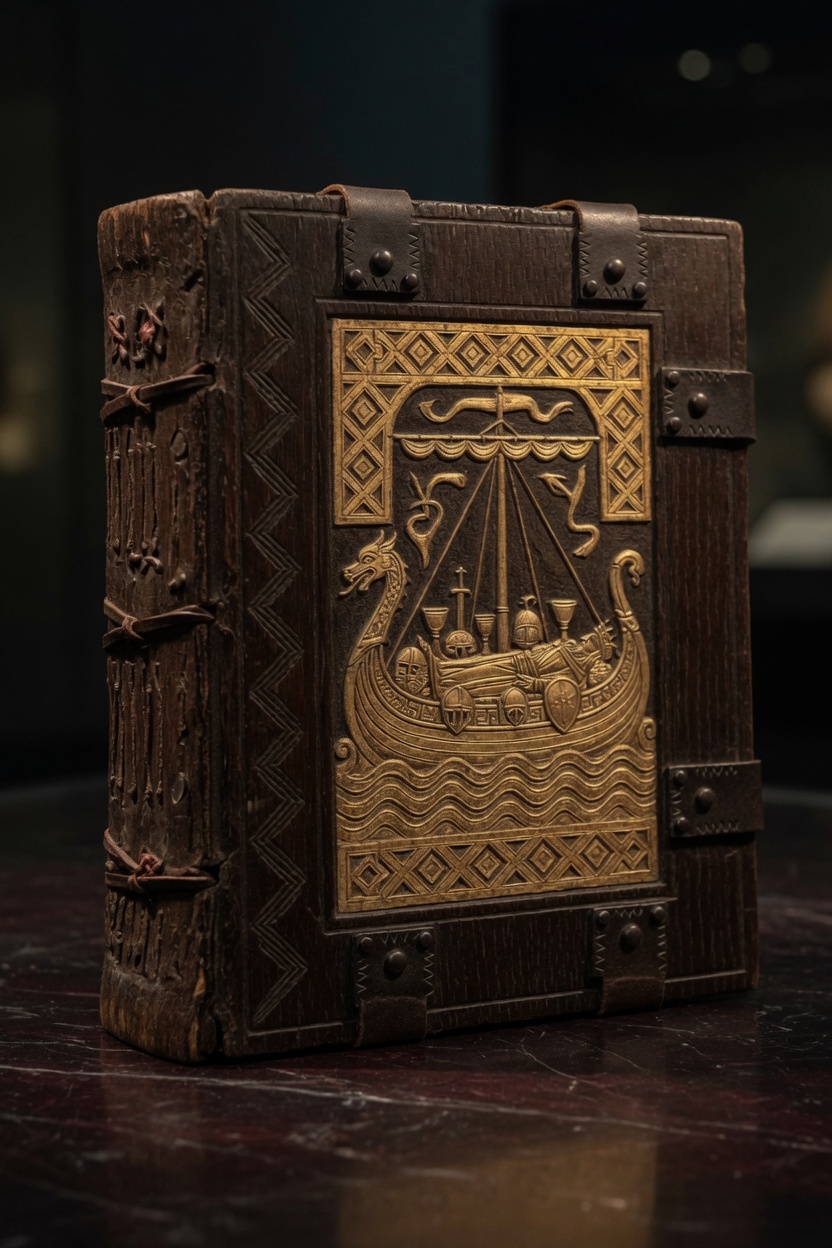
One anonymous Old English poem, about 3,182 lines, about Danes and Geats in a remembered pagan north, told in a Christian voice. It has no medieval title.
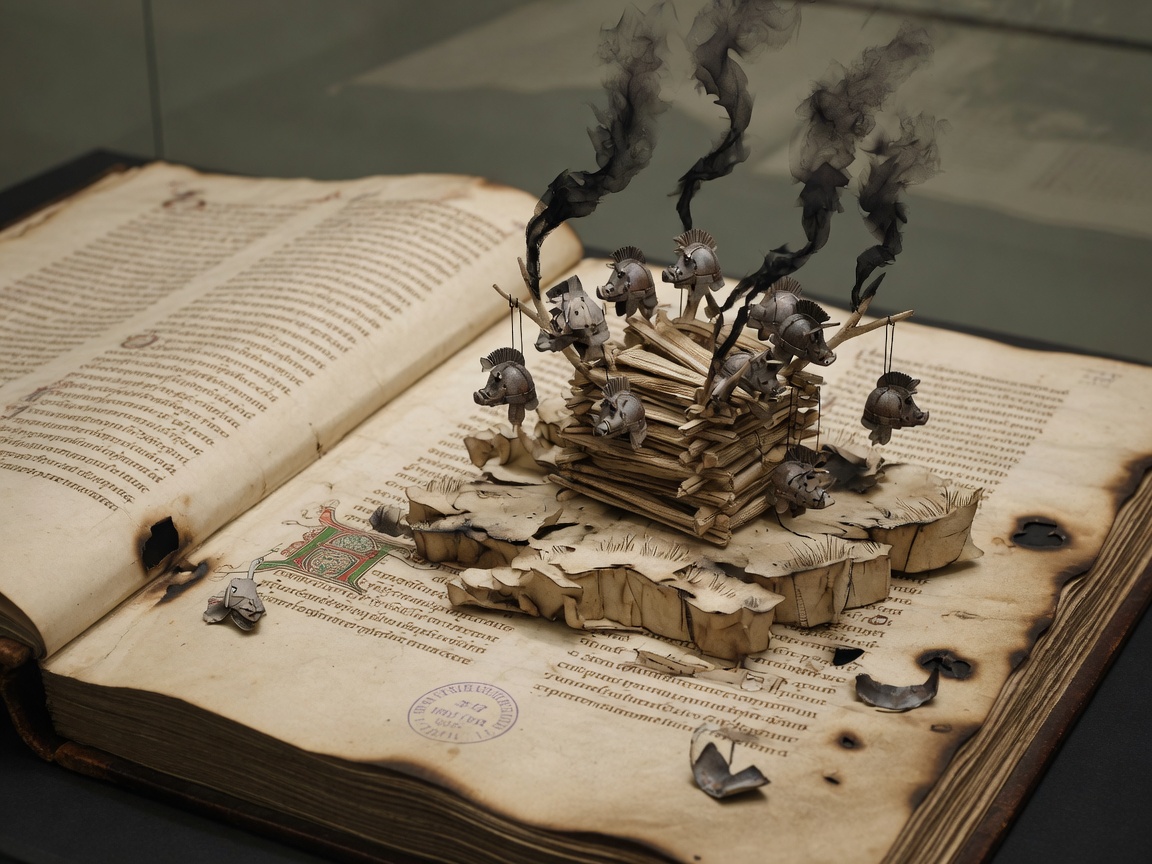
It survives in one book, and that book has been on fire. On 23 October 1731 the Cotton library burned at Ashburnham House; the edges of these leaves were scorched and went on crumbling afterwards. Some letters are readable now only because two transcripts were made in Copenhagen in 1786, before the crumbling took them. There is no second copy.
This is not a Viking epic and it is not England’s Homer. How old the poem itself is is still argued — the manuscript’s date is not the poem’s date.
What this edition is · Beowulf · Nowell Codex · Cotton MS Vitellius A.xv
Stills hung under the verse they illustrate. Tap a line to go there.
Hwät! we Gâr-Dena in geâr-dagumþeód-cyninga þrym gefrunon,hû þâ äðelingas ellen fremedon.Oft Scyld Scêfing sceaðena þreátum,monegum mægðum meodo-setla ofteáh.Egsode eorl, syððan ærest wearðfeá-sceaft funden: he þäs frôfre gebâd,weôx under wolcnum, weorð-myndum ðâh,ôð þät him æghwylc þâra ymb-sittendraofer hron-râde hýran scolde,gomban gyldan: þät wäs gôd cyning!þäm eafera wäs äfter cennedgeong in geardum, þone god sende
Listen.We have heard of the glory of the Spear-Danes’ kings in days gone by,how those princes did brave and mighty deeds.Scyld, son of Sheaf, tore mead-benches from troops of enemies again and again,stripped many peoples of their halls.He terrified warlords, this man who was first foundhelpless and alone — and lived to see comfort for it:he grew under the sky, thrived in honor,until every tribe that lived around him,across the whale’s road, had to obey himand pay him tribute. That was a good king.Later a son was born to him,a boy in his household, sent by God
folce tô frôfre; fyren-þearfe ongeat,þät hie ær drugon aldor-leáselange hwîle. Him þäs lîf-freá,wuldres wealdend, worold-âre forgeaf;Beówulf wäs breme (blæd wîde sprang),Scyldes eafera Scede-landum in.Swâ sceal geong guma, gôde gewyrcean,fromum feoh-giftum on fäder wine,þät hine on ylde eft gewunigenwil-gesîðas, þonne wîg cume,leóde gelæsten: lof-dædum scealin mægða gehwære man geþeón.Him þâ Scyld gewât tô gescäp-hwîle
to comfort a people who had felt the weight of need —long years without a ruler,suffering they had borne too long. The Lord of life,the ruler of glory, gave that son honor in the world.Beow’s fame spread wide —Scyld’s son, known through the Danish lands.So a young man should act: with good deeds,with open-handed gifts while still under his father’s roof,so that later, in old age, loyal companionswill stand by him when war comes,and his people will follow him. A man rises among his ownby deeds worth praising.Then Scyld went, at the hour fate had set for him,
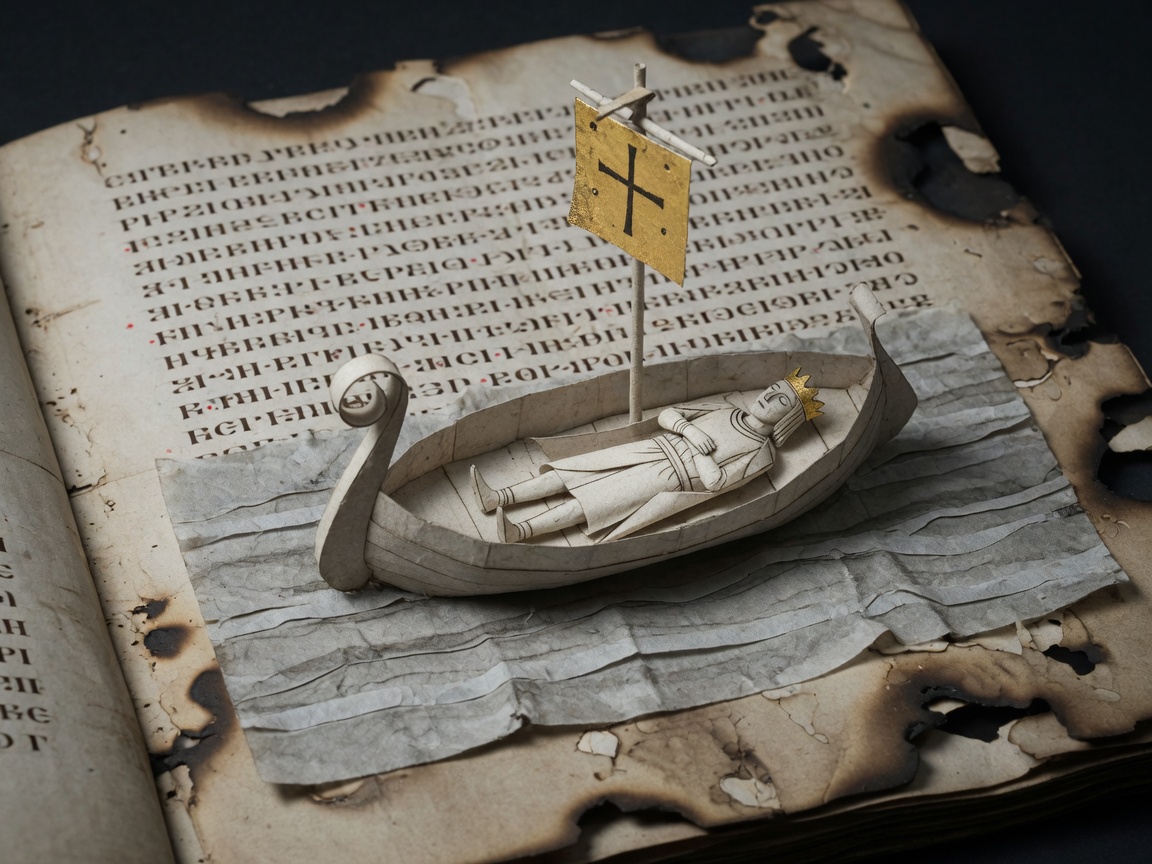
fela-hrôr fêran on freán wære;hi hyne þâ ätbæron tô brimes faroðe.swæse gesîðas, swâ he selfa bäd,þenden wordum weóld wine Scyldinga,leóf land-fruma lange âhte.Þær ät hýðe stôd hringed-stefna,îsig and ûtfûs, äðelinges fär;â-lêdon þâ leófne þeóden,beága bryttan on bearm scipes,mærne be mäste. Þær wäs mâdma fela,of feor-wegum frätwa gelæded:ne hýrde ic cymlîcor ceól gegyrwanhilde-wæpnum and heaðo-wædum,
still strong, to go into his Lord’s keeping.His own dear companions carried him downto the water’s edge, as he himself had asked,while he still ruled them with his word — friend of the Scyldings,beloved lord of the land, who had held it long.There at the harbor stood the ring-prowed ship,icy, straining to be gone — the prince’s own vessel.They laid their beloved lord down in it,their giver of rings, in the ship’s hold,the great man by the mast. Treasure lay there in plenty,gathered and carried from distant lands.I never heard of a ship better furnishedwith weapons of war and coats of mail,
billum and byrnum; him on bearme lägmâdma mänigo, þâ him mid scoldonon flôdes æht feor gewîtan.Nalas hi hine lässan lâcum teódan,þeód-gestreónum, þonne þâ dydon,þe hine ät frumsceafte forð onsendonænne ofer ýðe umbor wesende:þâ gyt hie him âsetton segen gyldenneheáh ofer heáfod, lêton holm beran,geâfon on gâr-secg: him wäs geômor sefa,murnende môd. Men ne cunnonsecgan tô soðe sele-rædende,häleð under heofenum, hwâ þäm hläste onfêng.
with swords and armor; heaped on his chest laytreasure that would travel with himfar out into the sea’s keeping.They gave him no fewer gifts, no less wealth of the nation,than those who had once sent him outalone on the waves, a mere child.High over his head they raiseda golden banner, and let the sea take him,gave him to the ocean. Their hearts were heavy,their spirits mourning.No one can say for certain —not the wisest counselor, not any man alive under heaven —who received that cargo.
Þâ wäs on burgum Beówulf Scyldinga,leóf leód-cyning, longe þragefolcum gefræge (fäder ellor hwearf,aldor of earde), ôð þät him eft onwôcheáh Healfdene; heóld þenden lifde,gamol and gûð-reów, gläde Scyldingas.Þäm feówer bearn forð-gerîmedin worold wôcun, weoroda ræswan,Heorogâr and Hrôðgâr and Hâlga til;hýrde ic, þat Elan cwên Ongenþeówes wäsHeaðoscilfinges heals-gebedde.Þâ wäs Hrôðgâre here-spêd gyfen,wîges weorð-mynd, þät him his wine-mâgasgeorne hýrdon, ôð þät seó geogoð geweôx,mago-driht micel. Him on môd bearn,þät heal-reced hâtan wolde,
Beow of the Scyldings ruled then in the strongholds,a beloved king of the people, for a long timefamous among them (his father had gone elsewhere,the old lord out of the world) — until to him in turn was borngreat Healfdene; he ruled while he lived,old and fierce in battle, over the gracious Scyldings.Four children in a rowwoke into the world for him, leader of hosts:Heorogar and Hrothgar and Halga the good;I have heard that Elan was queen, wife of Ongentheow,the Swedish war-king’s bedmate.Then success in war was given to Hrothgar,honor in battle, so that his kinsmengladly obeyed him, until the young men grew up,a great band of retainers. It came into his mindthat he wanted to order a hall built,
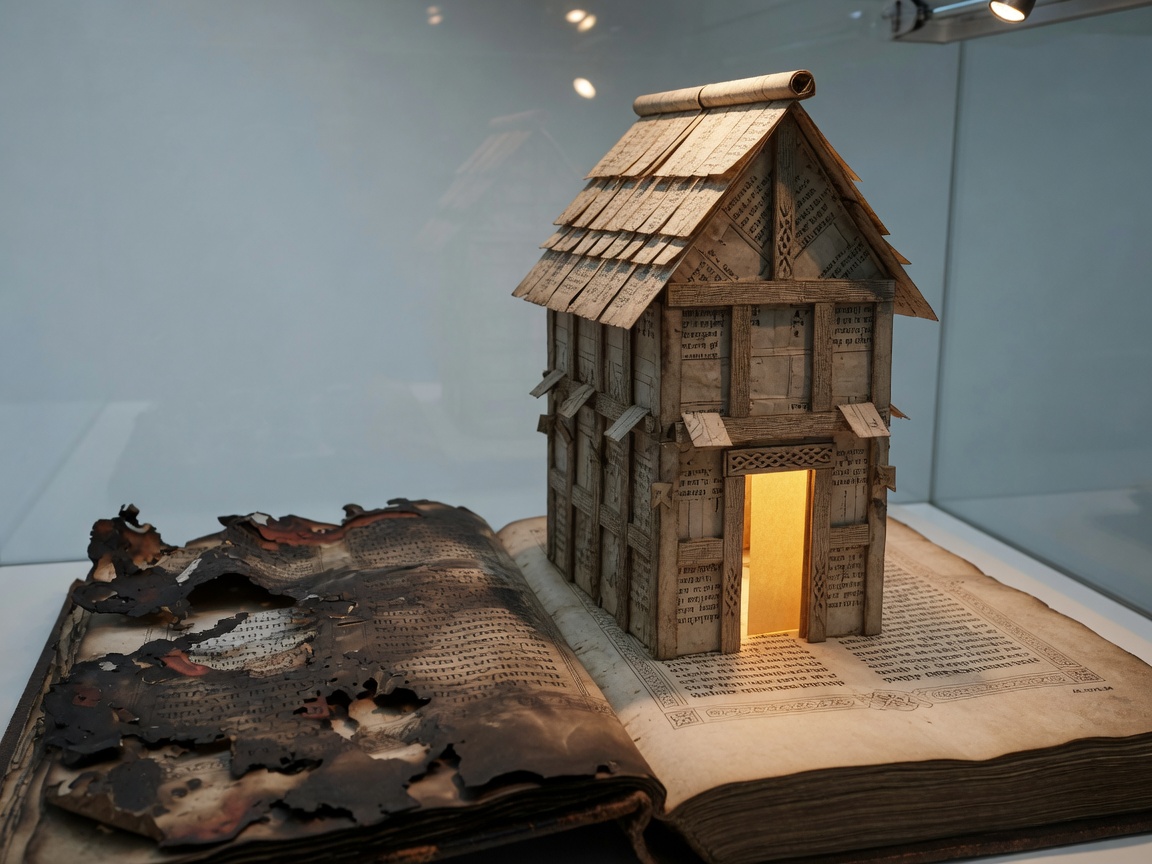
medo-ärn micel men gewyrcean,þone yldo bearn æfre gefrunon,and þær on innan eall gedælangeongum and ealdum, swylc him god sealde,bûton folc-scare and feorum gumena.Þâ ic wîde gefrägn weorc gebannanmanigre mægðe geond þisne middan-geard,folc-stede frätwan. Him on fyrste gelompädre mid yldum, þät hit wearð eal gearo,heal-ärna mæst; scôp him Heort naman,se þe his wordes geweald wîde häfde.He beót ne âlêh, beágas dælde,sinc ät symle. Sele hlifadeheáh and horn-geáp: heaðo-wylma bâd,lâðan lîges; ne wäs hit lenge þâ genþät se ecg-hete âðum-swerian
a great mead-hall, larger than menhad ever heard of,and there inside to share out everythingto young and old, all that God had given him,except common land and men’s lives.Then I heard the work was commanded far and wide,to many peoples across this middle-earth,to adorn that dwelling-place. In time it happened,quickly among men, that it was all finished,the greatest of halls; he named it Heorot,he whose word carried power far and wide.He kept his promise, handed out rings,treasure at the feast. The hall rose up,high and wide-gabled — it would face war’s surges,hostile flame; though it was not long yetbefore sword-hatred, sworn between kinsmen by marriage,
äfter wäl-nîðe wäcnan scolde.Þâ se ellen-gæst earfoðlîceþrage geþolode, se þe in þýstrum bâd,þät he dôgora gehwâm dreám gehýrdehlûdne in healle; þær wäs hearpan swêg,swutol sang scôpes. Sägde se þe cûðefrum-sceaft fira feorran reccan,cwäð þät se älmihtiga eorðan worhte,wlite-beorhtne wang, swâ wäter bebûgeð,gesette sige-hrêðig sunnan and mônanleóman tô leóhte land-bûendum,and gefrätwade foldan sceátasleomum and leáfum; lîf eác gesceôpcynna gehwylcum, þâra þe cwice hwyrfað.Swâ þâ driht-guman dreámum lifdon
would wake after deadly feud.Then the fierce spirit endured hardshipfor a long while, he who waited in darkness,hearing joy, day after day,loud in the hall — there was the sound of the harp,the clear song of the poet. The one who knew howtold the origin of men from ancient times,said that the Almighty made the earth,a bright plain that the water encircles,set the sun and moon in triumphas lights to shine for the people of the land,and adorned the corners of the earthwith branches and leaves; he shaped life toofor every kind of thing that moves and lives.So those retainers lived in joy,
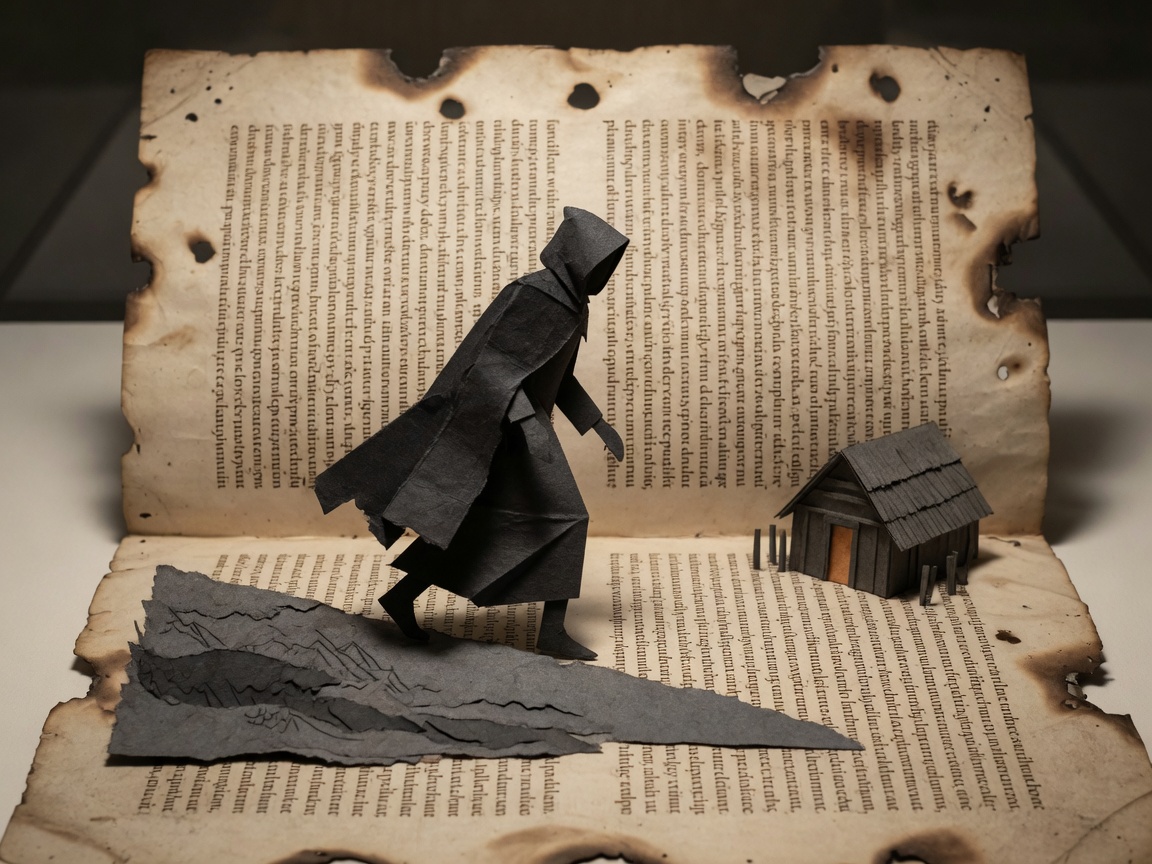
eádiglîce, ôð þät ân onganfyrene fremman, feónd on helle:wäs se grimma gäst Grendel hâten,mære mearc-stapa, se þe môras heóld,fen and fästen; fîfel-cynnes eardwon-sælig wer weardode hwîle,siððan him scyppend forscrifen häfde.In Caines cynne þone cwealm gewräc,êce drihten, þäs þe he Abel slôg;ne gefeah he þære fæhðe, ac he hine feor forwräc,metod for þý mâne man-cynne fram.Þanon untydras ealle onwôcon,eotenas and ylfe and orcnêas,swylce gigantas, þâ wið gode wunnonlange þrage; he him þäs leán forgeald.
happily, until one beganto commit crimes, a fiend out of hell:that grim spirit was called Grendel,the notorious walker of the borders, who held the moors,fen and stronghold; that land of monstersthe joyless man haunted for a time,after the Creator had condemned him.On Cain’s kin the eternal Lordavenged that killing, for he had slain Abel;he took no joy in that feud, but drove him far away,the Measurer, from mankind, for that crime.From him all monstrous broods awoke —ogres and elves and walking corpses,giants too, who fought against Godfor a long time; he paid them back for that.
Gewât þâ neósian, syððan niht becom,heán hûses, hû hit Hring-Deneäfter beór-þege gebûn häfdon.Fand þâ þær inne äðelinga gedrihtswefan äfter symble; sorge ne cûðon,won-sceaft wera. Wiht unhælogrim and grædig gearo sôna wäs,reóc and rêðe, and on räste genamþritig þegna: þanon eft gewâthûðe hrêmig tô hâm faran,mid þære wäl-fylle wîca neósan.Þâ wäs on uhtan mid ær-dägeGrendles gûð-cräft gumum undyrne:þâ wäs äfter wiste wôp up âhafen,micel morgen-swêg. Mære þeóden,
Then, once night had fallen, he went to seek outthe high hall — to see how the Ring-Daneshad settled in after their beer-drinking.Inside he found a company of noblesasleep after the feast; they knew no sorrow,no misery of men. That unholy creature,grim and greedy, was ready at once,savage and fierce, and seized from their restthirty thanes; then he went back,exulting in his plunder, heading home,to find his den with that fill of slaughter.Then at dawn, in the early light,Grendel’s war-craft was plain to see:after the feasting a wail went up,a great cry in the morning. The famous ruler,
äðeling ær-gôd, unblîðe sät,þolode þrýð-swýð, þegn-sorge dreáh,syððan hie þäs lâðan lâst sceáwedon,wergan gâstes; wäs þät gewin tô strang,lâð and longsum. Näs hit lengra fyrst,ac ymb âne niht eft gefremedemorð-beala mâre and nô mearn forefæhðe and fyrene; wäs tô fäst on þâm.Þâ wäs eáð-fynde, þe him elles hwærgerûmlîcor räste sôhte,bed äfter bûrum, þâ him gebeácnod wäs,gesägd sôðlîce sweotolan tâcneheal-þegnes hete; heóld hine syððanfyr and fästor, se þäm feónde ätwand.Swâ rîxode and wið rihte wan
that noble long good, sat grieving,suffered, strong as he was, bore the loss of his men,once they had seen the tracks of that hated,accursed spirit; the struggle was too fierce,hateful and long. No longer was there rest —within one more night he struck again,a greater slaughter, and felt no remorsefor feud or crime; he was too set on it.It was easy then to find the man who,somewhere else, sought a roomier bed,a place in the outbuildings, once it was made clear to him,told plainly by unmistakable sign,the hall-thane’s hatred; whoever escaped that fiendkept himself afterward farther off, and safer.So Grendel ruled, and fought against justice,
âna wið eallum, ôð þät îdel stôdhûsa sêlest. Wäs seó hwîl micel:twelf wintra tîd torn geþolodewine Scyldinga, weána gehwelcne,sîdra sorga; forþam syððan wearðylda bearnum undyrne cûð,gyddum geômore, þätte Grendel wan,hwîle wið Hrôðgâr;— hete-nîðas wäg,fyrene and fæhðe fela missera,singale säce, sibbe ne woldewið manna hwone mägenes Denigafeorh-bealo feorran, feó þingian,ne þær nænig witena wênan þorftebeorhtre bôte tô banan folmum;atol äglæca êhtende wäs,
alone against everyone, until it stood empty,the finest of halls. That was a long stretch of time:twelve winters of anguish the friend of the Scyldingsendured, every kind of grief,deep sorrows; and so, in time, it becamecommon knowledge to the children of men,sung of sadly, that Grendel had foughtagainst Hrothgar for years — waged hateful malice,crimes and feud, season after season,constant war, wanting no peacewith any man of the Danish power,no lifting of the death-toll, no settling for gold,and none of the counselors needed to expectbright compensation from the killer’s hands;the terrible monster hunted them down,
deorc deáð-scûa duguðe and geogoðeseomade and syrede. Sin-nihte heóldmistige môras; men ne cunnon,hwyder hel-rûnan hwyrftum scrîðað.Swâ fela fyrena feónd man-cynnes,atol ân-gengea, oft gefremedeheardra hýnða; Heorot eardode,sinc-fâge sel sweartum nihtum(nô he þone gif-stôl grêtan môste,mâððum for metode, ne his myne wisse);þät wäs wræc micel wine Scyldinga,môdes brecða. Monig-oft gesätrîce tô rûne; ræd eahtedon,hwät swîð-ferhðum sêlest wærewið fær-gryrum tô gefremmanne.
that dark shadow of death, stalking and ambushingveterans and young men alike. He held, night without end,the misty moors; no one knowswhere such hell-walkers go on their rounds.So many crimes the enemy of mankind,that terrible loner, went on committing,cruel humiliations; he lived in Heorot,that treasure-bright hall, on the darkest nights(he could never go near the throne of gifts,the treasure, because of God, and never knew His favor) —that was great grief to the friend of the Scyldings,a breaking of the heart. Often the powerfulsat in council, weighing what to do,what would serve the strong-hearted bestagainst these sudden horrors.
Hwîlum hie gehêton ät härg-trafumwig-weorðunga, wordum bædon,þät him gâst-bona geóce gefremedewið þeód-þreáum. Swylc wäs þeáw hyra,hæðenra hyht; helle gemundonin môd-sefan, metod hie ne cûðon,dæda dêmend, ne wiston hie drihten god,ne hie hûru heofena helm hêrian ne cûðon,wuldres waldend. Wâ bið þäm þe scealþurh slîðne nîð sâwle bescûfanin fýres fäðm, frôfre ne wênan,wihte gewendan; wel bið þäm þe môtäfter deáð-däge drihten sêceanand tô fäder fäðmum freoðo wilnian.
Sometimes at their shrines they vowedhonor to idols, prayed aloudthat the soul-slayer would send them helpagainst the people’s affliction. Such was their custom,the hope of the heathen; they turned their minds to hell,not knowing the Measurer, judge of deeds,not knowing the Lord God,not knowing how to praise the guardian of heaven,the ruler of glory. Woe to the one who,driven by savage hate, must shove his soulinto the fire’s grip, expecting no comfort,no change at all; well for the one who may,after his death-day, go to seek the Lordand long for peace in the Father’s embrace.
Swâ þâ mæl-ceare maga Healfdenessingala seáð; ne mihte snotor häleðweán onwendan: wäs þät gewin tô swýð,lâð and longsum, þe on þâ leóde becom,nýd-wracu nîð-grim, niht-bealwa mæst.Þät fram hâm gefrägn Higelâces þegn,gôd mid Geátum, Grendles dæda:se wäs mon-cynnes mägenes strengeston þäm däge þysses lîfes,äðele and eácen. Hêt him ýð-lidangôdne gegyrwan; cwäð he gûð-cyningofer swan-râde sêcean wolde,mærne þeóden, þâ him wäs manna þearf.Þone sîð-fät him snotere ceorlas
So then Healfdene’s kinsman brooded continuallyover that time of sorrow; the wise hero could notturn the misery aside: the struggle was too fierce,hateful and long, that had come upon his people,a grim and cruel oppression, worst of night-terrors.Hygelac’s thane, back home, heard of it —Grendel’s deeds — a good man among the Geats.He was, of all mankind, the strongest in mightalive in that day of this life,noble and mighty. He ordered a wave-crosser,a good ship, made ready; said that he, a warrior-king,would seek out over the swan’s-roadthat famous prince, since he had need of men.Wise men blamed him little
lyt-hwôn lôgon, þeáh he him leóf wære;hwetton higerôfne, hæl sceáwedon.Häfde se gôda Geáta leódacempan gecorone, þâra þe he cênostefindan mihte; fîftena sumsund-wudu sôhte; secg wîsade,lagu-cräftig mon, land-gemyrcu.Fyrst forð gewât: flota wäs on ýðum,bât under beorge. Beornas gearweon stefn stigon; streámas wundonsund wið sande; secgas bæronon bearm nacan beorhte frätwe,gûð-searo geatolîc; guman ût scufon,weras on wil-sîð wudu bundenne.
for that undertaking, dear as he was to them;they spurred the brave-hearted one on, studied the omens.The good man had chosen, from the people of the Geats,champions — the boldest hecould find; one of fifteen,he sought the sea-wood; a man skilled in the waterled them to the shore’s edge.Time went forward: the ship rode the waves,the boat under the cliff. The men, ready,climbed to the prow; the currents churned,sea against sand; the warriors carriedbright war-gear into the ship’s hold,splendid battle-trappings; the men shoved offthe well-bound timber on the voyage they had wished for.
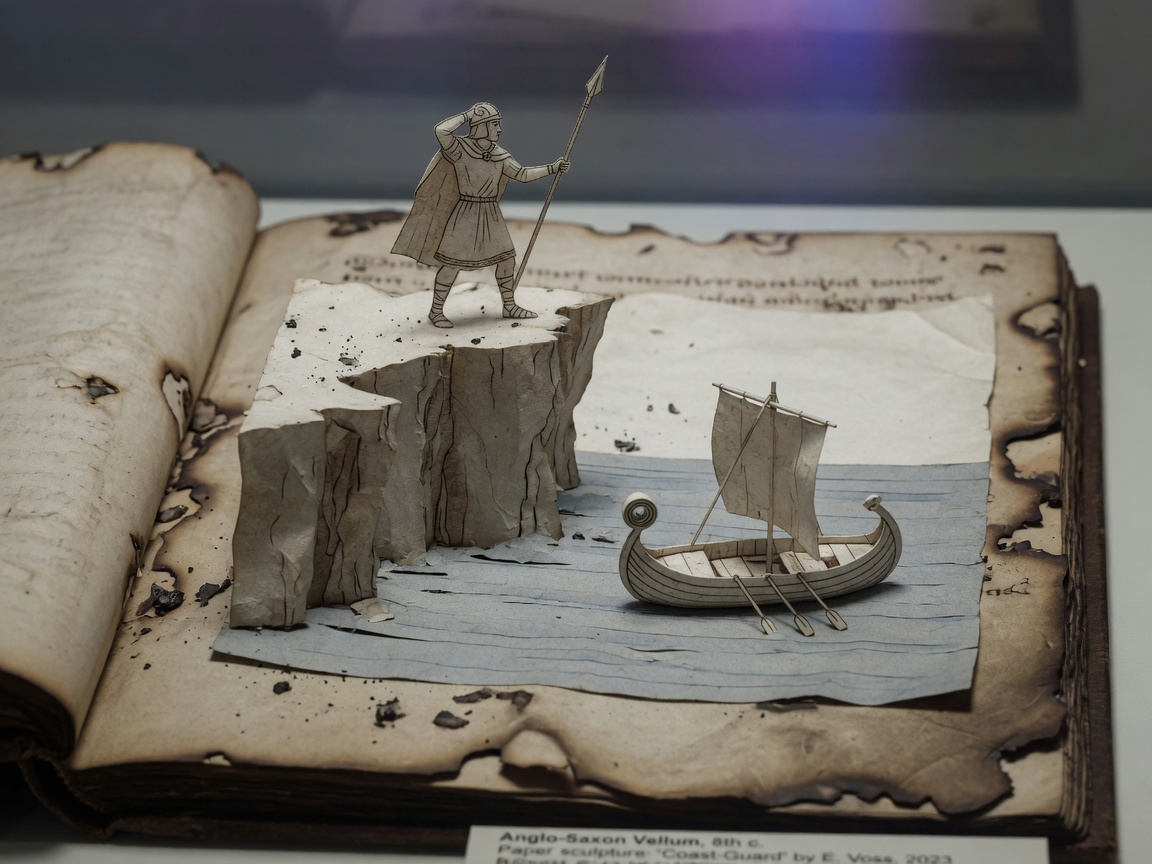
Gewât þâ ofer wæg-holm winde gefýsedflota fâmig-heals fugle gelîcost,ôð þät ymb ân-tîd ôðres dôgoreswunden-stefna gewaden häfde,þät þâ lîðende land gesâwon,brim-clifu blîcan, beorgas steápe,sîde sæ-nässas: þâ wäs sund liden,eoletes ät ende. Þanon up hraðeWedera leóde on wang stigon,sæ-wudu sældon (syrcan hrysedon,gûð-gewædo); gode þancedon,þäs þe him ýð-lâde eáðe wurdon.Þâ of wealle geseah weard Scildinga,se þe holm-clifu healdan scolde,
Then, driven by the wind, over the heaving sea,the foam-necked floater went, most like a bird,until, about the same hour of the second day,the curved-prowed ship had traveled far enoughthat the seafarers saw land,sea-cliffs shining, steep headlands,wide sea-nesses: the crossing was done then,the voyage at its end. Quickly up from therethe Geats climbed onto the shore,moored their sea-wood — their mail-shirts rattled,their battle-dress — and thanked Godthat the wave-paths had been easy for them.Then from the wall the Scyldings’ watchman saw,he whose duty was to guard the sea-cliffs,
beran ofer bolcan beorhte randas,fyrd-searu fûslîcu; hine fyrwyt bräcmôd-gehygdum, hwät þâ men wæron.Gewât him þâ tô waroðe wicge rîdanþegn Hrôðgâres, þrymmum cwehtemägen-wudu mundum, meðel-wordum frägn:"Hwät syndon ge searo-häbbendra"byrnum werede, þe þus brontne ceól"ofer lagu-stræte lædan cwômon,"hider ofer holmas helmas bæron?"Ic wäs ende-sæta, æg-wearde heóld,"þät on land Dena lâðra nænig"mid scip-herge sceððan ne meahte."Nô her cûðlîcor cuman ongunnon
men bearing bright shields over the gangway,battle-gear ready for use; his mind was grippedby curiosity — what these men might be.He rode down to the shore then on his horse,Hrothgar’s thane, and shook mightilythe great spear in his hands, and asked in formal words:“What are you, armed men,clad in mail-coats, who have come thusleading a tall ship over the sea-lanes,bearing helmets hither over the deep waters?I have been posted at the border, held watch on the coast,so that no enemy might do harmto the land of the Danes with a ship-army.No men have ever come here more openly,
"lind-häbbende; ne ge leáfnes-word"gûð-fremmendra gearwe ne wisson,"mâga gemêdu. Næfre ic mâran geseah"eorla ofer eorðan, þonne is eówer sum,"secg on searwum; nis þät seld-guma"wæpnum geweorðad, näfne him his wlite leóge,"ænlîc an-sýn. Nu ic eówer sceal"frum-cyn witan, ær ge fyr heonan"leáse sceáweras on land Dena"furður fêran. Nu ge feor-bûend,"mere-lîðende, mînne gehýrað"ân-fealdne geþôht: ôfost is sêlest"tô gecýðanne, hwanan eówre cyme syndon."
shield-bearers — yet you did not haveleave-word from those who wage war ready in hand,no kinsmen’s consent. Never have I seena mightier man on earth than one among you,a warrior in his gear; that is no hall-idlerhonored merely by weapons, unless his looks belie him,his singular bearing. Now I must knowyour lineage, before you go any furtheras false spies into the land of the Danes.Now, you who dwell far off,sea-voyagers, hearmy one plain thought: it is best to be quickin making known where you have come from.”

Him se yldesta andswarode,werodes wîsa, word-hord onleác:"We synt gum-cynnes Geáta leóde"and Higelâces heorð-geneátas."Wäs mîn fäder folcum gecýðed,"äðele ord-fruma Ecgþeów hâten;"gebâd wintra worn, ær he on weg hwurfe,"gamol of geardum; hine gearwe geman"witena wel-hwylc wîde geond eorðan.—"We þurh holdne hige hlâford þinne,"sunu Healfdenes, sêcean cwômon,"leód-gebyrgean: wes þu ûs lârena gôd!"Habbað we tô þäm mæran micel ærende"Deniga freán; ne sceal þær dyrne sum"wesan, þäs ic wêne. Þu wâst, gif hit is,"swâ we sôðlice secgan hýrdon,
The eldest of them answered him,the war-band’s leader, unlocked his word-hoard:“We are, by kin, people of the Geats,and Hygelac’s hearth-companions.My father was known among the nations,a noble chieftain called Ecgtheow;he lived through many winters before he went his way,old, from his home; wise men everywhereacross the earth still remember him well.We have come, with loyal purpose, seeking your lord,the son of Healfdene,the people’s protector: be good counsel to us!We carry a great errand to that famouslord of the Danes; nothing shall be hiddenin it, as I judge. You know, if it isas we have truly heard it said,
"þät mid Scyldingum sceaða ic nât hwylc,"deógol dæd-hata, deorcum nihtum"eáweð þurh egsan uncûðne nîð,"hýnðu and hrâ-fyl. Ic þäs Hrôðgâr mäg"þurh rûmne sefan ræd gelæran,"hû he frôd and gôd feónd oferswýðeð,"gyf him ed-wendan æfre scolde"bealuwa bisigu, bôt eft cuman"and þâ cear-wylmas côlran wurðað;"oððe â syððan earfoð-þrage,"þreá-nýd þolað, þenden þær wunað"on heáh-stede hûsa sêlest."Weard maðelode, þær on wicge sätombeht unforht: "Æghwäðres sceal"scearp scyld-wîga gescâd witan,"worda and worca, se þe wel þenceð.
that among the Scyldings some enemy — I know not who —some secret doer of harm, on the darkest nights,shows through terror an uncanny malice,humiliation and the piling of corpses. Concerning this I can give Hrothgaradvice, in the fullness of my heart,how he, wise and good, might overcome the enemy —if ever a turn should come for him,relief from that affliction, comfort come again,and those surging cares grow cooler;or else forever after he must endurehard times, distress, so long as it stands thereon its high place, that best of houses.”The watchman spoke, still seated on his horse,the fearless officer: “A sharp shield-warriorwho thinks clearly must know the differencebetween words and deeds, in either case.
"Ic þät gehýre, þät þis is hold weorod"freán Scyldinga. Gewîtað forð beran"wæpen and gewædu, ic eów wîsige:"swylce ic magu-þegnas mîne hâte"wið feónda gehwone flotan eówerne,"niw-tyrwedne nacan on sande"ârum healdan, ôð þät eft byreð"ofer lagu-streámas leófne mannan"wudu wunden-hals tô Weder-mearce."Gûð-fremmendra swylcum gifeðe bið,"þät þone hilde-ræs hâl gedîgeð."Gewiton him þâ fêran (flota stille bâd,seomode on sâle sîd-fäðmed scyp,on ancre fäst); eofor-lîc sciononofer hleór-beran gehroden golde
I hear this much: that this is a loyal companytoward the lord of the Scyldings. Go forward, bearingyour weapons and armor; I will guide you:and I will command my own young thanesto hold your ship in honor against every enemy,your freshly-tarred vessel there on the sand,until it carries againover the sea-streams the beloved man,the ship with its curved neck, back to the Weder lands.To one who does such deeds it shall be grantedto survive that rush of battle unharmed.”They set out then walking (the ship stayed still,rode at anchor on its rope, the broad-bellied craft,fast at its mooring); boar-images shoneabove their cheek-guards, adorned with gold,
fâh and fýr-heard, ferh wearde heóld.Gûðmôde grummon, guman onetton,sigon ätsomne, ôð þät hy säl timbredgeatolîc and gold-fâh ongytan mihton;þät wäs fore-mærost fold-bûendumreceda under roderum, on þäm se rîca bâd;lixte se leóma ofer landa fela.Him þâ hilde-deór hof môdigratorht getæhte, þät hie him tô mihtongegnum gangan; gûð-beorna sumwicg gewende, word äfter cwäð:"Mæl is me tô fêran; fäder alwalda"mid âr-stafum eówic gehealde"sîða gesunde! ic tô sæ wille,"wið wrâð werod wearde healdan."
bright and fire-hardened; life the boar guarded.Battle-minded, they hurried, the men pressed on,marched together, until they could make outthe timbered hall, splendid and gold-adorned;that was, for people of the earth, the most renownedof buildings under the heavens, where the mighty one waited;its light shone out over many lands.Then the battle-brave one pointed out to themthe bright court of the proud ones, so that they mightgo straight there; one of the war-menturned his horse then, and spoke these words:“It is time for me to go; may the almighty Fatherhold you in his grace,safe in your undertaking! I will go back to the sea,to keep watch there against a hostile force.”
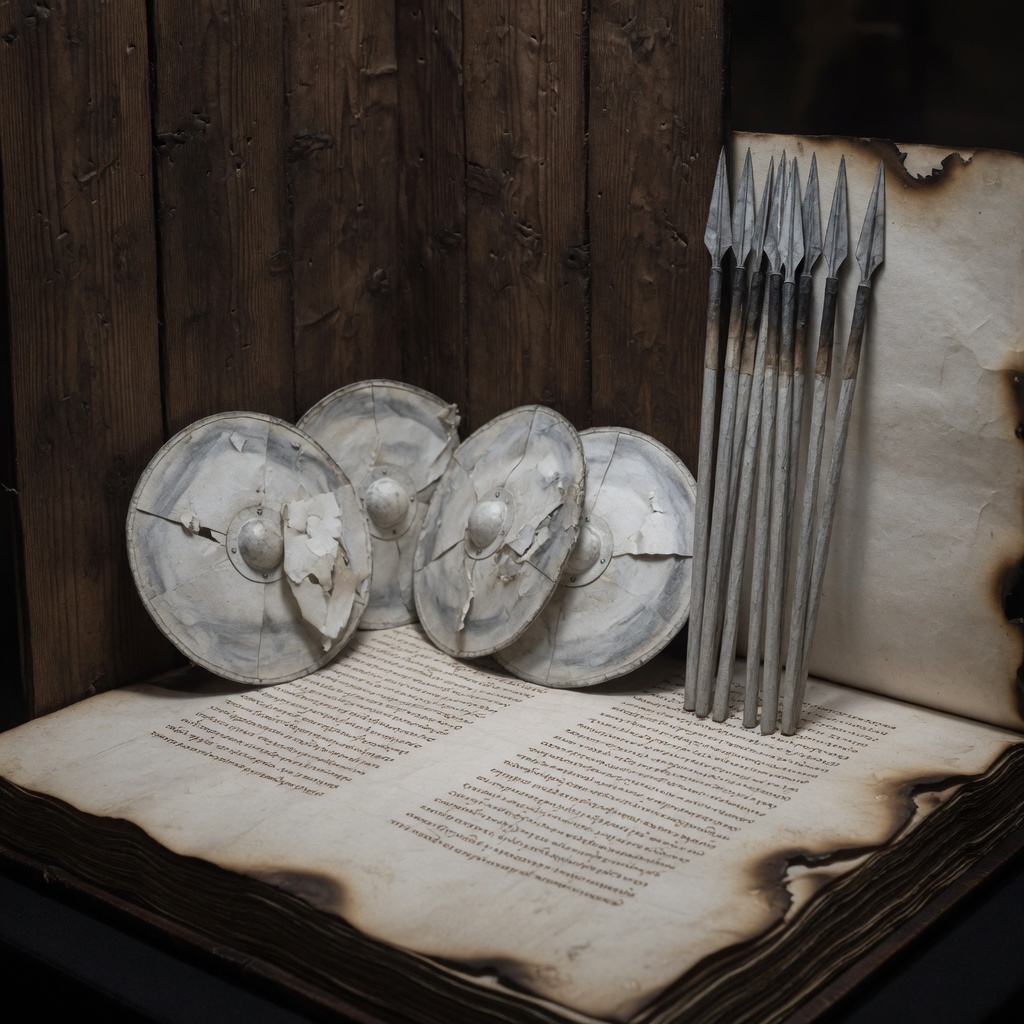
Stræt wäs stân-fâh, stîg wîsodegumum ätgädere. Gûð-byrne scânheard hond-locen, hring-îren scîrsong in searwum, þâ hie tô sele furðumin hyra gryre-geatwum gangan cwômon.Setton sæ-mêðe sîde scyldas,rondas regn-hearde wið þäs recedes weal,bugon þâ tô bence; byrnan hringdon,gûð-searo gumena; gâras stôdon,sæ-manna searo, samod ätgädere,äsc-holt ufan græg: wäs se îren-þreátwæpnum gewurðad. Þâ þær wlonc häleðoret-mecgas äfter äðelum frägn:
The street was paved with colored stone, the path guidedthe men together. Their war-mail shone,hard and hand-linked, the bright ring-ironsang in their gear, as they came marchingtoward the hall in their terrible war-dress.Sea-weary, they set their broad shields down,their battle-hard bucklers, against the building’s wall,and sat down on the bench; their mail-coats rang,the war-gear of men; the spears stood,the seamen’s weapons, gathered together,ash-shafts gray-tipped above: that armed companywas honored by its weapons. Then a proud warriorasked the champions about their lineage:
"Hwanon ferigeað ge fätte scyldas,"græge syrcan and grîm-helmas,"here-sceafta heáp?— Ic eom Hrôðgâres"âr and ombiht. Ne seah ic el-þeódige"þus manige men môdiglîcran."Wên' ic þät ge for wlenco, nalles for wräc-sîðum,"ac for hige-þrymmum Hrôðgâr sôhton."Him þâ ellen-rôf andswarode,wlanc Wedera leód word äfter spräc,heard under helme: "We synt Higelâces"beód-geneátas; Beówulf is mîn nama."Wille ic âsecgan suna Healfdenes,"mærum þeódne mîn ærende,
“From where do you carry those plated shields,gray mail-shirts and grim-visored helmets,that pile of war-spears? I am Hrothgar’sherald and officer. Never have I seenso many foreign men look so bold.I think it is for pride, not because you are exiles,but for greatness of heart that you have sought out Hrothgar.”The one famed for courage answered him,the proud lord of the Weders spoke back,hard beneath his helmet: “We are Hygelac’stable-companions; Beowulf is my name.I wish to tell my errand to the son of Healfdene,the famous prince,
"aldre þînum, gif he ûs geunnan wile,"þät we hine swâ gôdne grêtan môton."Wulfgâr maðelode (þät wäs Wendla leód,wäs his môd-sefa manegum gecýðed,wîg and wîs-dôm): "ic þäs wine Deniga,"freán Scildinga frinan wille,"beága bryttan, swâ þu bêna eart,"þeóden mærne ymb þînne sîð ;"and þe þâ andsware ädre gecýðan,"þe me se gôda âgifan þenceð."Hwearf þâ hrädlîce, þær Hrôðgâr sät,eald and unhâr mid his eorla gedriht;eode ellen-rôf, þät he for eaxlum gestôd
to your lord, if he will grant usthat we may greet him, good as he is.”Wulfgar spoke — he was a prince of the Wendels,his spirit known to many,his courage and his wisdom: “I will ask this of the friend of the Danes,the lord of the Scyldings, as you request,the famous ruler, about your journey,and bring you his answer quickly,whatever the good man decides to give.”He turned then swiftly to where Hrothgar sat,old and gray-haired, among his company of nobles;the famed one went until he stood at the shoulder
Deniga freán, cûðe he duguðe þeáw.Wulfgâr maðelode tô his wine-drihtne:"Her syndon geferede feorran cumene"ofer geofenes begang Geáta leóde:"þone yldestan oret-mecgas"Beówulf nemnað. Hy bênan synt,"þät hie, þeóden mîn, wið þe môton"wordum wrixlan; nô þu him wearne geteóh,"þînra gegn-cwida glädnian, Hrôðgâr!"Hy on wîg-geatwum wyrðe þinceað"eorla geæhtlan; hûru se aldor deáh,"se þæm heaðo-rincum hider wîsade."
of the Danish lord — he knew the custom of retainers.Wulfgar spoke to his friendly lord:“Here have come, brought from far off,over the sweep of the ocean, people of the Geats:the eldest of these warriorsthey call Beowulf. They are asking,my prince, that they might with youexchange words; do not refuse themyour answer, gracious Hrothgar!By their war-gear they seem worthyof an earl’s respect; surely their leader is strong,the one who led these battle-warriors here.”
Hrôðgâr maðelode, helm Scyldinga:"Ic hine cûðe cniht-wesende."Wäs his eald-fäder Ecgþeó hâten,"þäm tô hâm forgeaf Hrêðel Geáta"ângan dôhtor; is his eafora nu"heard her cumen, sôhte holdne wine."þonne sägdon þät sæ-lîðende,"þâ þe gif-sceattas Geáta fyredon"þyder tô þance, þät he þrittiges"manna mägen-cräft on his mund-grîpe"heaðo-rôf häbbe. Hine hâlig god"for âr-stafum us onsende,"tô West-Denum, þäs ic wên häbbe,"wið Grendles gryre: ic þäm gôdan sceal"for his môd-þräce mâdmas beódan.
Hrothgar spoke, helmet of the Scyldings:“I knew him when he was a boy.His father before him was called Ecgtheow;Hrethel of the Geats gave him at homehis only daughter; his son nowhas come here boldly, seeking a loyal friend.Seafarers have said this too,those who carried gift-treasures of the Geatsthere as thanks, that he has the strengthof thirty men in the grip of his hand,battle-brave as he is. Holy Godhas sent him to us out of grace,to the West-Danes, so I believe,against Grendel’s terror: to this good man I shalloffer treasures for his courage.
"Beó þu on ôfeste, hât hig in gân,"seón sibbe-gedriht samod ätgädere;"gesaga him eác wordum, þät hie sint wil-cuman"Deniga leódum." Þâ wið duru healleWulfgâr eode, word inne âbeád:"Eów hêt secgan sige-drihten mîn,"aldor Eást-Dena, þät he eówer äðelu can"and ge him syndon ofer sæ-wylmas,"heard-hicgende, hider wil-cuman."Nu ge môton gangan in eówrum guð-geatawum,"under here-grîman, Hrôðgâr geseón;"lætað hilde-bord her onbidian,"wudu wäl-sceaftas, worda geþinges."Ârâs þâ se rîca, ymb hine rinc manig,
Be quick, bid them come in,to see this whole company of kinsmen gathered together;tell them too, in words, that they are welcomeamong the Danish people.” Then at the hall doorWulfgar went, and announced the word within:“My victorious lord has bidden me tell you,the prince of the East-Danes, that he knows your lineage,and that you, resolute of heart,are welcome here, having come over the sea’s surge.Now you may go in your war-gear,under your battle-masks, to see Hrothgar;but leave your battle-shields here waiting,your spears and wooden shafts, until the talk is done.”The mighty one rose then, with many a warrior around him,a splendid band of thanes; some stayed behind,
þryðlîc þegna heáp; sume þær bidon,heaðo-reáf heóldon, swâ him se hearda bebeád.Snyredon ätsomne, þâ secg wîsodeunder Heorotes hrôf; hyge-rôf eode,heard under helme, þät he on heoðe gestôd.Beówulf maðelode (on him byrne scân,searo-net seówed smiðes or-þancum):"Wes þu Hrôðgâr hâl! ic eom Higelâces"mæg and mago-þegn; häbbe ic mærða fela"ongunnen on geogoðe. Me wearð Grendles þing"on mînre êðel-tyrf undyrne cûð:"secgað sæ-lîðend, þät þes sele stande,"reced sêlesta, rinca gehwylcum"îdel and unnyt, siððan æfen-leóht
to guard the battle-gear, as the bold one had ordered.Together they hurried, the man leading the wayunder Heorot’s roof; the stout-hearted one went,hard beneath his helmet, until he stood on the hearth.Beowulf spoke — his mail-shirt shone on him,its links forged by a smith’s cunning:“Hail to you, Hrothgar! I am Hygelac’skinsman and vassal; I have done manyglorious deeds since I was young. Grendel’s businessbecame known to me clearly in my own homeland:seafarers say that this hall stands,the best of buildings, empty and uselessto every man once the evening lightis hidden under heaven’s brightness.
"under heofenes hâdor beholen weorðeð."Þâ me þät gelærdon leóde mîne,"þâ sêlestan, snotere ceorlas,"þeóden Hrôðgâr, þät ic þe sôhte;"forþan hie mägenes cräft mînne cûðon:"selfe ofersâwon, þâ ic of searwum cwom,"fâh from feóndum, þær ic fîfe geband,"ýðde eotena cyn, and on ýðum slôg"niceras nihtes, nearo-þearfe dreáh,"wräc Wedera nîð (weán âhsodon)"forgrand gramum; and nu wið Grendel sceal,"wið þam aglæcan, âna gehegan"þing wið þyrse. Ic þe nu þâ,"brego Beorht-Dena, biddan wille,
Then my people advised me to this,the best of them, wise and clear-sighted,lord Hrothgar, that I should seek you out;for they knew well the strength of my might:they themselves had seen it, when I came from battle,stained with the blood of foes, where I had bound five,destroyed a brood of giants, and in the waves had slainsea-monsters by night, endured great hardship,avenged the Weders’ distress — they had suffered woe —and ground down their enemies; and now against Grendel I shall,against that fierce one, settle alonethe matter with the monster. Now Iwould ask one thing of you,lord of the Bright-Danes,
"eodor Scyldinga, ânre bêne;"þät þu me ne forwyrne, wîgendra hleó,"freó-wine folca, nu ic þus feorran com,"þät ic môte âna and mînra eorla gedryht,"þes hearda heáp, Heorot fælsian."Häbbe ic eác geâhsod, þät se äglæca"for his won-hýdum wæpna ne rêceð;"ic þät þonne forhicge, swâ me Higelâc sîe,"mîn mon-drihten, môdes blîðe,"þät ic sweord bere oððe sîdne scyld"geolo-rand tô gûðe; ac ic mid grâpe sceal"fôn wið feónde and ymb feorh sacan,"lâð wið lâðum; þær gelýfan sceal"dryhtnes dôme se þe hine deáð nimeð.
protector of the Scyldings, one single favor:that you not refuse me, shelter of warriors,gracious friend of your people, now that I have come so far,that I alone, with my own band of men,this hardy company, may cleanse Heorot.I have learned too that this fierce one,in his recklessness, has no use for weapons;so I too will scorn — as Hygelac,my lord, may be glad of spirit toward me —to carry a sword, or a broad shield,a yellow buckler, into that fight; but with my bare handsI shall grapple with the enemy and fight for life,foe against foe; and let him trust thenin the Lord’s judgment, whichever one death takes.
"Wên' ic þät he wille, gif he wealdan môt,"in þäm gûð-sele Geátena leóde"etan unforhte, swâ he oft dyde"mägen Hrêðmanna. Nâ þu mînne þearft"hafalan hýdan, ac he me habban wile"dreóre fâhne, gif mec deáð nimeð;"byreð blôdig wäl, byrgean þenceð,"eteð ân-genga unmurnlîce,"mearcað môr-hopu: nô þu ymb mînes ne þearft"lîces feorme leng sorgian."Onsend Higelâce, gif mec hild nime,"beadu-scrûda betst, þät mîne breóst wereð,"hrägla sêlest; þät is Hrêðlan lâf,"Wêlandes geweorc. Gæð â Wyrd swâ hió scel!"
I think, if he is allowed his way,that he will feast without fear in that war-hallon the people of the Geats, as he has often doneon the strength of the Hrethmen. You need not thentrouble to cover my head, for he will have mestained with gore, if death takes me;he will carry off my bloody corpse, meaning to taste it,the lone-walker will eat without pity,will mark the moor with my blood: you will not needto worry any longer about feeding my body.Send to Hygelac, if the battle takes me,the best of war-shirts, that guards my chest,finest of garments; it is the legacy of Hrethel,the work of Weland. Fate goes always as it must!”
Hrôðgâr maðelode, helm Scyldinga:"for were-fyhtum þu, wine mîn Beówulf,"and for âr-stafum ûsic sôhtest."Geslôh þin fäder fæhðe mæste,"wearð he Heaðolâfe tô hand-bonan"mid Wilfingum; þâ hine Wedera cyn"for here-brôgan habban ne mihte."Þanon he gesôhte Sûð-Dena folc"ofer ýða gewealc, Âr-Scyldinga;"þâ ic furðum weóld folce Deninga,"and on geogoðe heóld gimme-rîce"hord-burh häleða: þâ wäs Heregâr deád,"mîn yldra mæg unlifigende,"bearn Healfdenes. Se wäs betera þonne ic!"Siððan þâ fæhðe feó þingode;
Hrothgar spoke, helmet of the Scyldings:“For the sake of past battles, my friend Beowulf,and out of kindness, you have sought us out.Your father struck the greatest of feuds:he became Heatholaf’s slayer with his own handamong the Wylfings; then the Weder peoplecould not keep him for fear of war.From there he sought out the South-Danes’ folk,over the rolling waves, the honored Scyldings;I had only just then begun to rule the Danish people,and in my youth held this jeweled kingdom,this hoard-city of warriors: Heorogar was dead then,my elder kinsman, no longer living,Healfdene’s son. He was better than I!Afterward I settled that feud with payment;
"sende ic Wylfingum ofer wäteres hrycg"ealde mâdmas: he me âðas swôr."Sorh is me tô secganne on sefan mînum"gumena ængum, hwät me Grendel hafað"hýnðo on Heorote mid his hete-þancum,"fær-nîða gefremed. Is mîn flet-werod,"wîg-heáp gewanod; hie Wyrd forsweóp"on Grendles gryre. God eáðe mäg"þone dol-scaðan dæda getwæfan!"Ful oft gebeótedon beóre druncne"ofer ealo-wæge oret-mecgas,"þät hie in beór-sele bîdan woldon"Grendles gûðe mid gryrum ecga."Þonne wäs þeós medo-heal on morgen-tîd,
I sent to the Wylfings, over the water’s back,ancient treasures: he swore me oaths in return.It grieves me at heart to tellany man what Grendel has done to me,what humiliation in Heorot, with his hateful purposes,what sudden horrors. My hall-troop isdiminished, my war-band; fate has swept them awayinto Grendel’s terror. God could easilyput an end to that reckless ravager’s deeds!Very often warriors, drunk on beer,have boasted over the ale-cupthat they would wait in the beer-hallfor Grendel’s onslaught with terrible blades.Then this mead-hall, in the morning hour,
"driht-sele dreór-fâh, þonne däg lixte,"eal benc-þelu blôde bestýmed,"heall heoru-dreóre: âhte ic holdra þý läs,"deórre duguðe, þe þâ deáð fornam."Site nu tô symle and onsæl meoto,"sige-hrêð secgum, swâ þîn sefa hwette!"Þâ wäs Geát-mäcgum geador ätsomneon beór-sele benc gerýmed;þær swîð-ferhðe sittan eodonþryðum dealle. Þegn nytte beheóld,se þe on handa bär hroden ealo-wæge,scencte scîr wered. Scôp hwîlum sanghâdor on Heorote; þær wäs häleða dreám,duguð unlytel Dena and Wedera.
was stained with blood when daylight gleamed,all the bench-planks drenched with gore,the hall reeking with sword-blood: I had fewer loyal men,dear followers, whom death had taken.Sit now at the feast, and unburden your thoughts,victory-fame to my men, as your heart moves you!”Then for the men of the Geats, all together,a bench was cleared in the beer-hall;there the strong-hearted ones went to sit,proud in their might. A thane did his duty,who bore in his hand the adorned ale-cup,poured the bright drink. Sometimes the poet sang,clear-voiced in Heorot; there was joy of heroes,no small company of Danes and Weders.
Ûnferð maðelode, Ecglâfes bearn,þe ät fôtum sät freán Scyldinga;onband beadu-rûne (wäs him Beówulfes sîð,môdges mere-faran, micel äf-þunca,forþon þe he ne ûðe, þät ænig ôðer manæfre mærða þon mâ middan-geardesgehêdde under heofenum þonne he sylfa):"Eart þu se Beówulf, se þe wið Brecan wunne,"on sîdne sæ ymb sund flite,"þær git for wlence wada cunnedon"and for dol-gilpe on deóp wäter"aldrum nêðdon? Ne inc ænig mon,"ne leóf ne lâð, beleán mihte"sorh-fullne sîð; þâ git on sund reón,"þær git eágor-streám earmum þehton,
Unferth spoke up, Ecglaf’s son,who sat at the feet of the Scyldings’ lord;he loosed a string of battle-runes — Beowulf’s coming,the bold seafarer’s voyage, was to hima source of great resentment, for he could not bearthat any other man on this middle-earthshould ever win more glory under heaven than he himself:“Are you the Beowulf who competed with Breca,who raced him on the open sea in swimming,where the two of you, out of pride, tried the watersand, out of foolish boasting, risked your livesin the deep sea? No one could dissuade you,neither friend nor foe,from that dangerous venture; there you swam out,where you covered the sea-currents with your arms,
"mæton mere-stræta, mundum brugdon,"glidon ofer gâr-secg; geofon ýðum weól,"wintres wylme. Git on wäteres æht"seofon niht swuncon; he þe ät sunde oferflât,"häfde mâre mägen. Þâ hine on morgen-tîd"on Heaðo-ræmas holm up ätbär,"þonon he gesôhte swæsne êðel"leóf his leódum lond Brondinga,"freoðo-burh fägere, þær he folc âhte,"burg and beágas. Beót eal wið þe"sunu Beánstânes sôðe gelæste."Þonne wêne ic tô þe wyrsan geþinges,"þeáh þu heaðo-ræsa gehwær dohte,"grimre gûðe, gif þu Grendles dearst"niht-longne fyrst neán bîdan!"
measured the sea-paths, worked with your hands,glided over the ocean; the deep churned with waves,the surge of winter. For seven nightsyou two struggled in the water’s grip; he outdid you at swimming,had greater strength. Then, in the morning,the sea cast him up on the shore of the Heatho-Ramas,and from there he sought his own dear homeland,beloved by his people, the land of the Brondings,the fair peace-stronghold, where he had a people,a town, and rings. The son of Beanstanhad truly fulfilled his whole boast against you.So I expect a worse outcome for you,though you have proven strong in every clash of battle,in grim combat, if you dare wait near Grendelfor the length of a night!”
Beówulf maðelode, bearn Ecgþeówes:"Hwät þu worn fela, wine mîn Ûnferð,"beóre druncen ymb Brecan spræce,"sägdest from his sîðe! Sôð ic talige,"þät ic mere-strengo mâran âhte,"earfeðo on ýðum, þonne ænig ôðer man."Wit þät gecwædon cniht-wesende"and gebeótedon (wæron begen þâ git"on geogoð-feore) þät wit on gâr-secg ût"aldrum nêðdon; and þät geäfndon swâ."Häfdon swurd nacod, þâ wit on sund reón,"heard on handa, wit unc wið hron-fixas"werian þôhton. Nô he wiht fram me"flôd-ýðum feor fleótan meahte,"hraðor on holme, nô ic fram him wolde.
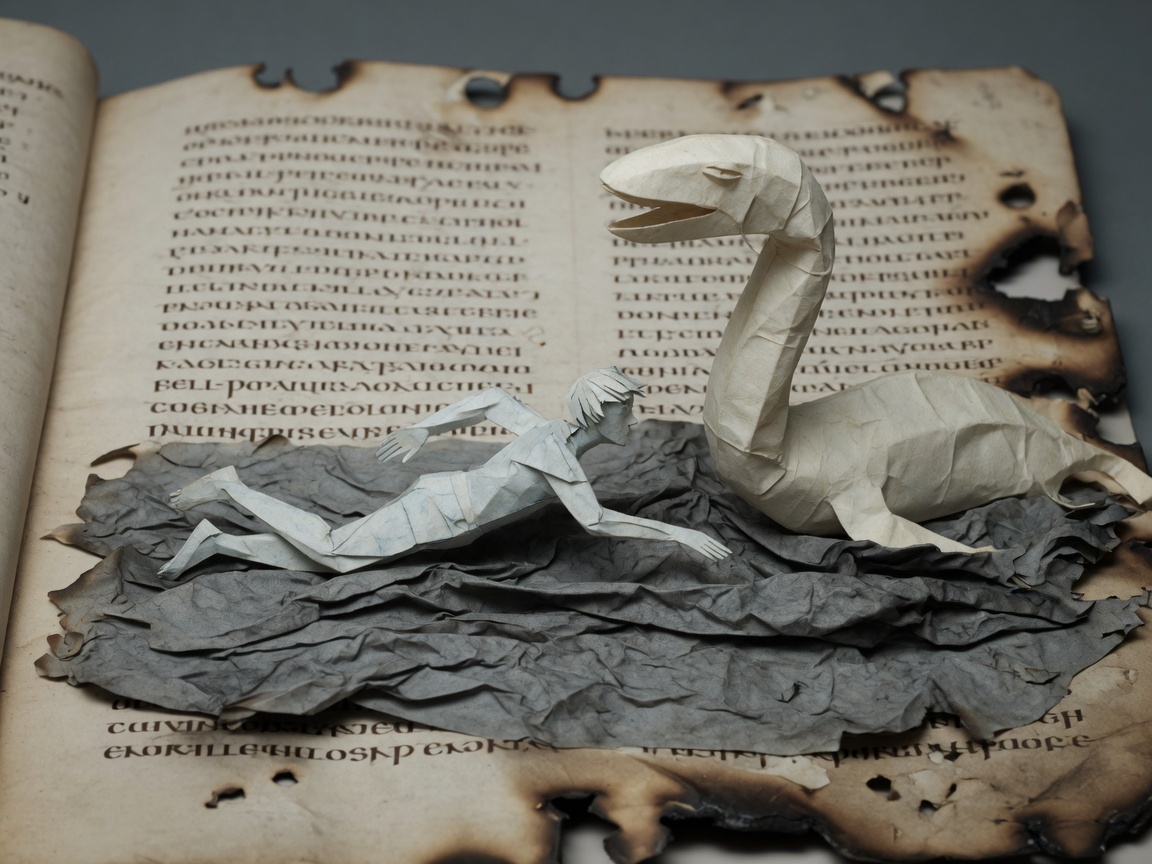
Beowulf spoke, son of Ecgtheow:“Well, my friend Unferth, you have saida great deal, drunk on beer, about Breca,told of his journey! But I hold it as truththat I had greater strength in the sea,more endurance in the waves, than any other man.We agreed to it as boysand made our boast — we were both thenstill in our youth — that we would risk our livesout on the open sea; and we carried it out just so.We held naked swords in our hands as we swam,hard blades, meaning to defend ourselvesagainst sea-monsters. He could notswim far from me on the flood-waves,could not move faster on the sea, and I would not leave him.
"Þâ wit ätsomne on sæ wæron"fîf nihta fyrst, ôð þät unc flôd tôdrâf,"wado weallende, wedera cealdost,"nîpende niht and norðan wind"heaðo-grim andhwearf; hreó wæron ýða,"Wäs mere-fixa môd onhrêred:"þær me wið lâðum lîc-syrce mîn,"heard hond-locen, helpe gefremede;"beado-hrägl broden on breóstum läg,"golde gegyrwed. Me tô grunde teáh"fâh feónd-scaða, fäste häfde"grim on grâpe: hwäðre me gyfeðe wearð,"þät ic aglæcan orde geræhte,"hilde-bille; heaðo-ræs fornam"mihtig mere-deór þurh mîne hand.
Then we two were together on the seafor the space of five nights, until the flood drove us apart,the surging waters, the coldest of weathers,darkening night and a wind from the northturned fierce against us; rough were the waves,the mood of the sea-fish was stirred to fury:there my corselet, against those enemies,hard and hand-linked, did me service;my woven battle-garment lay on my breast,adorned with gold. Down to the bottom dragged mea fierce and hostile enemy, held me fastgrim in its grip: yet it was granted to methat I reached the monster with the point of my weapon,my battle-blade; the storm of war carried offthat mighty sea-beast through my hand.
"Swâ mec gelôme lâð-geteónan"þreátedon þearle. Ic him þênode"deóran sweorde, swâ hit gedêfe wäs;"näs hie þære fylle gefeán häfdon,"mân-fordædlan, þät hie me þêgon,"symbel ymb-sæton sæ-grunde neáh,"ac on mergenne mêcum wunde"be ýð-lâfe uppe lægon,"sweordum âswefede, þät syððan nâ"ymb brontne ford brim-lîðende"lâde ne letton. Leóht eástan com,"beorht beácen godes; brimu swaðredon,"þät ic sæ-nässas geseón mihte,"windige weallas. Wyrd oft nereð"unfægne eorl, ðonne his ellen deáh!
“So often did hostile foespress hard upon me. I served themwith my dear sword, as was fitting;they had no joy of that feast,those evil wrongdoers, feeding on me,sitting down to banquet near the sea-floor,but in the morning, wounded by blades,they lay up along the tide-line,put to sleep by swords, so that never afterdid they hinder seafarersfrom their passage across that deep crossing. Light came from the east,God’s bright beacon; the seas grew calm,so that I could see the headlands,the windy cliffs. Fate often sparesthe man not doomed, when his courage holds!
"Hwäðere me gesælde, þät ic mid sweorde ofslôh"niceras nigene. Nô ic on niht gefrägn"under heofones hwealf heardran feohtan,"ne on êg-streámum earmran mannan;"hwäðere ic fâra feng feore gedîgde,"siðes wêrig. Þâ mec sæ ôðbär,"flôd äfter faroðe, on Finna land,"wadu weallendu. Nô ic wiht fram þe"swylcra searo-nîða secgan hýrde,"billa brôgan: Breca næfre git"ät heaðo-lâce, ne gehwäðer incer"swâ deórlîce dæd gefremede"fâgum sweordum . . . . . . .". . . . . . . nô ic þäs gylpe;"þeáh þu þînum brôðrum tô banan wurde,
Even so, it fell to me to kill with my swordnine sea-monsters. Never have I heardof a harder fight by night under heaven’s vault,nor of a man more wretched in the ocean-currents;yet I survived that grip of enemies with my life,weary from the ordeal. Then the sea carried me off,the current bore me, to the land of the Finns,the surging waters. I have never heardof such feats of skill told about you,such terror of blades: Breca never yet,not either of you two, in the play of battle,performed so bold a deedwith gleaming swords . . .. . . — I make no boast of that;though you became the slayer of your own brothers,
"heáfod-mægum; þäs þu in helle scealt"werhðo dreógan, þeáh þîn wit duge,"Secge ic þe tô sôðe, sunu Ecglâfes,"þät næfre Grendel swâ fela gryra gefremede,"atol äglæca ealdre þînum,"hýnðo on Heorote, gif þîn hige wære,"sefa swâ searo-grim, swâ þu self talast."Ac he hafað onfunden, þät he þâ fæhðe ne þearf,"atole ecg-þräce eówer leóde"swîðe onsittan, Sige-Scyldinga;"nymeð nýd-bâde, nænegum ârað"leóde Deniga, ac he on lust wîgeð,"swefeð ond sendeð, secce ne wêneð"tô Gâr-Denum. Ac him Geáta sceal"eafoð and ellen ungeâra nu
your closest kin — for that you shall sufferdamnation in hell, clever as your wit may be.I tell you truly, son of Ecglaf,that Grendel would never have done so many horrors,that terrible monster, to your lord,such humiliation in Heorot, if your spirit wereas fierce in battle as you yourself claim.But he has found out that he need notgreatly fear the fierce sword-assaultof your people, the Victory-Scyldings;he takes his toll by force, spares noneof the Danish people, but fights as he pleases,kills and feasts, expects no resistancefrom the Spear-Danes. But now the Geats shallsoon show him strength and courage
"gûðe gebeódan. Gæð eft se þe môt"tô medo môdig, siððan morgen-leóht"ofer ylda bearn ôðres dôgores,"sunne swegl-wered sûðan scîneð!"Þâ wäs on sâlum sinces bryttagamol-feax and gûð-rôf, geóce gelýfdebrego Beorht-Dena; gehýrde on Beówulfefolces hyrde fäst-rædne geþôht.Þær wäs häleða hleahtor; hlyn swynsode,word wæron wynsume. Eode Wealhþeów forð,cwên Hrôðgâres, cynna gemyndig,grêtte gold-hroden guman on healle,and þâ freólîc wîf ful gesealdeærest Eást-Dena êðel-wearde,bäd hine blîðne ät þære beór-þege,
in battle. Then he may go again,whoever is able, boldly to the mead,once the morning light of the next dayshines from the south, wrapped in the sun’s brightness!”Then the giver of treasure was glad,gray-haired and battle-famed; the lord of the Bright-Danestrusted in help; the shepherd of his people heardin Beowulf’s words a firm resolve.There was laughter among the warriors; the sound was pleasant,the words were joyful. Wealhtheow came forward then,Hrothgar’s queen, mindful of courtesies,gold-adorned, and greeted the men in the hall;and the noble woman offered the cupfirst to the guardian of the East-Danes’ homeland,bade him be glad at the beer-drinking,
leódum leófne; he on lust geþeahsymbel and sele-ful, sige-rôf kyning.Ymb-eode þâ ides Helmingaduguðe and geogoðe dæl æghwylcne;sinc-fato sealde, ôð þät sæl âlamp,þät hió Beówulfe, beág-hroden cwên,môde geþungen, medo-ful ätbär;grêtte Geáta leód, gode þancodewîs-fäst wordum, þäs þe hire se willa gelamp,þät heó on ænigne eorl gelýfdefyrena frôfre. He þät ful geþeah,wäl-reów wîga ät Wealhþeón,and þâ gyddode gûðe gefýsed,Beówulf maðelode, bearn Ecgþeówes:"Ic þät hogode, þâ ic on holm gestâh,
dear to his people; he took joyin feast and cup, that victorious king.Then the lady of the Helmings went aroundto every rank, veterans and young men alike;she offered the precious cups, until the moment camethat she, the ring-adorned queen, of noble mind,carried the mead-cup to Beowulf;she greeted the prince of the Geats, thanked God,wise in her words, that her wish had come to pass,that she might trust in any warrior at lastfor relief from these horrors. He took that cup,the fierce warrior, from Wealhtheow’s hand,and then, eager for battle, spoke in measured words —Beowulf spoke, son of Ecgtheow:“I resolved, when I set out on the sea,
"sæ-bât gesät mid mînra secga gedriht,"þät ic ânunga eówra leóda"willan geworhte, oððe on wäl crunge,"feónd-grâpum fäst. Ic gefremman sceal"eorlîc ellen, oððe ende-däg"on þisse meodu-healle mînne gebîdan."Þam wîfe þâ word wel lîcodon,gilp-cwide Geátes; eode gold-hrodenfreólîcu folc-cwên tô hire freán sittan.Þâ wäs eft swâ ær inne on healleþryð-word sprecen, þeód on sælum,sige-folca swêg, ôð þät semningasunu Healfdenes sêcean woldeæfen-räste; wiste ät þäm ahlæcantô þäm heáh-sele hilde geþinged,
sat down in my sea-boat with my band of men,that I would carry out fully the willof your people, or fall in the slaughter,fast in the enemy’s grip. I shall achievea deed worthy of a warrior, or awaitmy final day in this mead-hall.”These words pleased the woman well,the Geat’s proud vow; the gold-adornednoble folk-queen went to sit by her lord.Then again, as before, inside the hallbold words were spoken, the people rejoicing,the sound of a victorious nation, until suddenlythe son of Healfdene wished to seekhis evening rest; he knew that against that monstera battle had been arranged for the high hall,
siððan hie sunnan leóht geseón ne meahton,oððe nîpende niht ofer ealle,scadu-helma gesceapu scrîðan cwôman,wan under wolcnum. Werod eall ârâs.Grêtte þâ giddum guma ôðerne,Hrôðgâr Beówulf, and him hæl âbeád,wîn-ärnes geweald and þät word âcwäð:"Næfre ic ænegum men ær âlýfde,"siððan ic hond and rond hebban mihte,"þryð-ärn Dena bûton þe nu þâ."Hafa nu and geheald hûsa sêlest;"gemyne mærðo, mägen-ellen cýð,"waca wið wrâðum! Ne bið þe wilna gâd,"gif þu þät ellen-weorc aldre gedîgest."
from the time they could no longer see the sun’s light,and darkening night came down over all,shapes of shadow came gliding,dark under the clouds. The whole company rose.Then one man greeted the other with words,Hrothgar greeted Beowulf, and wished him well,gave him charge of the wine-hall, and spoke these words:“Never before have I entrusted to any man,since I could raise hand and shield,this great hall of the Danes, until now, to you.Have now and hold the best of houses;remember your fame, show your mighty courage,watch against the enemy! You will lack nothing you desire,if you survive this brave undertaking with your life.”
Þâ him Hrôðgâr gewât mid his häleða gedryht,eodur Scyldinga ût of healle;wolde wîg-fruma Wealhþeó sêcan,cwên tô gebeddan Häfde kyninga wuldorGrendle tô-geánes, swâ guman gefrungon,sele-weard âseted, sundor-nytte beheóldymb aldor Dena, eoton weard âbeád;hûru Geáta leód georne trûwodemôdgan mägnes, metodes hyldo.Þâ he him of dyde îsern-byrnan,helm of hafelan, sealde his hyrsted sweord,îrena cyst ombiht-þegne,and gehealdan hêt hilde-geatwe.Gespräc þâ se gôda gylp-worda sumBeówulf Geáta, ær he on bed stige:"Nô ic me an here-wæsmum hnâgran talige
Then Hrothgar departed with his band of warriors,the protector of the Scyldings, out of the hall;the war-leader wished to seek out Wealhtheow,the queen, as his bedmate. The King of Glory had,against Grendel, as men had heard,set a hall-guard, who kept a special watchfor the lord of the Danes, and stood ready against the ogre;indeed the prince of the Geats trusted firmlyin his own great strength, and the Maker’s favor.Then he took off his iron mail-shirt,his helmet from his head, gave his ornamented sword,finest of blades, to his attending thane,and bade him keep the battle-gear safe.Then the good man spoke a boast,Beowulf of the Geats, before he climbed into bed:“I do not count myself lesser in battle-strength,
"gûð-geweorca, þonne Grendel hine;"forþan ic hine sweorde swebban nelle,"aldre beneótan, þeáh ic eal mæge."Nât he þâra gôda, þät he me on-geán sleá,"rand geheáwe, þeáh þe he rôf sîe"nîð-geweorca; ac wit on niht sculon"secge ofersittan, gif he gesêcean dear"wîg ofer wæpen, and siððan witig god"on swâ hwäðere hond hâlig dryhten"mærðo dême, swâ him gemet þince."Hylde hine þâ heaðo-deór, hleór-bolster onfêngeorles andwlitan; and hine ymb monigsnellîc sæ-rinc sele-reste gebeáh.Nænig heora þôhte þät he þanon scoldeeft eard-lufan æfre gesêcean,folc oððe freó-burh, þær he âfêded wäs,
in works of war, than Grendel counts himself;and so I will not put him to sleep with a sword,take his life, though I well could.He knows nothing of the fine art of striking back at me,of hacking my shield, skilled as he may bein violent deeds; but we two, tonight,shall do without swords, if he dares to seeka fight without weapons, and afterward let wise God,the holy Lord, on whichever sidehe judges fit, decide the glory.”Then the battle-brave one lay down, the pillow receivedthe warrior’s face; and around him manya bold sea-fighter settled into the hall’s rest.None of them thought that he would evergo back again to seek his beloved home,his people or the noble stronghold where he was raised,
ac hie häfdon gefrunen, þät hie ær tô fela miclesin þäm wîn-sele wäl-deáð fornam,Denigea leóde. Ac him dryhten forgeafwîg-spêda gewiofu, Wedera leódumfrôfor and fultum, þät hie feónd heoraþurh ânes cräft ealle ofercômon,selfes mihtum: sôð is gecýðed,þät mihtig god manna cynnesweóld wîde-ferhð. Com on wanre nihtscrîðan sceadu-genga. Sceótend swæfon,þâ þät horn-reced healdan scoldon,ealle bûton ânum. Þät wäs yldum cûð,þät hie ne môste, þâ metod nolde,se syn-scaða under sceadu bregdan;ac he wäccende wrâðum on andanbâd bolgen-môd beadwa geþinges.
for they had heard that violent death had alreadycarried off too many of the Danish peoplein that wine-hall before. But the Lord granted themthe weaving of war-luck, gave the Weder peoplecomfort and help, so that through the strength of onethey all overcame their enemy,by his might alone: the truth is made known,that mighty God has ruled overmankind always. Through the dark night camegliding the shadow-walker. The bowmen slept,those who should have held that horned hall,all but one. It was known to menthat the evil-doer could not drag them offinto the shadows, if the Maker did not will it;but he, watching, in fury against his foes,waited grim-hearted for the outcome of battle.
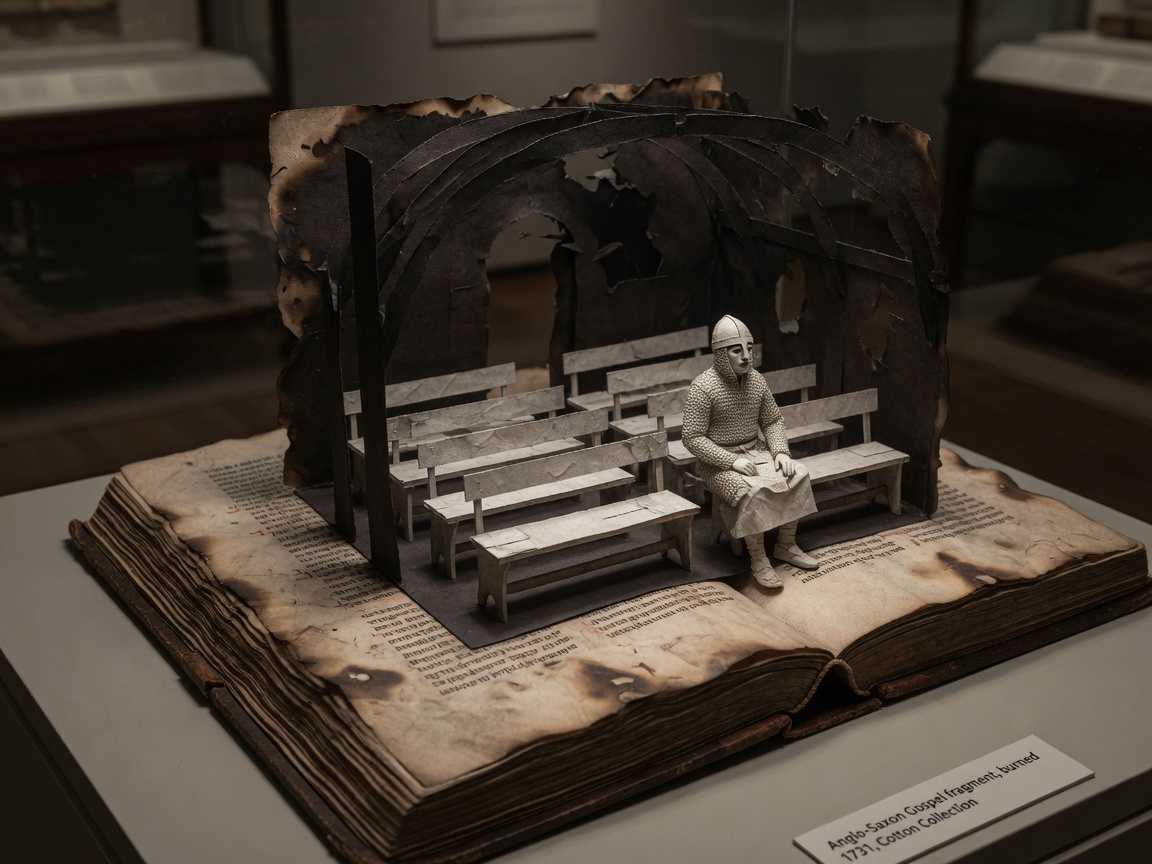
Þâ com of môre under mist-hleoðumGrendel gongan, godes yrre bär.Mynte se mân-scaða manna cynnessumne besyrwan in sele þam heán;wôd under wolcnum, tô þäs þe he wîn-reced,gold-sele gumena, gearwost wissefättum fâhne. Ne wäs þät forma sîð,þät he Hrôðgâres hâm gesôhte:næfre he on aldor-dagum ær ne siððanheardran häle, heal-þegnas fand!Com þâ tô recede rinc sîðiandreámum bedæled. Duru sôna onarnfýr-bendum fäst, syððan he hire folmum hrân;onbräd þâ bealo-hydig, þâ he âbolgen wäs,
Out of the moor, under the misty hills,Grendel came walking, carrying God’s fury with him.The monster meant to trap one moreof mankind in that high hall.He moved beneath the clouds until he knew wellwhere the wine-hall, the gold-hall of men,stood gleaming with plated gold.This was not the first time he had come looking for Hrothgar’s home —but never before or after in all his daysdid he find harder luck, tougher hall-guards.The warrior came marching to the building,a man cut off from joy. The door burst open at once,fast in its fire-forged bands, the moment his hands touched it;he wrenched wide the hall’s mouth, sick with malice,
recedes mûðan. Raðe äfter þonon fâgne flôr feónd treddode,eode yrre-môd; him of eágum stôdlîge gelîcost leóht unfäger.Geseah he in recede rinca manige,swefan sibbe-gedriht samod ätgädere,mago-rinca heáp: þâ his môd âhlôg,mynte þät he gedælde, ær þon däg cwôme,atol aglæca, ânra gehwylceslîf wið lîce, þâ him âlumpen wäswist-fylle wên. Ne wäs þät wyrd þâ gen,þät he mâ môste manna cynnesþicgean ofer þâ niht. Þrýð-swýð beheóldmæg Higelâces, hû se mân-scaða
raging as he was. Quickly after thatthe fiend trod the shining floor,stalking in fury; from his eyes camea light most like flame, an ugly glow.He saw in the hall a crowd of warriors,a kinship of sleepers lying together,a heap of young men — and his heart laughed,for he meant, before day came,that horror, to tear apartlife from body, every one of them,since he expected a full feast.But it was not fate, not yet,that he would take any more menthat night. Mighty in strength, the kinsman of Hygelac
under fær-gripum gefaran wolde.Ne þät se aglæca yldan þôhte,ac he gefêng hraðe forman siðeslæpendne rinc, slât unwearnum,bât bân-locan, blôd êdrum dranc,syn-snædum swealh: sôna häfdeunlyfigendes eal gefeormodfêt and folma. Forð neár ätstôp,nam þâ mid handa hige-þihtignerinc on räste; ræhte ongeánfeónd mid folme, he onfêng hraðeinwit-þancum and wið earm gesät.Sôna þät onfunde fyrena hyrde,þät he ne mêtte middan-geardes
watched closely to see how the monsterwould move in his sudden onslaughts.The fiend had no mind to wait;he seized without warning, on his first pass,a sleeping soldier, tore into him savagely,bit through the bone-locks, drank the blood as it ran,swallowed him down in great gulps; soon he had eatenentirely the feet and hands of the dead man.He stepped in closer, took with his handthe strong-hearted warrior where he lay resting;reached for him with his claw — the fiend caught itquickly, with hostile intent, and sat up against the arm.At once the shepherd of crimes discoveredthat he had never met, in all the regions of this world,
eorðan sceáta on elran menmund-gripe mâran: he on môde wearðforht on ferhðe, nô þý ær fram meahte;hyge wäs him hin-fûs, wolde on heolster fleón,sêcan deófla gedräg: ne wäs his drohtoð þær,swylce he on ealder-dagum ær gemêtte.Gemunde þâ se gôda mæg Higelâcesæfen-spræce, up-lang âstôdand him fäste wiðfêng. Fingras burston;eoten wäs ût-weard, eorl furður stôp.Mynte se mæra, þær he meahte swâ,wîdre gewindan and on weg þanonfleón on fen-hopu; wiste his fingra geweald
in any other man on earth,a mightier grip of hand:he grew afraid in his heart,could not break free any sooner; his spirit was set on flight,he wanted to bolt for the shadows, seek out the company of devils —his time there was nothing like what he had met with before in his life.Then Hygelac’s good kinsman rememberedhis boast from the evening before, stood bolt uprightand held him fast. Fingers cracked;the giant strained outward, the earl stepped in further.The famous one meant, if he only could,to break loose wider and get away from there,flee to the fen-refuges; he knew the strength of his fingerswas caught in an angry man’s grip.
on grames grâpum. Þät wäs geócor sîð,þät se hearm-scaða tô Heorute âteáh:dryht-sele dynede, Denum eallum wearð,ceaster-bûendum, cênra gehwylcum,eorlum ealu-scerwen. Yrre wæron begen,rêðe rên-weardas. Reced hlynsode;þâ wäs wundor micel, þät se wîn-selewiðhäfde heaðo-deórum, þät he on hrusan ne feól,fäger fold-bold; ac he þäs fäste wäsinnan and ûtan îren-bendumsearo-þoncum besmiðod. Þær fram sylle âbeágmedu-benc monig mîne gefræge,golde geregnad, þær þâ graman wunnon;
That was a bitter journey the harm-doer had made to Heorot:the hall thundered, and every Dane,every man in that stronghold, every brave one,felt an ale-hall terror. Both fighters were furious,the fierce guardians of that hall. The building roared;it was a great wonder that the wine-hallwithstood two men so battle-hardened, that it did not collapse to earth,that fair building — but it had been made so fast,bound inside and out with iron bandsby cunning smith-craft. There, from the floor,many a mead-bench was wrenched loose, so I have heard,gold-adorned, where the furious ones grappled;the wise men of the Scyldings had never expected
þäs ne wêndon ær witan Scyldinga,þät hit â mid gemete manna ænigbetlîc and bân-fâg tôbrecan meahte,listum tôlûcan, nymðe lîges fäðmswulge on swaðule. Swêg up âstâgniwe geneahhe; Norð-Denum stôdatelîc egesa ânra gehwylcumþâra þe of wealle wôp gehýrdon,gryre-leóð galan godes andsacan,sige-leásne sang, sâr wânigeanhelle häftan. Heóld hine tô fästese þe manna wäs mägene strengeston þäm däge þysses lîfes.
that any man alive could everbreak it apart by main strength,that splendid, antler-bright hall, take it apart by cunning,unless the grip of fire should swallow it in flame.A sound rose up, strange and constant; a terrible dread seizedevery one of the North-Daneswho heard, from outside the wall, the weeping,the terror-song sung by God’s enemy,the victory-less song, the sore lamentof hell’s own captive. He held him too fast,that man who was, of all men living,the strongest in the grip of his handin that day of this life.
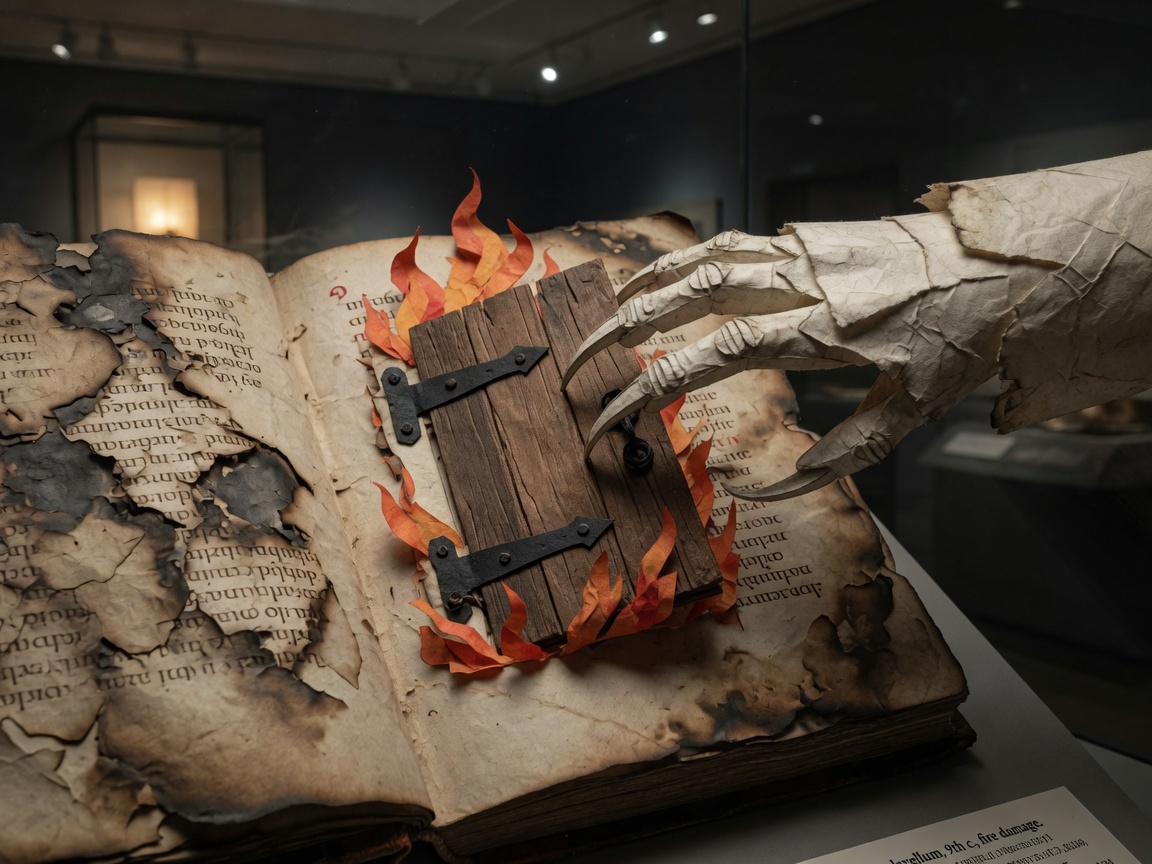
Nolde eorla hleó ænige þingaþone cwealm-cuman cwicne forlætan,ne his lîf-dagas leóda ænigumnytte tealde. Þær genehost brägdeorl Beówulfes ealde lâfe,wolde freá-drihtnes feorh ealgianmæres þeódnes, þær hie meahton swâ;hie þät ne wiston, þâ hie gewin drugon,heard-hicgende hilde-mecgas,and on healfa gehwone heáwan þôhton,sâwle sêcan, þät þone syn-scaðanænig ofer eorðan îrenna cyst,gûð-billa nân grêtan nolde;ac he sige-wæpnum forsworen häfde,ecga gehwylcre. Scolde his aldor-gedâlon þäm däge þysses lîfes
The protector of earls would not, for anything,let that death-bringing guest go off alive;he counted his remaining days no useto any man living. Many a warriorof Beowulf’s drew his old blade,wanting to guard his lord’s life,their famous leader’s, if only they could;they did not know, as they fought,those hard-minded battle-men, meaning to hewat him from every side, to hunt down his soul,that no sword’s edge on earth,no war-blade whatever, would touch that sinner —he had forsworn every weapon of victory, every edge.His death, on that day of this life,was fated to be wretched,
earmlîc wurðan and se ellor-gâston feónda geweald feor sîðian.Þâ þät onfunde se þe fela ærormôdes myrðe manna cynnefyrene gefremede (he wäs fâg wið god)þät him se lîc-homa læstan nolde,ac hine se môdega mæg Hygelâceshäfde be honda; wäs gehwäðer ôðrumlifigende lâð. Lîc-sâr gebâdatol äglæca, him on eaxle wearðsyn-dolh sweotol, seonowe onsprungonburston bân-locan. Beówulfe wearðgûð-hrêð gyfeðe; scolde Grendel þonanfeorh-seóc fleón under fen-hleoðu,sêcean wyn-leás wîc; wiste þê geornor,
and his alien spirit would travel farinto the power of fiends. Then he who had longworked grief and malice on mankind,hateful to God, discoveredthat his body would fail him:the bold kinsman of Hygelachad him by the hand; each was hatefulto the other while he lived. The terrible onesuffered a wound in the flesh: plain on his shouldera gash tore open, sinews snapped,bone-joints burst apart. To Beowulfwas given the glory of battle; Grendel had to flee from there,sick to death, under the fen-slopes,to look for a joyless den; he knew all the betterthat his life’s end had come,
þät his aldres wäs ende gegongen,dôgera däg-rîm. Denum eallum wearðäfter þam wäl-ræse willa gelumpen.Häfde þâ gefælsod, se þe ær feorran com,snotor and swýð-ferhð sele Hrôðgâres,genered wið nîðe. Niht-weorce gefeh,ellen-mærðum; häfde Eást-DenumGeát-mecga leód gilp gelæsted,swylce oncýððe ealle gebêtte,inwid-sorge, þe hie ær drugonand for þreá-nýdum þolian scoldon,torn unlytel. Þät wäs tâcen sweotol,syððan hilde-deór hond âlegde,earm and eaxle (þær wäs eal geadorGrendles grâpe) under geápne hrôf.
the sum of his days counted out. For all the Danes,after that slaughter-onslaught, their wishhad come to pass at last. He who had come from far off,wise and strong-hearted, had cleansedHrothgar’s hall, saved it from violence.He rejoiced in that night’s work, in glory won;the Geatish champion had made good his boastto the people of the East-Danes, had cured them tooof all their old affliction, the malice and griefthey had suffered before, had been forced to endureunder crushing oppression, no small anguish.That was a plain sign, once the battle-hardened onehad laid down the hand — the arm and the shoulder(there lay the whole of Grendel’s claw together) —under the high-arched roof.
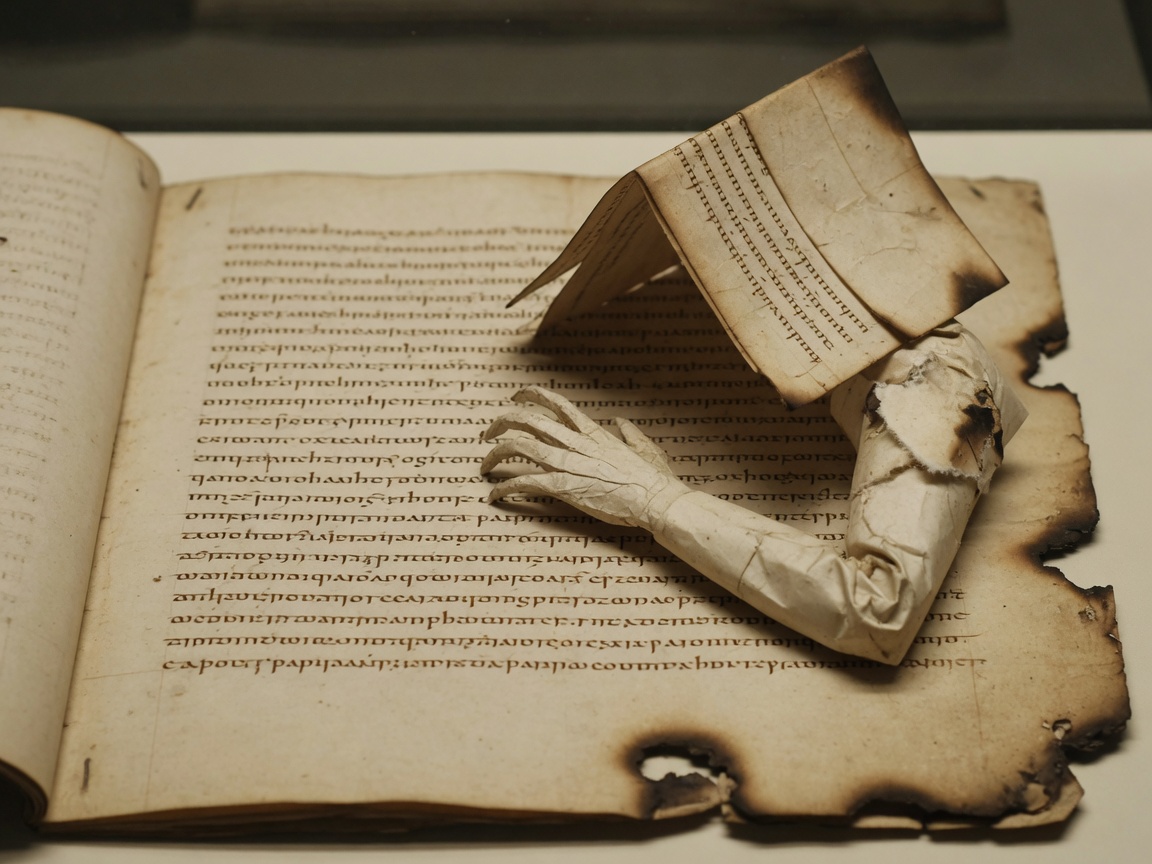
Þâ wäs on morgen mîne gefrægeymb þâ gif-healle gûð-rinc monig:fêrdon folc-togan feorran and neángeond wîd-wegas wundor sceáwian,lâðes lâstas. Nô his lîf-gedâlsârlîc þûhte secga ænegum,þâra þe tîr-leáses trode sceáwode,hû he wêrig-môd on weg þanon,nîða ofercumen, on nicera merefæge and geflýmed feorh-lâstas bär.Þær wäs on blôde brim weallende,atol ýða geswing eal gemengedhâtan heolfre, heoro-dreóre weól;deáð-fæge deóg, siððan dreáma leásin fen-freoðo feorh âlegde
In the morning, so I have heard,many a warrior gathered round the gift-hall:leaders of the people came from far and neardown long roads to look at the wonder,the tracks of the hated one. His parting from lifeseemed sorrowful to no man therewho studied the trail of that glory-less creature —how, weary at heart, beaten down,doomed and put to flight, he had carried his life-tracks awayto the monsters’ mere. There the waterwas welling with blood, the terrible churn of wavesall mixed with hot gore, boiling with battle-blood;death-fated, he had hidden himself,laid down his life, joyless, in the fen’s shelter,his heathen soul, and hell took him in.
hæðene sâwle, þær him hel onfêng.Þanon eft gewiton eald-gesîðas,swylce geong manig of gomen-wâðe,fram mere môdge, mearum rîdan,beornas on blancum. Þær wäs Beówulfesmærðo mæned; monig oft gecwäð,þätte sûð ne norð be sæm tweonumofer eormen-grund ôðer nænigunder swegles begong sêlra nærerond-häbbendra, rîces wyrðra.Ne hie hûru wine-drihten wiht ne lôgon,glädne Hrôðgâr, ac þät wäs gôd cyning.Hwîlum heaðo-rôfe hleápan lêton,on geflît faran fealwe mearas,þær him fold-wegas fägere þûhton,
From there the old companions turned back again,and many a young man too, riding for sport,proud from the mere, mounted on horses,warriors on their steeds. There Beowulf’s famewas spoken of; many said, again and again,that neither south nor north, between the two seas,across the wide earth, under the sweep of the sky,was any other shield-bearer better,more worthy of a kingdom. Nor did they, even so,find fault with their own friendly lord,gracious Hrothgar — he was a good king.Sometimes those battle-brave men let their tawny horsesrun, race each other in rivalry,wherever the paths looked fair to them,known for their going; sometimes a thane of the king,
cystum cûðe; hwîlum cyninges þegn,guma gilp-hläden gidda gemyndig,se þe eal-fela eald-gesegenaworn gemunde, word ôðer fandsôðe gebunden: secg eft ongansîð Beówulfes snyttrum styrianand on spêd wrecan spel gerâde,wordum wrixlan, wel-hwylc gecwäð,þät he fram Sigemunde secgan hýrde,ellen-dædum, uncûðes fela,Wälsinges gewin, wîde sîðas,þâra þe gumena bearn gearwe ne wiston,fæhðe and fyrene, bûton Fitela mid hine,þonne he swylces hwät secgan woldeeám his nefan, swâ hie â wæron
a man loaded with old songs, mindful of lays,who remembered a great store of ancient tradition,found other words, truly bound together:the man began, with skill, to shapeBeowulf’s venture into a well-made tale,weave it cleverly, vary his words,and tell it all — what he had heard toldof Sigemund, of unknown deeds,brave feats, the struggles of the Waelsing,his wide travels, things the sons of menhad barely heard of — feud and crime —except Fitela, who was with himwhenever he wanted to speak of such things,uncle to nephew, since the two of themwere always companions when trouble came;
ät nîða gehwâm nýd-gesteallan:häfdon eal-fela eotena cynnessweordum gesæged. Sigemunde gesprongäfter deáð-däge dôm unlýtel,syððan wîges heard wyrm âcwealde,hordes hyrde; he under hârne stân,äðelinges bearn, âna genêðdefrêcne dæde; ne wäs him Fitela mid.Hwäðre him gesælde, þät þät swurd þurhwôdwrätlîcne wyrm, þät hit on wealle ätstôd,dryhtlîc îren; draca morðre swealt.Häfde aglæca elne gegongen,þät he beáh-hordes brûcan môsteselfes dôme: sæ-bât gehlôd,bär on bearm scipes beorhte frätwa,
together they had cut down a great manyof the race of giants with their swords.No little glory sprang up for Sigemundafter his death-day, since, hardy in battle,he had killed the dragon, the hoard’s guardian;under the grey stone, that nobleman’s sonventured the perilous deed alone —Fitela was not with him that time;yet it fell to him that his sword drove cleanthrough the wondrous serpent, so that it stuck fast in the rock wall,that lordly iron; the dragon died in the slaughter.By his courage the brave one had wonthe right to enjoy the ring-hoard by his own judgment;he loaded his sea-boat, carried the bright treasure
Wälses eafera; wyrm hât gemealt.Se wäs wreccena wîde mærostofer wer-þeóde, wîgendra hleóellen-dædum: he þäs âron þâh.Siððan Heremôdes hild sweðrodeeafoð and ellen. He mid eotenum wearðon feónda geweald forð forlâcen,snûde forsended. Hine sorh-wylmaslemede tô lange, he his leódum wearð,eallum äðelingum tô aldor-ceare;swylce oft bemearn ærran mælumswîð-ferhðes sîð snotor ceorl monig,se þe him bealwa tô bôte gelýfde,þät þät þeódnes bearn geþeón scolde,
onto the ship’s hold, Waels’s own son;the worm melted away in its heat.He was the most widely famed of wanderersamong the nations of men for his courage,a shelter for warriors — by it he thrived.Afterward Heremod’s strength and courage failed him;he was betrayed, given over among enemies,swiftly sent away. Surges of sorrowoppressed him too long; he became, to his people,to every noble, a burden and a grief;just so, many a wise man had often mourned,in earlier days, that strong-hearted one’s path —one who had trusted in him for relief from evils,that the king’s son would prosper,
fäder-äðelum onfôn, folc gehealdan,hord and hleó-burh, häleða rîce,êðel Scyldinga. He þær eallum wearð,mæg Higelâces manna cynne,freóndum gefägra; hine fyren onwôd.Hwîlum flîtende fealwe strætemearum mæton. Þâ wäs morgen-leóhtscofen and scynded. Eode scealc monigswîð-hicgende tô sele þam heán,searo-wundor seón, swylce self cyning,of brýd-bûre beáh-horda weard,tryddode tîr-fäst getrume micle,cystum gecýðed, and his cwên mid himmedo-stîg gemät mägða hôse.
take up his father’s rank, protect the people,the hoard and the stronghold, the realm of warriors,the homeland of the Scyldings. But he, the kinsman of Hygelac,became instead more dear to everyone,to all his friends; sin had entered the other.At times, racing each other, they measuredthe tawny roads on horseback. By then the morning lightwas hurrying on. Many a retainer went,bold in spirit, to the high hallto see the marvel; and the king himself went too,out of his bride-chamber, guardian of the ring-hoard,stepping forth, glory-fast, with a great company,famed for his virtues, and beside him his queenmeasured the mead-path with her train of maidens.
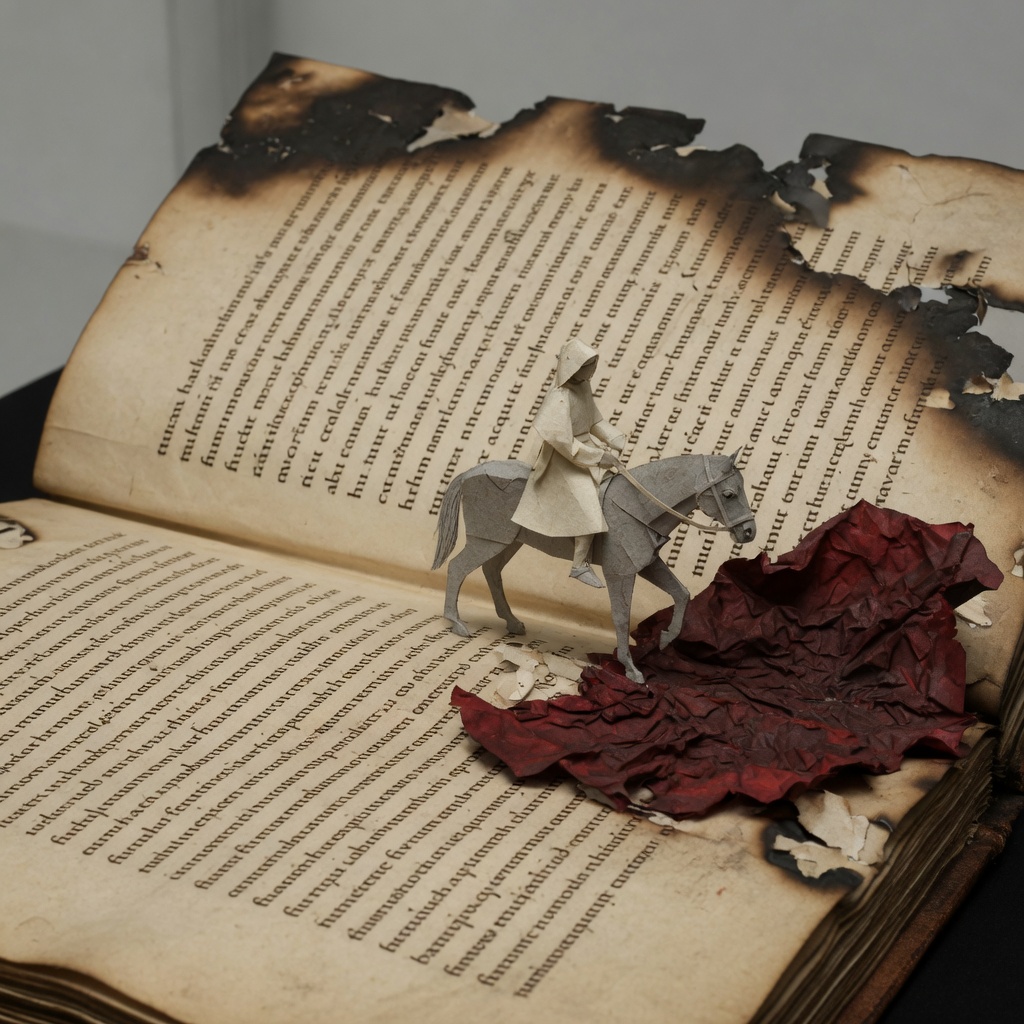
Hrôðgâr maðelode (he tô healle geóng,stôd on stapole, geseah steápne hrôfgolde fâhne and Grendles hond):"þisse ansýne al-wealdan þanc"lungre gelimpe! Fela ic lâðes gebâd,"grynna ät Grendle: â mäg god wyrcan"wunder äfter wundre, wuldres hyrde!"Þät wäs ungeâra, þät ic ænigra me"weána ne wênde tô wîdan feore"bôte gebîdan þonne blôde fâh"hûsa sêlest heoro-dreórig stôd;"weá wîd-scofen witena gehwylcne"þâra þe ne wêndon, þät hie wîde-ferhð"leóda land-geweorc lâðum beweredon
Hrothgar spoke — he had come up to the hall,stood on the step, looked at the high-arched roofgleaming with gold, and at Grendel’s hand:“For this sight, let thanks be given at onceto the All-Ruler! I have endured much evil,much grief from Grendel: God can always workwonder after wonder, guardian of glory!It was not long ago that I had stopped hopingfor any remedy, ever, for any of my sorrows,while the finest of houses stood thereblood-stained, drenched with gore —grief spread wide to every counselorwho never expected to defendthis stronghold of the people against its enemies,
"scuccum and scinnum. Nu scealc hafað"þurh drihtnes miht dæd gefremede,"þe we ealle ær ne meahton"snyttrum besyrwan. Hwät! þät secgan mäg"efne swâ hwylc mägða, swâ þone magan cende"äfter gum-cynnum, gyf heó gyt lyfað,"þät hyre eald-metod êste wære"bearn-gebyrdo. Nu ic Beówulf"þec, secg betsta, me for sunu wylle"freógan on ferhðe; heald forð tela"niwe sibbe. Ne bið þe nænigra gâd"worolde wilna, þe ic geweald häbbe."Ful-oft ic for lässan leán teohhode
against demons and spirits. Now a warrior has done,through the Lord’s own power, a deedthat none of us, for all our wisdom,could accomplish before. Whatever woman it waswho bore this young man among the tribes of men,if she is still living, may truly saythat the old Creator was gracious to herin that birth. Now, Beowulf, best of men,I will love you in my heart as a son;hold well from now on this new kinship.You will lack nothing you desirethat lies within my power to give.Very often I have given rewards for lesser deeds,
"hord-weorðunge hnâhran rince,"sæmran ät säcce. Þu þe self hafast"dædum gefremed, þät þîn dôm lyfað"âwâ tô aldre. Alwalda þec"gôde forgylde, swâ he nu gyt dyde!"Beówulf maðelode, bearn Ecgþeówes:"We þät ellen-weorc êstum miclum,"feohtan fremedon, frêcne genêðdon"eafoð uncûðes; ûðe ic swîðor,"þät þu hinc selfne geseón môste,"feónd on frätewum fyl-wêrigne!"Ic hine hrädlîce heardan clammum"on wäl-bedde wrîðan þôhte,
hoard-treasure to a lesser man,weaker in the fight. You yourself have made it so,by your own deeds, that your fame will liveforever and ever. May the Almightyrepay you with good, just as he has now!”Beowulf spoke, son of Ecgtheow:“We carried out that work of couragegladly, with a whole heart, dared the fightagainst unknown strength; I wish, even more,that you could have seen him yourself,the fiend in his trappings, exhausted to death!I meant to pin him fast, in hard grips,on his death-bed there, so that because of my hand-grip
"þät he for mund-gripe mînum scolde"licgean lîf-bysig, bûtan his lîc swice;"ic hine ne mihte, þâ metod nolde,"ganges getwæman, nô ic him þäs georne ätfealh,"feorh-genîðlan; wäs tô fore-mihtig"feónd on fêðe. Hwäðere he his folme forlêt"tô lîf-wraðe lâst weardian,"earm and eaxle; nô þær ænige swâ þeáh"feá-sceaft guma frôfre gebohte:"nô þý leng leofað lâð-geteóna"synnum geswenced, ac hyne sâr hafað"in nýd-gripe nearwe befongen,"balwon bendum: þær âbîdan sceal
he’d have to lie struggling for his life —unless his body slipped free; I could not,since God did not will it, keep himfrom getting away — I did not hold that deadly enemytightly enough; the foe was too strongin his flight. Even so, he left his hand behind himto mark his trail — his own life’s price —an arm and a shoulder; small comfortdid the wretched creature buy himself there:he will not live any longer, that hateful doer of harm,weighed down by his sins, but pain now holds himgripped fast in a hostile clutch,bound in baleful chains; there, stained with guilt,
"maga mâne fâh miclan dômes,"hû him scîr metod scrîfan wille."Þâ wäs swîgra secg, sunu Ecglâfes,on gylp-spræce gûð-geweorca,siððan äðelingas eorles cräfteofer heáhne hrôf hand sceáwedon,feóndes fingras, foran æghwylc;wäs stêde nägla gehwylc, stýle gelîcost,hæðenes hand-sporu hilde-rincesegle unheóru; æg-hwylc gecwäð,þät him heardra nân hrînan woldeîren ær-gôd, þät þäs ahlæcanblôdge beadu-folme onberan wolde.
he must wait for the great judgment,for how the shining Creator will decide his fate.”Then Ecglaf’s son was quieter after thatin his boasting about deeds of war,once the nobles, by the strength of that one earl,looked up at the hand on the high roof,the enemy’s fingers, each one laid bare;every nail was like a spur of steel,the heathen’s claw, that warrior’s talon,vile and monstrous; everyone agreedthat no hard iron, however fine,would ever touch it, would ever cut awaythat wretch’s bloody battle-hand.
Þâ wäs hâten hreðe Heort innan-weardfolmum gefrätwod: fela þæra wäswera and wîfa, þe þät wîn-reced,gest-sele gyredon. Gold-fâg scinonweb äfter wagum, wundor-sióna felasecga gehwylcum þâra þe on swylc staraðWäs þät beorhte bold tôbrocen swîðeeal inne-weard îren-bendum fäst,heorras tôhlidene; hrôf âna genäsealles ansund, þâ se aglæcafyren-dædum fâg on fleám gewand,aldres or-wêna. Nô þät ýðe byðtô befleónne (fremme se þe wille!)ac gesacan sceal sâwl-berendranýde genýdde niðða bearna
Then it was quickly ordered that insideHeorot be adorned by hand; there were many,men and women both, who decked outthat wine-hall, that guest-hall. Gold-woven hangingsshone along the walls, wonder after wonderfor everyone who looks on such things.That bright building was badly broken,though all the inside was bound fast with iron,its hinges wrenched apart; only the roof stayedwholly sound, when that monster,stained with wicked deeds, turned to flight,despairing of life. That is not easy to escape —let whoever wants to try it! — but every soul-bearer,every child of men, every dweller on earthmust, of necessity, seek out
grund-bûendra gearwe stôwe,þær his lîc-homa leger-bedde fästswefeð äfter symle. Þâ wäs sæl and mæl,þät tô healle gang Healfdenes sunu;wolde self cyning symbel þicgan.Ne gefrägen ic þâ mægðe mâran weorodeymb hyra sinc-gyfan sêl gebæran.Bugon þâ tô bence blæd-âgende,fylle gefægon. Fägere geþægonmedo-ful manig mâgas † þâraswîð-hicgende on sele þam heán,Hrôðgâr and Hrôðulf. Heorot innan wäsfreóndum âfylled; nalles fâcen-stafasÞeód-Scyldingas þenden fremedon.Forgeaf þâ Beówulfe bearn Healfdenes
the place made ready, where his body,fast in its resting-bed, will sleepafter the feast is over. Then it was the time,the season, for Healfdene’s son to go to the hall;the king himself wanted to share the feast.I never heard of a greater companybehaving better around their treasure-giver.They sat down on the benches then,those laden with glory, took their filland were glad of it. Courteously they drankmany a mead-cup, those kinsmen,strong-minded in the high hall,Hrothgar and Hrothulf. Heorot withinwas filled with friends; not at all, then,did the Scyldings practice treachery.
segen gyldenne sigores tô leáne,hroden hilte-cumbor, helm and byrnan;mære mâððum-sweord manige gesâwonbeforan beorn beran. Beówulf geþahful on flette; nô he þære feoh-gyftefor sceótendum scamigan þorfte,ne gefrägn ic freóndlîcor feówer mâdmasgolde gegyrede gum-manna felain ealo-bence ôðrum gesellan.Ymb þäs helmes hrôf heáfod-beorgewîrum bewunden walan ûtan heóld,þät him fêla lâfe frêcne ne meahtonscûr-heard sceððan, þonne scyld-frecaongeán gramum gangan scolde.Hêht þâ eorla hleó eahta mearas,
Then Healfdene’s son gave to Beowulfa golden banner as reward for victory,an embroidered war-standard, a helmet and mail-shirt;many saw that famous treasure-swordcarried before the warrior. Beowulf took the cupin the hall; he had no cause for shamebefore the soldiers over that gift of treasure —I never heard of men giving four such jewelsmore graciously, gold-adorned,on the ale-bench, one to another.Around the crown of the helmet a head-guard,wound with wire, held firm on the outside,so that well-forged blades could not harm itdangerously, when the shield-bearer had to goagainst his enemies. Then the protector of earls
fäted-hleóre, on flet teónin under eoderas; þâra ânum stôdsadol searwum fâh since gewurðad,þät wäs hilde-setl heáh-cyninges,þonne sweorda gelâc sunu Healfdenesefnan wolde; næfre on ôre lägwîd-cûðes wîg, þonne walu feóllon.And þâ Beówulfe bega gehwäðreseodor Ingwina onweald geteáh,wicga and wæpna; hêt hine wel brûcan.Swâ manlîce mære þeóden,hord-weard häleða heaðo-ræsas gealdmearum and mâdmum, swâ hý næfre man lyhð,se þe secgan wile sôð äfter rihte.
commanded eight horses, with gold-plated cheek-guards,led onto the hall floor, in under the roof;on one of them stood a saddle,skillfully worked, set with jewels —that was the high king’s own battle-seat,whenever Healfdene’s son wanted to take his partin the play of swords; the far-famed one’s couragenever failed at the front, when the slain were falling.And then the lord of the Ingwins granted Beowulfmastery of both, horses and weapons;bade him make good use of them. So noblydid that famous prince, hoard-guardian of warriors,repay the battle-onslaughts with horses and treasure,that no one who wishes to speak the plain truthwill ever find fault with it.
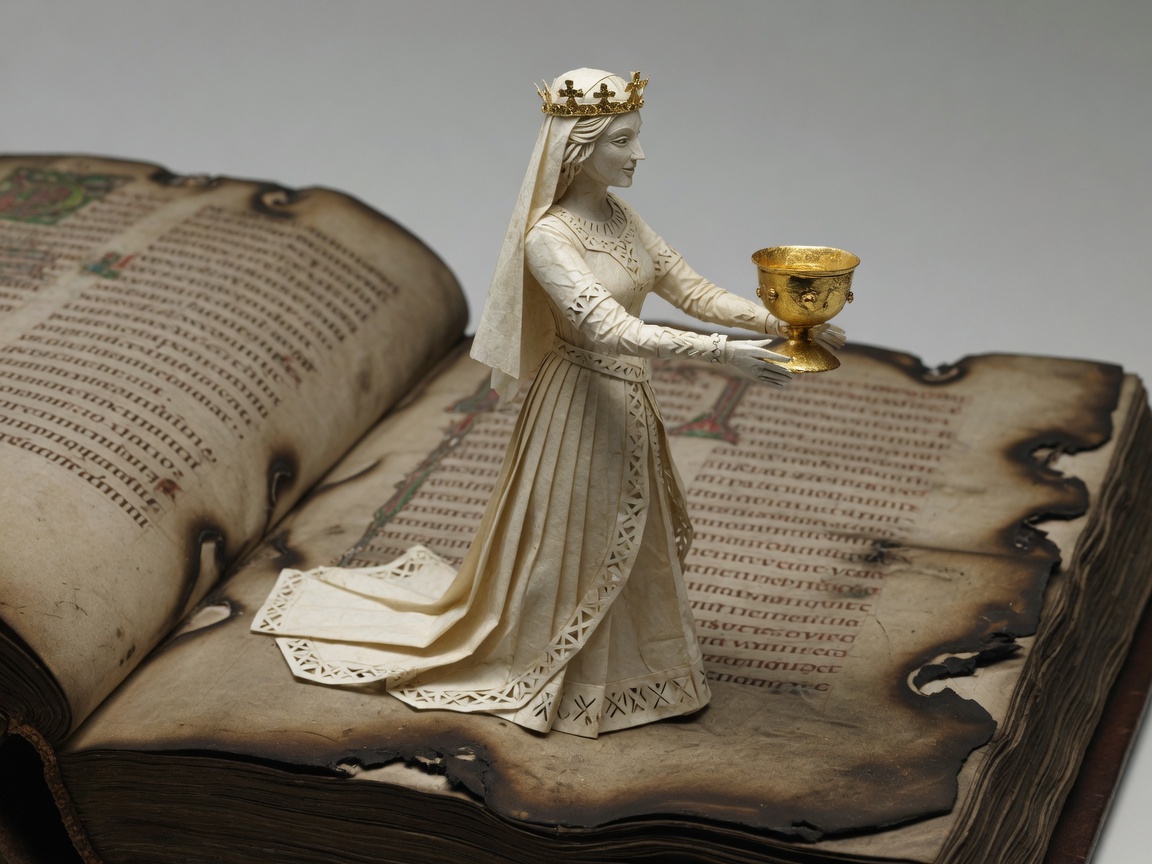
Þâ gyt æghwylcum eorla drihtenþâra þe mid Beówulfe brim-lâde teáh,on þære medu-bence mâððum gesealde,yrfe-lâfe, and þone ænne hêhtgolde forgyldan, þone þe Grendel ærmâne âcwealde, swâ he hyra mâ wolde,nefne him witig god wyrd forstôdeand þäs mannes môd: metod eallum weóldgumena cynnes, swâ he nu git dêð;forþan bið andgit æghwær sêlest,ferhðes fore-þanc! fela sceal gebîdanleófes and lâðes, se þe longe heron þyssum win-dagum worolde brûceð.Þær wäs sang and swêg samod ätgäderefore Healfdenes hilde-wîsan,
Still, to each of the earls who had madethat sea-crossing with Beowulf, on the mead-bench,he gave treasure, an heirloom, and orderedthat the one be paid for in goldwhom Grendel had wickedly killed before —as he would have killed more of them,had not wise God and that man’s own courageturned fate aside; the Ruler governedall of mankind then, as he still does now;so understanding is everywhere best,forethought of the spirit! Much shall he endure,of both good and ill, whoever lives longin these troubled days, and makes use of the world.There was song and music togetherbefore Healfdene’s battle-leader; the harp was touched,
gomen-wudu grêted, gid oft wrecen,þonne heal-gamen Hrôðgâres scôpäfter medo-bence mænan scoldeFinnes eaferum, þâ hie se fær begeat:"Häleð Healfdenes, Hnäf Scyldinga,"in Fr..es wäle feallan scolde."Ne hûru Hildeburh hêrian þorfte"Eotena treówe: unsynnum wearð"beloren leófum ät þam lind-plegan"bearnum and brôðrum; hie on gebyrd hruron"gâre wunde; þät wäs geômuru ides."Nalles hôlinga Hôces dôhtor"meotod-sceaft bemearn, syððan morgen com,"þâ heó under swegle geseón meahte"morðor-bealo mâga, þær heó ær mæste heóld
a tale often told, when Hrothgar’s hall-poetwas to give the company entertainmentalong the mead-bench, tell of Finn’s sons,of the disaster that came upon them:“The hero of the Half-Danes, Hnaef of the Scyldings,was fated to fall on the field of the Frisians.Hildeburh had no cause to praisethe good faith of the Jutes; blameless as she was,she lost her loved ones at that clash of shields —her sons, her brothers; they fell as fate decreed,wounded by spears — that was a grieving woman.Not without cause did Hoc’s daughter mournthat decree of fate, once morning cameand she could see, under the open sky,the slaughter of her kinsmen, where she had once held
"worolde wynne: wîg ealle fornam"Finnes þegnas, nemne feáum ânum,"þät he ne mehte on þäm meðel-stede"wîg Hengeste wiht gefeohtan,"ne þâ weá-lâfe wîge forþringan"þeódnes þegne; ac hig him geþingo budon,"þät hie him ôðer flet eal gerýmdon,"healle and heáh-setl, þät hie healfre geweald"wið Eotena bearn âgan môston,"and ät feoh-gyftum Folcwaldan sunu"dôgra gehwylce Dene weorðode,"Hengestes heáp hringum wenede,"efne swâ swîðe sinc-gestreónum"fättan goldes, swâ he Fresena cyn"on beór-sele byldan wolde.
the greatest joy of the world; war had takenevery one of Finn’s thanes, all but a handful,so that he could not fight the matter outwith Hengest at all, there on that field,nor drive off by force the shattered remnantfrom the prince’s own thane; but they offered terms instead —that they would clear for them another hall entirely,a hall and a high-seat, and grant themcontrol of half of it, shared with the Jutes’ sons,and that at every gift-giving Folcwalda’s sonwould honor the Danes day after day,would gladden Hengest’s troop with rings,exactly as freely, with plated gold,as he used to hearten the Frisian peoplein the beer-hall. Then on both sides
"Þâ hie getrûwedon on twâ healfa"fäste frioðu-wære; Fin Hengeste"elne unflitme âðum benemde,"þät he þâ weá-lâfe weotena dôme"ârum heolde, þät þær ænig mon"wordum ne worcum wære ne bræce,"ne þurh inwit-searo æfre gemænden,"þeáh hie hira beág-gyfan banan folgedon"þeóden-leáse, þâ him swâ geþearfod wäs:"gyf þonne Frysna hwylc frêcnan spræce"þäs morðor-hetes myndgiend wære,"þonne hit sweordes ecg syððan scolde."Âð wäs geäfned and icge gold"âhäfen of horde. Here-Scyldinga"betst beado-rinca wäs on bæl gearu;
they sealed a firm peace-pact; Finn swore to Hengest,without reservation, on oath, that he would holdthe shattered remnant in honor, by his counselors’ judgment,so that no man there, by word or deed,would break that truce, nor ever raise itthrough malicious cunning, even though, lordless,they now followed the slayer of their own ring-giver —since that was forced upon them; and if any Frisian,by reckless talk, should call to mindthat murderous hatred, then the sword’s edgewould settle it after. An oath was sworn,and ancient gold raised up from the hoard.The best of the war-Scyldings’ fighting menwas made ready on the pyre; at that funeral fireit was easy to see the blood-soaked mail-shirt,
"ät þäm âde wäs êð-gesýne"swât-fâh syrce, swýn eal-gylden,"eofer îren-heard, äðeling manig"wundum âwyrded; sume on wäle crungon."Hêt þâ Hildeburh ät Hnäfes âde"hire selfre sunu sweoloðe befästan,"bân-fatu bärnan and on bæl dôn."Earme on eaxle ides gnornode,"geômrode giddum; gûð-rinc âstâh."Wand tô wolcnum wäl-fýra mæst,"hlynode for hlâwe; hafelan multon,"ben-geato burston, þonne blôd ätspranc"lâð-bite lîces. Lîg ealle forswealg,"gæsta gîfrost, þâra þe þær gûð fornam"bega folces; wäs hira blæd scacen.
the golden boar, the iron-hard swine-image,many a nobleman ruined by wounds;some had fallen in the slaughter. Then Hildeburh orderedthat her own son be given to the flamesat Hnaef’s own pyre, his body burnedand laid on the pile. The grieving womanmourned at his shoulder, lamented in song;the warrior rose in smoke. The greatest of death-firescoiled to the clouds, roared before the barrow;heads melted, wounds burst open,and blood sprang out from the body’s cruel bite.The fire, greediest of spirits, swallowedall that war had carried off from both peoples;their glory was gone.”
"Gewiton him þâ wîgend wîca neósian,"freóndum befeallen Frysland geseón,"hâmas and heá-burh. Hengest þâ gyt"wäl-fâgne winter wunode mid Finne"ealles unhlitme; eard gemunde,"þeáh þe he ne meahte on mere drîfan"hringed-stefnan; holm storme weól,"won wið winde; winter ýðe beleác"îs-gebinde ôð þät ôðer com"geâr in geardas, swâ nu gyt dêð,"þâ þe syngales sêle bewitiað,"wuldor-torhtan weder. Þâ wäs winter scacen,"fäger foldan bearm; fundode wrecca,"gist of geardum; he tô gyrn-wräce
“Then the warriors went to seek out their homes,stripped of friends, to look on Frisia,their houses and high stronghold. Hengest still remained,through that death-stained winter, with Finn,with no choice in the matter; he thought of home,though he could not drive his ring-prowed shipout onto the sea — the water churned with storm,fought against the wind; winter locked the currentsin bonds of ice, until another yearcame round to men’s dwellings, as it still does now,those bright and glorious seasons that keep their turning.Then winter was gone, the earth’s lap grew fair;the exile grew restless, the guest eager to leavethat household; he thought more of vengeance for the wrong done him
"swîðor þôhte, þonne tô sæ-lâde,"gif he torn-gemôt þurhteón mihte,"þät he Eotena bearn inne gemunde."Swâ he ne forwyrnde worold-rædenne,"þonne him Hûnlâfing hilde-leóman,"billa sêlest, on bearm dyde:"þäs wæron mid Eotenum ecge cûðe."Swylce ferhð-frecan Fin eft begeat"sweord-bealo slîðen ät his selfes hâm,"siððan grimne gripe Gûðlaf ond Ôslâf"äfter sæ-siðe sorge mændon,"ätwiton weána dæl; ne meahte wäfre môd"forhabban in hreðre. Þâ wäs heal hroden"feónda feorum, swilce Fin slägen,
than of the sea-crossing — whether he could bring abouta hostile meeting, in which he might yetcall the sons of the Jutes to account.So he did not refuse the world’s way,when Hunlaf’s son laid the battle-lightin his lap, finest of blades: its edgeswere well known among the Jutes. In just that waycruel sword-evil came, later,to fierce Finn himself, in his own home,after Guthlaf and Oslaf, back from that sea-voyage,spoke bitterly of the grim onslaught,laid their share of sorrows at his door;his restless heart could not hold still in his breast.Then the hall ran red with the blood of enemies,
"cyning on corðre, and seó cwên numen."Sceótend Scyldinga tô scypum feredon"eal in-gesteald eorð-cyninges,"swylce hie ät Finnes hâm findan meahton"sigla searo-gimma. Hie on sæ-lâde"drihtlîce wîf tô Denum feredon,"læddon tô leódum." Leóð wäs âsungen,gleó-mannes gyd. Gamen eft âstâh,beorhtode benc-swêg, byrelas sealdonwîn of wunder-fatum. Þâ cwom Wealhþeó forðgân under gyldnum beáge, þær þâ gôdan twegensæton suhter-gefäderan; þâ gyt wäs hiera sib ätgädereæghwylc ôðrum trýwe. Swylce þær Ûnferð þyle
and Finn too was killed, the king among his troop,and the queen was taken. The Scylding warriorscarried to their ships all the household treasureof that earth-king, whatever they could findat Finn’s home of jewels, of finely worked gems.They bore that noble woman on the sea-crossingback to the Danes, brought her home to her people.”The lay was finished, the minstrel’s song.Merriment rose again, bench-noise brightened,cup-bearers poured wine from wondrous vessels.Then Wealhtheow came forward, walkingunder her golden crown, to where the two good men sat,uncle and nephew; their kinship thenwas still whole between them, each true to the other.
ät fôtum sät freán Scyldinga: gehwylc hiora his ferhðe treówde,þät he häfde môd micel, þeáh þe he his mâgum næreârfäst ät ecga gelâcum. Spräc þâ ides Scyldinga:"Onfôh þissum fulle, freó-drihten mîn,"sinces brytta; þu on sælum wes,"gold-wine gumena, and tô Geátum sprec"mildum wordum! Swâ sceal man dôn."Beó wið Geátas gläd, geofena gemyndig;"neán and feorran þu nu friðu hafast."Me man sägde, þät þu þe for sunu wolde"here-rinc habban. Heorot is gefælsod,"beáh-sele beorhta; brûc þenden þu môte"manigra mêda and þînum mâgum læf
And Unferth the spokesman sat there too,at the feet of the Scyldings’ lord: everyone trustedhis courage, though he had not always shown honortoward his own kin in the play of swords.Then the lady of the Scyldings spoke:“Take this cup, my own dear lord,giver of treasure; be joyful,gold-friend of men, and speak to the Geatswith gentle words, as a man should do!Be gracious to the Geats, mindful of your gifts;you have peace now, near and far. I am toldyou mean to take this warrior for a son.Heorot is cleansed, the bright ring-hall;
"folc and rîce, þonne þu forð scyle"metod-sceaft seón. Ic mînne can"glädne Hrôðulf, þät he þâ geogoðe wile"ârum healdan, gyf þu ær þonne he,"wine Scildinga, worold oflætest;"wêne ic, þät he mid gôde gyldan wille"uncran eaferan, gif he þät eal gemon,"hwät wit tô willan and tô worð-myndum"umbor wesendum ær ârna gefremedon."Hwearf þâ bî bence, þær hyre byre wæron,Hrêðrîc and Hrôðmund, and häleða bearn,giogoð ätgädere; þær se gôda sätBeówulf Geáta be þæm gebrôðrum twæm.
enjoy, while you may, your many rewards,and leave to your kinsmen the folk and the kingdomwhen you must go forth to meet your fate.I know my gracious Hrothulf will holdthe young men in honor, if you, friend of the Scyldings,leave this world before he does; I trusthe will repay our sons well, if he remembersall we did for his pleasure and his honorwhile he was still a child.” Then she turnedto the bench where her own sons sat,Hrethric and Hrothmund, and the sons of warriors,the young men together; there the good man sat,Beowulf of the Geats, between the two brothers.
Him wäs ful boren and freónd-laðuwordum bewägned and wunden goldêstum geeáwed, earm-hreáde twâ,hrägl and hringas, heals-beága mæstþâra þe ic on foldan gefrägen häbbe.Nænigne ic under swegle sêlran hýrdehord-mâððum häleða, syððan Hâma ätwägtô þære byrhtan byrig Brosinga mene,sigle and sinc-fät, searo-nîðas fealhEormenrîces, geceás êcne ræd.Þone hring häfde Higelâc Geáta,nefa Swertinges, nýhstan sîðe,siððan he under segne sinc ealgode,wäl-reáf werede; hyne Wyrd fornam,syððan he for wlenco weán âhsode,
A cup was brought to him, and wordsof friendship offered along with it,and twisted gold graciously given,two arm-bands, a mail-coat and rings,the greatest neck-ring I have ever heard ofon this earth. I never heard of a finerhoard-treasure among heroes under the sky,since Hama carried off, to that bright city,the Brosings’ necklace, the jewel and its setting —fled Eormenric’s cruelty, chosea lasting gain instead. Hygelac the Geathad that ring on his last venture,the nephew of Swerting, when under his bannerhe defended treasure, guarded plunderwon in battle; fate took him then,when out of pride he went looking for trouble,
fæhðe tô Frysum; he þâ frätwe wäg,eorclan-stânas ofer ýða ful,rîce þeóden, he under rande gecranc;gehwearf þâ in Francna fäðm feorh cyninges,breóst-gewædu and se beáh somod:wyrsan wîg-frecan wäl reáfedonäfter gûð-sceare, Geáta leódehreâ-wîc heóldon. Heal swêge onfêng.Wealhþeó maðelode, heó fore þäm werede spräc:"Brûc þisses beáges, Beówulf, leófa"hyse, mid hæle, and þisses hrägles neót"þeód-gestreóna, and geþeóh tela,"cen þec mid cräfte and þyssum cnyhtum wes"lâra lîðe! ic þe þäs leán geman."Hafast þu gefêred, þät þe feor and neáh
a feud with the Frisians; he wore that ornament,those precious stones, over the cup of the waves,that mighty prince; he fell beneath his shield.Then the king’s body passedinto the hands of the Franks, his breastplateand the ring together; lesser warriorsstripped the dead after that harvest of battle;the Geatish people held the field of corpses.The hall filled with noise. Wealhtheow spoke,addressed the company: “Enjoy this collar,dear Beowulf, young man, with good fortune,and make use of this mail-shirt, these treasures of the people,and prosper well; make your name knownby strength, and be kind in counselto these boys! I will remember to reward you for it.
"ealne wîde-ferhð weras ehtigað,"efne swâ sîde swâ sæ bebûgeð"windige weallas. Wes, þenden þu lifige,"äðeling eádig! ic þe an tela"sinc-gestreóna. Beó þu suna mînum"dædum gedêfe dreám healdende!"Her is æghwylc eorl ôðrum getrýwe,"môdes milde, man-drihtne hold,"þegnas syndon geþwære, þeód eal gearo:"druncne dryht-guman, dôð swâ ic bidde!"Eode þâ tô setle. Þær wäs symbla cyst,druncon wîn weras: wyrd ne cûðon,geó-sceaft grimme, swâ hit âgangen wearðeorla manegum, syððan æfen cwomand him Hrôðgâr gewât tô hofe sînum,
You have brought it about that men will honor you,far and wide, forever and ever,as widely as the ocean surroundsthe windy cliffs. Be, as long as you live,a blessed prince! I wish you well,with treasures in plenty. Be kind to my sonin your deeds, keep him in joy!Here every earl is true to the other,gentle of mind, loyal to his lord;the thanes stand united, the whole nation ready;drink has made the men hereglad to do as I ask.” Then she went to her seat.There was the finest of feasts, the men drank wine:they did not know their fate, the grim destinyalready fallen on many a warrior,
rîce tô räste. Reced weardodeunrîm eorla, swâ hie oft ær dydon:benc-þelu beredon, hit geond-bræded wearðbeddum and bolstrum. Beór-scealca sumfûs and fæge flet-räste gebeág.Setton him tô heáfdum hilde-randas,bord-wudu beorhtan; þær on bence wäsofer äðelinge ýð-gesêneheaðo-steápa helm, hringed byrne,þrec-wudu þrymlîc. Wäs þeáw hyra,þät hie oft wæron an wîg gearwe,ge ät hâm ge on herge, ge gehwäðer þâraefne swylce mæla, swylce hira man-dryhtneþearf gesælde; wäs seó þeód tilu.
once evening came and Hrothgar departedto his own chamber, the mighty one to his rest.Countless warriors guarded the hall,as they had often done before: they cleared the benches,spread them over with beds and pillows.One of the beer-drinkers, doomed and fated,settled down to his hall-rest. They set at their headstheir battle-shields, bright wood, ready;there on the bench, above each noble,plain to see, stood the towering war-helmet,the ringed mail-coat, the mighty spear-shaft.It was their custom always to be ready for war,both at home and on campaign, whichever it was,whenever need befell their lord;that was a good people.
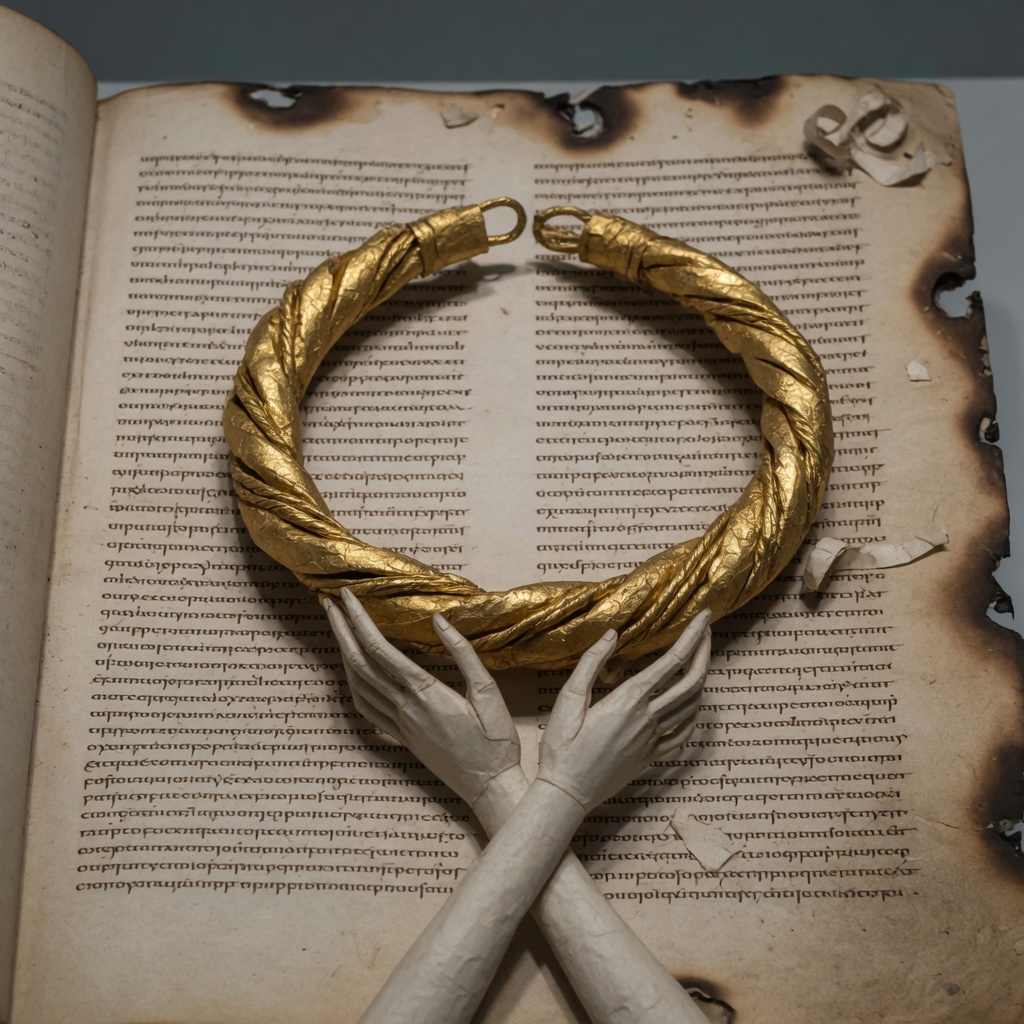
Sigon þâ tô slæpe. Sum sâre angealdæfen-räste, swâ him ful-oft gelamp,siððan gold-sele Grendel warode,unriht äfnde, ôð þät ende becwom,swylt äfter synnum. Þät gesýne wearð,wîd-cûð werum, þätte wrecend þâ gytlifde äfter lâðum, lange þrageäfter gûð-ceare; Grendles môdor,ides aglæc-wîf yrmðe gemunde,se þe wäter-egesan wunian scolde,cealde streámas, siððan Cain wearðtô ecg-banan ângan brêðer,fäderen-mæge; he þâ fâg gewât,morðre gemearcod man-dreám fleón,
Then they sank to sleep. One of them paid dearlyfor his evening’s rest, as had so often happenedto them before, once Grendel had heldthat gold-hall, done his wrong, until the end came,death for his crimes. It became known then,widely known to men, that an avenger still livedafter the hateful one, for a long while,after that grief of battle: Grendel’s mother,monstrous woman, brooded on her misery —she who had to dwell in the terrible waters,the cold streams, ever since Cain becamethe sword-slayer of his own brother,his own father’s son; he went then, marked,fled human joy, branded with murder,
wêsten warode. Þanon wôc felageósceaft-gâsta; wäs þæra Grendel sum,heoro-wearh hetelîc, se ät Heorote fandwäccendne wer wîges bîdan,þær him aglæca ät-græpe wearð;hwäðre he gemunde mägenes strenge,gim-fäste gife, þe him god sealde,and him tô anwaldan âre gelýfde,frôfre and fultum: þý he þone feónd ofercwom,gehnægde helle gâst: þâ he heán gewât,dreáme bedæled deáð-wîc seón,man-cynnes feónd. And his môdor þâ gytgîfre and galg-môd gegân woldesorh-fulne sîð, suna deáð wrecan.
and lived in the wasteland. From him wokemany doomed spirits; Grendel was one of them,hateful outcast, who at Heorot founda man lying awake, waiting for battle;there the monster came to grips with him.Yet he remembered the strength of his might,the great gift God had given him,trusted in the Ruler’s grace,his comfort and his help: by that he overcamethe enemy, brought the hell-spirit down;then off he went, humbled, stripped of joy,to see the house of death, that foe of mankind.And now his mother, greedy still,gallows-minded, wanted to go
Com þâ tô Heorote, þær Hring-Denegeond þät säld swæfun. Þâ þær sôna wearðed-hwyrft eorlum, siððan inne fealhGrendles môdor; wäs se gryre lässaefne swâ micle, swâ bið mägða cräft,wîg-gryre wîfes be wæpned-men,þonne heoru bunden, hamere geþuren,sweord swâte fâh swîn ofer helme,ecgum dyhtig andweard scireð.Þâ wäs on healle heard-ecg togen,sweord ofer setlum, sîd-rand manighafen handa fäst; helm ne gemunde,byrnan sîde, þe hine se brôga angeat.Heó wäs on ôfste, wolde ût þanon
on that grim journey, to avenge her son’s death.She came then to Heorot, where the Ring-Daneslay sleeping throughout the hall. Then at oncethere came a reversal for the nobles,once Grendel’s mother had gotten in;the terror was less by as muchas a woman’s war-strength is less than an armed man’s,when a bound blade, forged by the hammer,a sword stained with blood, hard at the edge,shears through the boar-image set on a helmet.Then in the hall the hard-edged sword was drawn,over the benches, many a broad shieldlifted fast in hand; no one thought of a helmet,of a wide mail-shirt, once the terror had them.
feore beorgan, þâ heó onfunden wäs;hraðe heó äðelinga ânne häfdefäste befangen, þâ heó tô fenne gang;se wäs Hrôðgâre häleða leófoston gesîðes hâd be sæm tweonum,rîce rand-wîga, þone þe heó on räste âbreát,blæd-fästne beorn. Näs Beówulf þær,ac wäs ôðer in ær geteohhodäfter mâððum-gife mærum Geáte.Hreám wearð on Heorote. Heó under heolfre genamcûðe folme; cearu wäs geniwodgeworden in wîcum: ne wäs þät gewrixle til,þät hie on bâ healfa bicgan scoldonfreónda feorum. Þâ wäs frôd cyning,
She was in haste, wanted to be out of there,to save her life, once she was seen;quickly she had one of the noblescaught fast in her clutches, as she made for the fen.He was, to Hrothgar, the dearest of menamong all his followers, between the two seas,a powerful shield-warrior, whom she killed at his rest,a man marked out for fame. Beowulf was not there —another lodging had been given the famous Geat,after the treasure was shared. There was uproar in Heorot.She took that famous hand, still covered in gore;grief was made new, come again to those halls:that was no good exchange, that they should have to payon both sides with the lives of friends.
hâr hilde-rinc, on hreón môde,syððan he aldor-þegn unlyfigendne,þone deórestan deádne wisse.Hraðe wäs tô bûre Beówulf fetod,sigor-eádig secg. Samod ær-dägeeode eorla sum, äðele cempaself mid gesîðum, þær se snottra bâd,hwäðre him al-walda æfre willeäfter weá-spelle wyrpe gefremman.Gang þâ äfter flôre fyrd-wyrðe manmid his hand-scale (heal-wudu dynede)þät he þone wîsan wordum hnægdefreán Ingwina; frägn gif him wæreäfter neód-laðu niht getæse.
Then the old king, the grey-haired warrior,was troubled in spirit, once he knewhis chief thane lay lifeless, knew his dearest man was dead.Quickly Beowulf was sent for, brought to the chamber,that man marked out for victory. At dawnhe went, together with his men, one of the nobles,a proud champion, himself with his companions,to where the wise king waited, wonderingwhether the Almighty would ever grant himrelief from this tale of grief. Then the battle-tried manwalked across the floor with his chosen troop(the hall-timbers echoed) until he greeted the wise one,the lord of the Ingwins; asked him whether the nighthad gone well for him, as he had hoped.
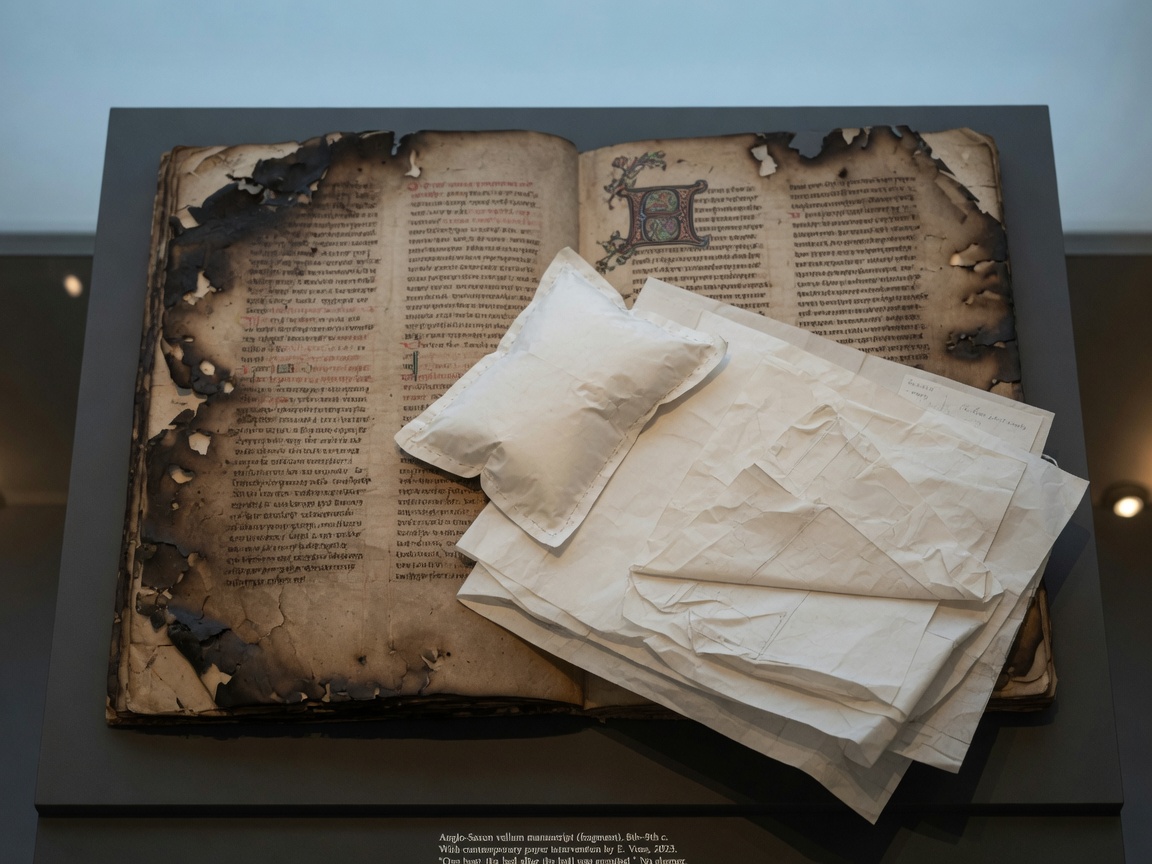
Hrôðgâr maðelode, helm Scildinga:"Ne frin þu äfter sælum! Sorh is geniwod"Denigea leódum. Deád is Äsc-here,"Yrmenlâfes yldra brôðor,"mîn rûn-wita and mîn ræd-bora,"eaxl-gestealla, þonne we on orlege"hafelan weredon, þonne hniton fêðan,"eoferas cnysedan; swylc scolde eorl wesan"äðeling ær-gôd, swylc Äsc-here wäs."Wearð him on Heorote tô hand-banan"wäl-gæst wäfre; ic ne wât hwäder"atol æse wlanc eft-sîðas teáh,"fylle gefrægnod. Heó þâ fæhðe wräc,"þe þu gystran niht Grendel cwealdest"þurh hæstne hâd heardum clammum,"forþan he tô lange leóde mîne
Hrothgar spoke, helmet of the Scyldings:“Do not ask about joy! Sorrow is renewedfor the people of the Danes. Aeschere is dead,Yrmenlaf’s elder brother,my rune-counselor and my advisor,my shoulder-companion, when we guarded our headsin the fight,when troops clashed, when helmets crashed together;such should an earl be, a good man from of old,such as Aeschere was.In Heorot he becamethe victim of some wandering slaughter-ghost’s hand;I do not know where, gloating over the feast,proud with her killing, she made her way back.She avenged that feud in which you killed Grendellast night, by violent force, with hard grips,
"wanode and wyrde. He ät wîge gecrang"ealdres scyldig, and nu ôðer cwom"mihtig mân-scaða, wolde hyre mæg wrecan,"ge feor hafað fæhðe gestæled,"þäs þe þincean mäg þegne monegum,"se þe äfter sinc-gyfan on sefan greóteð,"hreðer-bealo hearde; nu seó hand ligeð,"se þe eów wel-hwylcra wilna dohte."Ic þät lond-bûend leóde mîne"sele-rædende secgan hýrde,"þät hie gesâwon swylce twegen"micle mearc-stapan môras healdan,"ellor-gæstas: þæra ôðer wäs,"þäs þe hie gewislîcost gewitan meahton,"idese onlîcnes, ôðer earm-sceapen"on weres wästmum wräc-lâstas träd,
since he had too long worn down and wastedmy own people. He fell in the fight,forfeit of his life, and now anothermighty evil-doer has come, meaning to avengeher kinsman,and has carried this feud far,as it may well seem to many a thanewho grieves in his heart for his treasure-giver,a hard affliction of the spirit; now that hand lies stillwhich once served you in every wish you had.I have heard the land-dwellers, my own people,my hall-counselors, say this: that they had seentwo such creatures, great walkers of the borders,holding the moors, alien spirits —one of them was, as far as they could tell,in the shape of a woman; the other, misshapen,
"näfne he wäs mâra þonne ænig man ôðer,"þone on geâr-dagum Grendel nemdon"fold-bûende: nô hie fäder cunnon,"hwäðer him ænig wäs ær âcenned"dyrnra gâsta. Hie dýgel lond"warigeað, wulf-hleoðu, windige nässas,"frêcne fen-gelâd, þær fyrgen-streám"under nässa genipu niðer gewîteð,"flôd under foldan; nis þät feor heonon"mîl-gemearces, þät se mere standeð,"ofer þäm hongiað hrîmge bearwas,"wudu wyrtum fäst, wäter oferhelmað."Þær mäg nihta gehwæm nîð-wundor seón,"fýr on flôde; nô þäs frôd leofað"gumena bearna, þät þone grund wite;
walked the paths of exile in the form of a man,except he was bigger than any other man alive —the earth-dwellers, long ago, called him Grendel;they know of no father, whether one was ever born to him,of hidden spirits. They live in a secret land,wolf-slopes, windy headlands,a dangerous fen-track, where a mountain streamgoes down under the mist of the cliffs,a flood beneath the earth; it is not far from here,measured in miles, that the mere stands,over which hang groves grey with frost,a wood fast-rooted, shadowing the water.There, every night, one may see a grim wonder,fire on the flood; no one among the children of menlives wise enough to know its bottom.
"þeáh þe hæð-stapa hundum geswenced,"heorot hornum trum holt-wudu sêce,"feorran geflýmed, ær he feorh seleð,"aldor on ôfre, ær he in wille,"hafelan hýdan. Nis þät heóru stôw:"þonon ýð-geblond up âstîgeð"won tô wolcnum, þonne wind styreð"lâð gewidru, ôð þät lyft drysmað,"roderas reótað. Nu is ræd gelang"eft ät þe ânum! Eard git ne const,"frêcne stôwe, þær þu findan miht"sinnigne secg: sêc gif þu dyrre!"Ic þe þâ fæhðe feó leánige,"eald-gestreónum, swâ ic ær dyde,"wundnum golde, gyf þu on weg cymest."
Even the heath-stalker, hunted by hounds,the stag strong in his antlers, seeking the forest,chased from far off, will give up his lifeon the shore, will give up his spirit,before he will go in there to hide his head.That is no wholesome place: from it the churning wavesrise up dark to the clouds, when the wind stirshateful storms, until the sky turns thickand the heavens weep. Now, once again,all help depends on you alone! You do not yet knowthat place, that dangerous spot, where you might findthat creature stained with sin: seek it, if you dare!I will pay you for that feud with treasure,with ancient gold, as I did before,with twisted rings, if you come back alive.”
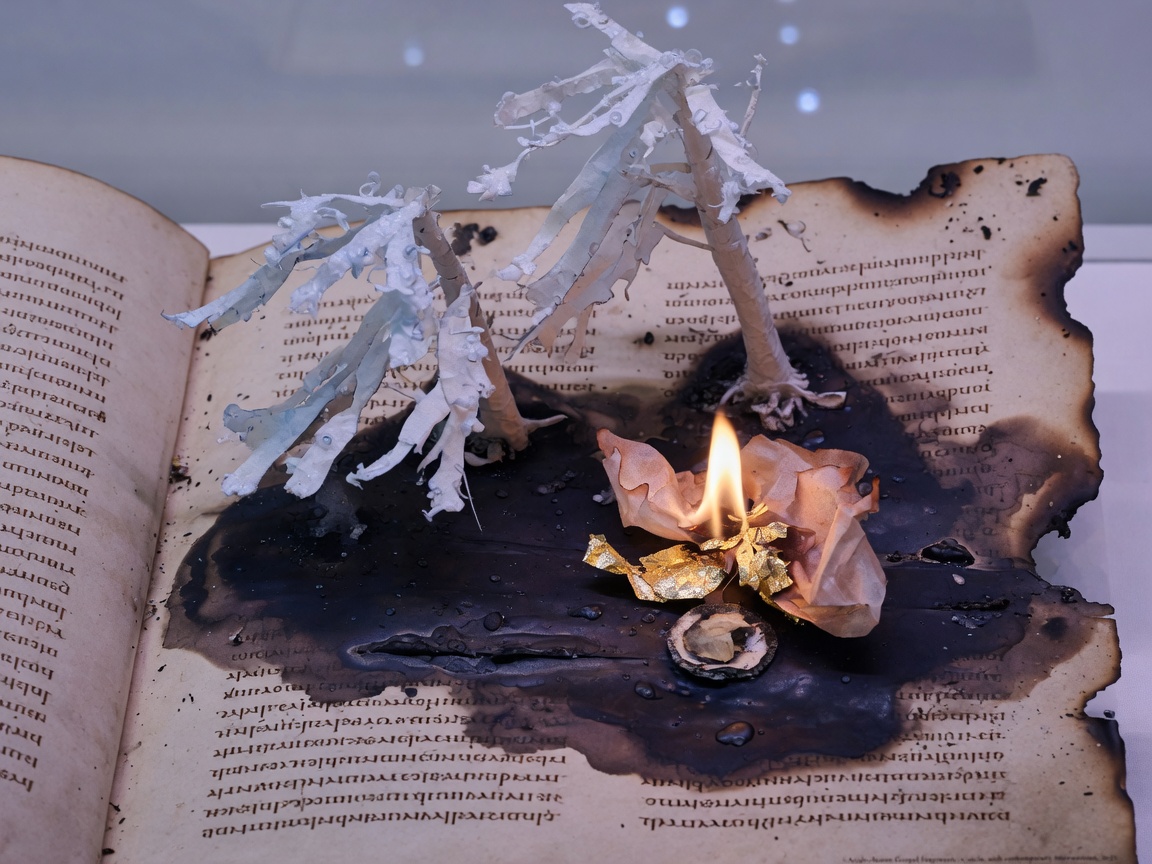
Beówulf maðelode, bearn Ecgþeówes:"Ne sorga, snotor guma! sêlre bið æghwæm,"þät he his freónd wrece, þonne he fela murne;"ûre æghwylc sceal ende gebîdan"worolde lîfes; wyrce se þe môte"dômes ær deáðe! þät bið driht-guman"unlifgendum äfter sêlest."Ârîs, rîces weard; uton hraðe fêran,"Grendles mâgan gang sceáwigan!"Ic hit þe gehâte: nô he on helm losað,"ne on foldan fäðm, ne on fyrgen-holt,"ne on gyfenes grund, gâ þær he wille."Þys dôgor þu geþyld hafa"weána gehwylces, swâ ic þe wêne tô!"Âhleóp þâ se gomela, gode þancode,
Beowulf spoke, son of Ecgtheow:“Do not grieve, wise man! It is better for everyoneto avenge his friend than to mourn him too much;each of us must face the endof this world’s life; let whoever canwin glory before death! That is best, afterward,for a warrior once he is gone. Rise up, guardian of the kingdom;let us go quickly, track downthe trail of Grendel’s kinswoman!I promise you this: she will not escape into shelter —not into the earth’s embrace, not into mountain-forest,not into the depths of the sea, wherever she goes.Bear with patience, today, each of your sorrows,as I hope and trust you will!” The old man leapt up then,thanked God, the mighty Lord,
mihtigan drihtne, þäs se man gespräc.Þâ wäs Hrôðgâre hors gebæted,wicg wunden-feax. Wîsa fengelgeatolîc gengde; gum-fêða stôplind-häbbendra. Lâstas wæronäfter wald-swaðum wîde gesýne,gang ofer grundas; gegnum fôr þâofer myrcan môr, mago-þegna bärþone sêlestan sâwol-leásne,þâra þe mid Hrôðgâre hâm eahtode.Ofer-eode þâ äðelinga bearnsteáp stân-hliðo, stîge nearwe,enge ân-paðas, un-cûð gelâd,neowle nässas, nicor-hûsa fela;he feára sum beforan gengde
for what the man had spoken. Then a horse was bridledfor Hrothgar, a steed with braided mane.The wise king rode out in splendor; a companyof shield-bearing footmen marched beside him.Her tracks were plain to see along the forest paths,her way across the ground; straight on she had goneover the darkened moor, carried off, lifeless,the best of the retainers who had once thought with Hrothgarfor the good of his home. Then the sons of nobleswent on across steep stone-slopes,narrow paths, tight single-file trails,unknown ways, sheer headlands,many a den of water-monsters; he went aheadwith a handful of wise men, to study the ground,until all at once he found mountain trees
wîsra monna, wong sceáwian,ôð þät he færinga fyrgen-beámasofer hârne stân hleonian funde,wyn-leásne wudu; wäter under stôddreórig and gedrêfed. Denum eallum wäs,winum Scyldinga, weorce on môde,tô geþolianne þegne monegum,oncýð eorla gehwæm, syððan Äsc-hereson þam holm-clife hafelan mêtton.Flôd blôde weól (folc tô sægon)hâtan heolfre. Horn stundum songfûslîc fyrd-leóð. Fêða eal gesät;gesâwon þâ äfter wätere wyrm-cynnes fela,sellîce sæ-dracan sund cunnian,swylce on näs-hleoðum nicras licgean,
leaning out over a grey stone,a joyless wood; the water stood beneath,bloody and churned. It was a hardship of spiritto every one of the Danes, to the Scyldings’ friends,to many a thane, an affliction for every noble,when they came upon Aeschere’s headthere on the sea-cliff. The water welled with blood —the troop looked on — with hot gore.At times a horn sang out an eager battle-song.The whole company sat down. They saw then in the watermany kinds of serpents, strange sea-dragonstesting the currents, and water-monsterslying along the headland-slopes, the sort that often,in the hour before noon, keep to their sorrowful courseover the sail-road, serpents and wild beasts;
þâ on undern-mæl oft bewitigaðsorh-fulne sîð on segl-râde,wyrmas and wil-deór; hie on weg hruronbitere and gebolgne, bearhtm ongeâton,gûð-horn galan. Sumne Geáta leódof flân-bogan feores getwæfde,ýð-gewinnes, þät him on aldre stôdhere-stræl hearda; he on holme wässundes þe sænra, þe hyne swylt fornam.Hräðe wearð on ýðum mid eofer-spreótumheoro-hôcyhtum hearde genearwod,nîða genæged and on näs togenwundorlîc wæg-bora; weras sceáwedongryrelîcne gist. Gyrede hine Beówulfeorl-gewædum, nalles for ealdre mearn:
they rushed away, bitter and enraged,once they heard the noise, the war-horn’s call.One of them a Geatish man cut off from lifewith an arrow from his bow, from his struggle in the water,so that the hard war-shaft stood fast in his vitals;he was slower at swimming after that,once death had taken him. Quickly he was hard-pressedin the waves with barbed boar-spears,savagely attacked and hauled up onto the headland,that strange creature of the waves; the men studiedthe terrible visitor. Beowulf armed himselfin a warrior’s gear, gave no thought at all to his life;his war-shirt, hand-woven, broad and finely made,had to test the water — the one that knewhow to guard his body, so that no battle-grip
scolde here-byrne hondum gebroden,sîd and searo-fâh, sund cunnian,seó þe bân-côfan beorgan cûðe,þät him hilde-grâp hreðre ne mihte,eorres inwit-feng, aldre gesceððan;ac se hwîta helm hafelan werede,se þe mere-grundas mengan scolde,sêcan sund-gebland since geweorðad,befongen freá-wrâsnum, swâ hine fyrn-dagumworhte wæpna smið, wundrum teóde,besette swîn-lîcum, þät hine syððan nôbrond ne beado-mêcas bîtan ne meahton.Näs þät þonne mætost mägen-fultuma,þät him on þearfe lâh þyle Hrôðgâres;wäs þäm häft-mêce Hrunting nama,
could reach his chest, no hostile clutchof an angry foe could do him harm;and the pale helmet guarded his head,the one that was to stir the sea-bottoms,brave the churning water, set with treasure,ringed round with a princely chain,just as, long ago, the weapon-smith had made it,wrought it with wonder, set it with boar-figures,so that no blade, no battle-sword, could ever afterbite through it. And that was not the leastof the aids to his strength: Hrothgar’s own spokesmanhad lent him, at his need, a hafted swordnamed Hrunting, one of the foremostof ancient treasures; its blade was iron,
þät wäs ân foran eald-gestreóna;ecg wäs îren âter-teárum fâh,âhyrded heaðo-swâte; næfre hit ät hilde ne swâcmanna ængum þâra þe hit mid mundum bewand,se þe gryre-sîðas gegân dorste,folc-stede fâra; näs þät forma sîð,þät hit ellen-weorc äfnan scolde.Hûru ne gemunde mago Ecglâfeseafoðes cräftig, þät he ær gespräcwîne druncen, þâ he þäs wæpnes onlâhsêlran sweord-frecan: selfa ne dorsteunder ýða gewin aldre genêðan,driht-scype dreógan; þær he dôme forleás,ellen-mærðum. Ne wäs þäm ôðrum swâ,syððan he hine tô gûðe gegyred häfde.
stained with poison, tempered in battle-blood;it had never once failed, in a fight, any manwho took it in his hands, who daredto go out on terrible ventures, onto the field of foes;this was not the first time it had had to performa deed of courage. Indeed Ecglaf’s son,for all his strength, did not rememberwhat he had said before, drunk on wine,when he lent that weapon to a better swordsman:he himself did not dare risk his own lifeunder the churn of the waves, performa deed of noble courage; there he lost his glory,his name for bravery. It was not sowith the other one, once he had armed himself for battle.
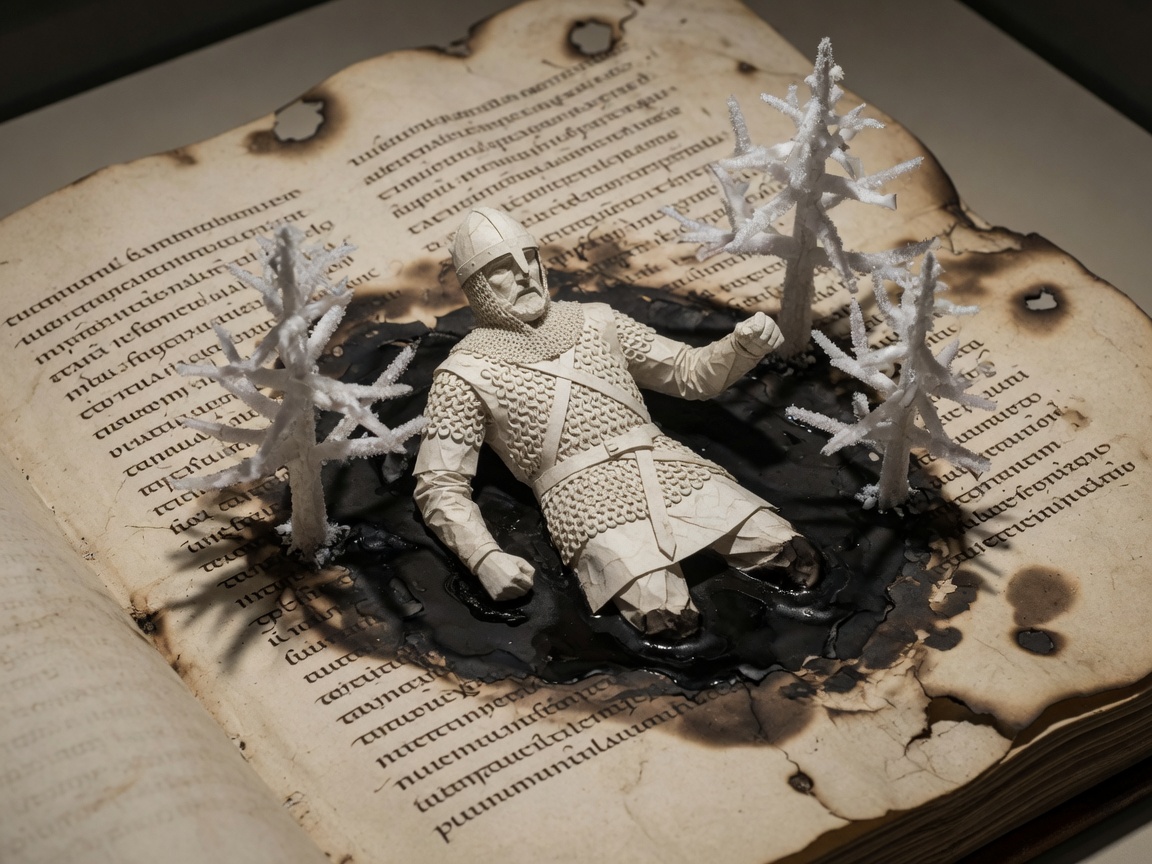
Beówulf maðelode, bearn Ecgþeówes:"geþenc nu, se mæra maga Healfdenes,"snottra fengel, nu ic eom sîðes fûs,"gold-wine gumena, hwät wit geó spræcon,"gif ic ät þearfe þînre scolde"aldre linnan, þät þu me â wære"forð-gewitenum on fäder stäle;"wes þu mund-bora mînum mago-þegnum,"hond-gesellum, gif mec hild nime:"swylce þu þâ mâdmas, þe þu me sealdest,"Hrôðgâr leófa, Higelâce onsend."Mäg þonne on þäm golde ongitan Geáta dryhten,"geseón sunu Hrêðles, þonne he on þät sinc starað,"þät ic gum-cystum gôdne funde
Beowulf spoke, son of Ecgtheow:“Consider now, famous kinsman of Healfdene,wise prince, now that I am ready to set out,gold-friend of men, what we two agreed before:if, in serving you, I should lose my life,that you would always stand to me, once I was gone,in a father’s place; be a guardianto my young retainers, my hand-picked men,if battle takes me; likewise the treasuresyou have given me, dear Hrothgar,send on to Hygelac. Then the lord of the Geatsmay see from that gold, the son of Hrethel may perceive,when he looks at the treasure, that I founda ring-giver good beyond measure,enjoyed him while I could. And let Unferth keep
"beága bryttan, breác þonne môste."And þu Ûnferð læt ealde lâfe,"wrätlîc wæg-sweord wîd-cûðne man"heard-ecg habban; ic me mid Hruntinge"dôm gewyrce, oððe mec deáð nimeð."Äfter þæm wordum Weder-Geáta leódêfste mid elne, nalas andswarebîdan wolde; brim-wylm onfênghilde-rince. Þâ wäs hwîl däges,ær he þone grund-wong ongytan mehte.Sôna þät onfunde, se þe flôda begongheoro-gîfre beheóld hund missera,grim and grædig, þät þær gumena sumäl-wihta eard ufan cunnode.
my old heirloom, that wondrous wave-patterned sword,that widely-known man, that hard-edged blade;with Hrunting I mean to win myself glory,or death will take me.” After these wordsthe prince of the Weder-Geats hurried on with courage,would not wait at all for an answer;the churning water swallowed the battle-warrior.It was the length of a day before he could make outthe bottom of it. Soon she discovered,she who had held that stretch of water,savage with bloodlust, for fifty years,grim and greedy, that some man from abovewas exploring the dwelling-place of monsters.She grasped toward him then, seized the warriorin her terrible claws; but even so
Grâp þâ tôgeánes, gûð-rinc gefêngatolan clommum; nô þý ær in gescôdhâlan lîce: hring ûtan ymb-bearh,þät heó þone fyrd-hom þurh-fôn ne mihte,locene leoðo-syrcan lâðan fingrum.Bär þâ seó brim-wylf, þâ heó tô botme com,hringa þengel tô hofe sînum,swâ he ne mihte nô (he þäs môdig wäs)wæpna gewealdan, ac hine wundra þäs felaswencte on sunde, sæ-deór monighilde-tuxum here-syrcan bräc,êhton aglæcan. Þâ se eorl ongeat,þät he in nið-sele nât-hwylcum wäs,þær him nænig wäter wihte ne sceðede,
she did not injure his unbroken body:the ring-mail guarded him from outside,so that she could not force her way through that war-garment,the locked limb-armor, with her hostile fingers.Then the sea-wolf bore him, once she reached the bottom,the ring-prince, down to her own den,so that, brave as he was, he could notwield any weapon at all; but too many horrorsbeset him as he sank, many a sea-beasttore at his mail-shirt with battle-tusks,monsters hounded him. Then the earl sawthat he was in some kind of hostile hallwhere no water at all could touch him,where the roofed chamber kept off
ne him for hrôf-sele hrînan ne mehtefær-gripe flôdes: fýr-leóht geseah,blâcne leóman beorhte scînan.Ongeat þâ se gôda grund-wyrgenne,mere-wîf mihtig; mägen-ræs forgeafhilde-bille, hond swenge ne ofteáh,þät hire on hafelan hring-mæl âgôlgrædig gûð-leóð. Þâ se gist onfand,þät se beado-leóma bîtan nolde,aldre sceððan, ac seó ecg geswâcþeódne ät þearfe: þolode ær felahond-gemôta, helm oft gescär,fæges fyrd-hrägl: þät wäs forma sîðdeórum mâðme, þät his dôm âläg.
the sudden grip of the flood; he saw firelight,a bright glow shining. Then the good man made outthat mighty mere-woman; he swung his battle-swordwith all his strength, did not hold back the stroke,so that the ring-marked blade sang outa greedy war-song against her head.Then the stranger found that the battle-lightwould not bite, would not touch her life,but the edge failed the prince in his need:it had endured many hand-fights before,had often sheared through helmets,the war-coat of the doomed; that was the first timefor that precious blade that its glory had failed.He was resolute all the same, no slower in courage,
Eft wäs ân-ræd, nalas elnes lät,mærða gemyndig mæg Hygelâces;wearp þâ wunden-mæl wrättum gebundenyrre oretta, þät hit on eorðan läg,stîð and stýl-ecg; strenge getrûwode,mund-gripe mägenes. Swâ sceal man dôn,þonne he ät gûðe gegân þenceðlongsumne lof, nâ ymb his lîf cearað.Gefêng þâ be eaxle (nalas for fæhðe mearn)Gûð-Geáta leód Grendles môdor;brägd þâ beadwe heard, þâ he gebolgen wäs,feorh-genîðlan, þät heó on flet gebeáh.Heó him eft hraðe and-leán forgealdgrimman grâpum and him tôgeánes fêng;
mindful of fame, that kinsman of Hygelac;the angry warrior flung away that sword then,patterned and jewel-set, so that it lay on the ground,hard and steel-edged; he trusted his strength,the might of his own bare grip. So should a man dowhenever he means to win lasting praisein battle; he thinks nothing of his life.Then he seized her by the shoulder — he had no regretfor the feud — the lord of the War-Geatscaught hold of Grendel’s mother; hardened for the fight,his anger up, he swung his mortal enemyso that she fell to the ground. She paid him backjust as quickly, with her savage claws,and grabbed for him; then the strongest of warriors,
oferwearp þâ wêrig-môd wîgena strengest,fêðe-cempa, þät he on fylle wearð.Ofsät þâ þone sele-gyst and hyre seaxe geteáh,brâd and brûn-ecg wolde hire bearn wrecan,ângan eaferan. Him on eaxle lägbreóst-net broden; þät gebearh feore,wið ord and wið ecge ingang forstôd.Häfde þâ forsîðod sunu Ecgþeówesunder gynne grund, Geáta cempa,nemne him heaðo-byrne helpe gefremede,here-net hearde, and hâlig godgeweóld wîg-sigor, witig drihten;rodera rædend hit on ryht gescêd,ýðelîce syððan he eft âstôd.
weary in spirit, the fighter on his feet,stumbled, and went down. Then she sat astridethat hall-guest and drew her knife,broad and bright-edged; she meant to avenge her son,her one and only child. On his shoulderlay his woven breast-armor; that saved his life,kept out the point and the edge.Ecgtheow’s son would have died there then,under the wide earth, that champion of the Geats,had not his battle-shirt come to his aid,that hard war-net, and had not holy Godbrought about victory in that fight — the wise Lord;the ruler of the heavens decided it rightly and easily,once he stood up again.
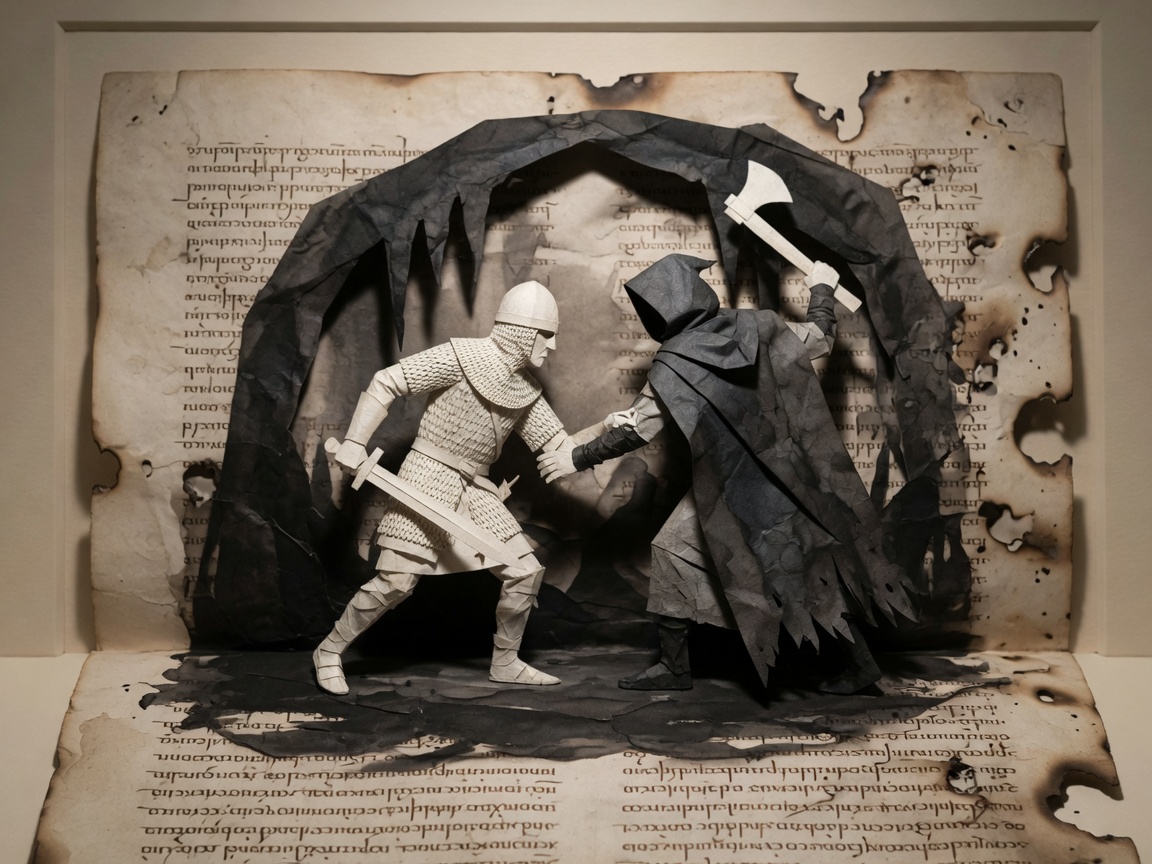
Geseah þâ on searwum sige-eádig bil,eald sweord eotenisc ecgum þyhtig,wîgena weorð-mynd: þät wäs wæpna cyst,bûton hit wäs mâre þonne ænig mon ôðertô beadu-lâce ätberan meahtegôd and geatolîc giganta geweorc.He gefêng þâ fetel-hilt, freca Scildinga,hreóh and heoro-grim hring-mæl gebrägd,aldres orwêna, yrringa slôh,þät hire wið halse heard grâpode,bân-hringas bräc, bil eal þurh-wôdfægne flæsc-homan, heó on flet gecrong;sweord wäs swâtig, secg weorce gefeh.Lixte se leóma, leóht inne stôd,efne swâ of hefene hâdre scîneðrodores candel. He äfter recede wlât,
Then he saw among the war-gear a blade blessed with victory,an old sword made by giants, strong at the edge,an honor for warriors; that was the choicest of weapons,except that it was bigger than any other mancould ever carry into battle-play,good and splendid, the work of giants.He seized the hilt then, that champion of the Scyldings,fierce and battle-grim, drew the ring-marked sword,despairing of his own life, struck in fury,so that it caught her hard around the neck,broke through the rings of bone; the blade went cleanthrough her doomed body, and she fell to the floor;the sword was bloody, the man rejoiced in his work.The gleam shone out, a light stood within,just as the sky’s own candle shines clear from heaven.He looked around the hall,
hwearf þâ be wealle, wæpen hafenadeheard be hiltum Higelâces þegn,yrre and ân-ræd. Näs seó ecg fracodhilde-rince, ac he hraðe woldeGrendle forgyldan gûð-ræsa felaþâra þe he geworhte tô West-Denumoftor micle þonne on ænne sîð,þonne he Hrôðgâres heorð-geneátasslôh on sweofote, slæpende frätfolces Denigea fýf-tyne menand ôðer swylc ût of-ferede,lâðlîcu lâc. He him þäs leán forgeald,rêðe cempa, tô þäs þe he on räste geseahgûð-wêrigne Grendel licgan,aldor-leásne, swâ him ær gescôdhild ät Heorote; hrâ wîde sprong,
then turned along the wall,Hygelac’s thane raised the weapon,hard by the hilt, angry and resolute.The edge was not wasted on that battle-warrior;he wanted, quickly, to repay Grendelfor the many onslaughts he had madeon the West-Danes, far more than once,when he killed Hrothgar’s own hearth-companions in their sleep,devoured sleeping men, fifteen of the Danish people,and carried off just as many more,a hateful plunder. He paid him back for that,that fierce champion, so that now he saw Grendellying on his own resting-place,worn out by battle,lifeless, just as the fight at Heorothad wounded him before; his body burst wide open,
syððan he äfter deáðe drepe þrowade,heoro-sweng heardne, and hine þâ heáfde becearf,Sôna þät gesâwon snottre ceorlas,þâ þe mid Hrôðgâre on holm wliton,þät wäs ýð-geblond eal gemenged,brim blôde fâh: blonden-feaxegomele ymb gôdne ongeador spræcon,þät hig þäs äðelinges eft ne wêndon,þät he sige-hrêðig sêcean cômemærne þeóden; þâ þäs monige gewearð,þät hine seó brim-wylf âbroten häfde.Þâ com nôn däges. Näs ofgeâfonhwate Scyldingas; gewât him hâm þonongold-wine gumena. Gistas sêtan,môdes seóce, and on mere staredon,wiston and ne wêndon, þät hie heora wine-drihten
once he took the blow after death,a hard sword-stroke, and Beowulf struck off his head.At once the wise men who watched the water’s surfacewith Hrothgar saw that the churning waveswere all stirred together, the water stained with blood:the grey-haired ones, old men, spoke it over among themselves,said they did not expect that prince to come back,that he would return in triumph to seek outtheir famous lord;it seemed certain to manythat the sea-wolf had destroyed him. The ninth hour of the daycame then. The bold Scyldings gave up the headland;the gold-friend of men went home from there.The strangers sat,sick at heart, and stared at the mere;they wished, though they no longer expected,
selfne gesâwon. Þâ þät sweord onganäfter heaðo-swâte hilde-gicelumwîg-bil wanian; þät wäs wundra sum,þät hit eal gemealt îse gelîcost,þonne forstes bend fäder onlæteð,onwindeð wäl-râpas, se þe geweald hafaðsæla and mæla; þät is sôð metod.Ne nom he in þæm wîcum, Weder-Geáta leód,mâðm-æhta mâ, þêh he þær monige geseah,bûton þone hafelan and þâ hilt somod,since fâge; sweord ær gemealt,forbarn broden mæl: wäs þät blôd tô þäs hât,ættren ellor-gæst, se þær inne swealt.Sôna wäs on sunde, se þe ær ät säcce gebâdwîg-hryre wrâðra, wäter up þurh-deáf;wæron ýð-gebland eal gefælsod,
to see their beloved lord again with their own eyes.Then that sword, the war-blade, began to waste awayin battle-icicles, from the blood, from the battle-sweat;it was a great wonder that it melted entirely,most like ice, when the Father loosensthe bonds of frost, unwinds the water’s ropes,he who holds power over times and seasons;that is the true Measurer. He took nothing moreof treasure from that dwelling, the lord of the Weder-Geats,though he saw plenty there, except the headand the hilt together, bright with gems;the blade itself had already melted,that patterned sword had burned away;the blood was too hot,the poisonous alien spirit that had died within it.Soon he was swimming, he who had lived through
eácne eardas, þâ se ellor-gâstoflêt lîf-dagas and þâs lænan gesceaft.Com þâ tô lande lid-manna helmswîð-môd swymman, sæ-lâce gefeah,mägen-byrðenne þâra þe he him mid häfde.Eodon him þâ tôgeánes, gode þancodon,þryðlîc þegna heáp, þeódnes gefêgon,þäs þe hi hyne gesundne geseón môston.Þâ wäs of þäm hrôran helm and byrnelungre âlýsed: lagu drusade,wäter under wolcnum, wäl-dreóre fâg.Fêrdon forð þonon fêðe-lâstumferhðum fägne, fold-weg mæton,cûðe stræte; cyning-balde menfrom þäm holm-clife hafelan bæron
the downfall of his enemies in battle,rose up through the water; the churning waves were cleansedentirely, the wide expanses, once the alien spiritgave up her life-days and this fleeting world.Then the protector of seamen came swimming to land,strong in spirit, glad of his sea-plunder,the great burden he had brought with him.They went toward him then, thanked God,that splendid company of thanes, rejoiced in their prince,that they were allowed to see him safe and sound.Then from that strong man helmet and mail-coatwere quickly loosened: the mere lay quiet,the water under the clouds, stained with battle-blood.They went forward from there along their own footprints,glad at heart, measured the earth-path,
earfoðlîce heora æghwäðrumfela-môdigra: feówer scoldonon ðäm wäl-stenge weorcum geferiantô þäm gold-sele Grendles heáfod,ôð þät semninga tô sele cômonfrome fyrd-hwate feówer-tyneGeáta gongan; gum-dryhten midmôdig on gemonge meodo-wongas träd.Þâ com in gân ealdor þegna,dæd-cêne mon dôme gewurðad,häle hilde-deór. Hrôðgâr grêtan:Þâ wäs be feaxe on flet borenGrendles heáfod, þær guman druncon,egeslîc for eorlum and þære idese mid:wlite-seón wrätlîc weras onsâwon.
the road they knew; kingly-bold mencarried the head from the sea-cliff, and it was hard workfor every one of them, brave as they were:four of them had to carry, with real effort,Grendel’s head on a spear-shaft to the gold-hall,until, at last, fourteen brave and battle-ready Geatscame walking to the building; their lord walked among them,proud amid the throng, treading the meadow-paths.Then in walked the leader of the thanes,a man bold in deeds, honored for glory,a hero brave in battle, to greet Hrothgar.Then Grendel’s head was carried by the haironto the floor, where the men were drinking,a terrible sight before the nobles, and before the lady too:the warriors looked on a wondrous thing.
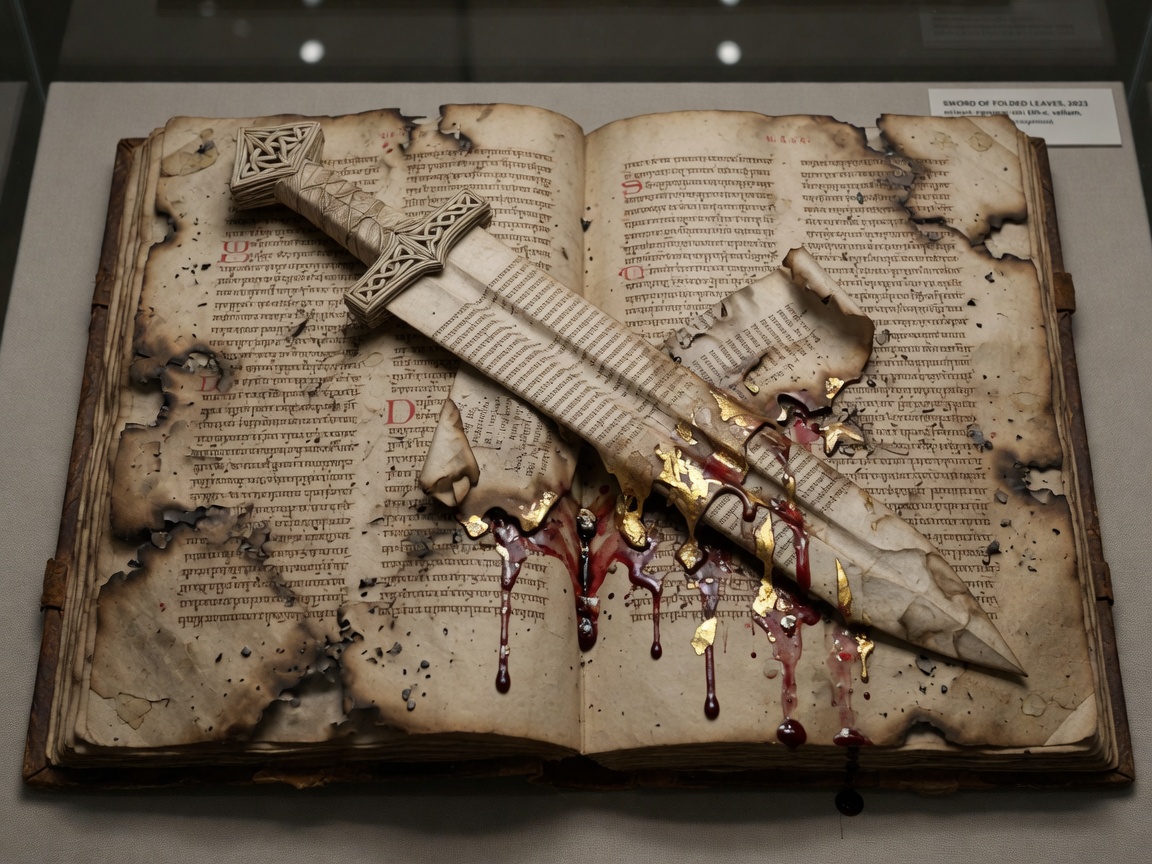
Beówulf maðelode, bearn Ecgþeówes:"Hwät! we þe þâs sæ-lâc, sunu Healfdenes,"leód Scyldinga, lustum brôhton,"tîres tô tâcne, þe þu her tô lôcast."Ic þät unsôfte ealdre gedîgde:"wîge under wätere weorc genêðde"earfoðlîce, ät-rihte wäs"gûð getwæfed, nymðe mec god scylde."Ne meahte ic ät hilde mid Hruntinge"wiht gewyrcan, þeáh þät wæpen duge,"ac me geûðe ylda waldend,"þät ic on wage geseah wlitig hangian"eald sweord eácen (oftost wîsode"winigea leásum) þät ic þý wæpne gebräd."Ofslôh þâ ät þære säcce (þâ me sæl âgeald)"hûses hyrdas. Þâ þät hilde-bil
Beowulf spoke, son of Ecgtheow:“Listen! We have brought you gladly, son of Healfdene,prince of the Scyldings, this plunder from the seathat you look on now, as a token of glory.I did not come through that easily, with my life:I risked the deed under the water,carried it out with difficulty; the fightwas very nearly finished, had God not shielded me.I could accomplish nothing in that struggle with Hrunting,good weapon though it is, but the ruler of mengranted that I should see, hanging on the wall,a mighty old sword, splendid to look at —he often guides the friendless —so that I drew that weapon.Then, in that fight, when the chance was given me,I killed the guardians of that house.
"forbarn, brogden mæl, swâ þät blôd gesprang,"hâtost heaðo-swâta: ic þät hilt þanan"feóndum ätferede; fyren-dæda wräc,"deáð-cwealm Denigea, swâ hit gedêfe wäs."Ic hit þe þonne gehâte, þät þu on Heorote môst"sorh-leás swefan mid þînra secga gedryht,"and þegna gehwylc þînra leóda,"duguðe and iogoðe, þät þu him ondrædan ne þearft,"þeóden Scyldinga, on þâ healfe,"aldor-bealu eorlum, swâ þu ær dydest."Þâ wäs gylden hilt gamelum rince.hârum hild-fruman, on hand gyfen,enta ær-geweorc, hit on æht gehwearfäfter deófla hryre Denigea freán,wundor-smiða geweorc, and þâ þâs worold ofgeafgrom-heort guma, godes andsaca,
Then the battle-sword burned up, that patterned blade,as the blood sprang out, hottest of battle-sweats;I carried the hilt away from there, away from my enemies;I avenged those wicked deeds, that slaughter of the Danes,as it was fitting to do. I promise you nowthat you may sleep in Heorot free of sorrowwith your company of men, and every one of your thanes,the greater and the lesser alike,and that you need not fear,from that quarter, prince of the Scyldings,any deadly harm to your nobles, as you had to before.”Then the golden hilt was placed in the handof the old warrior, the grey-haired battle-leader,that ancient work of giants; it passed into the keeping,after the downfall of devils, of the lord of the Danes,the work of a wondrous smith;
morðres scyldig, and his môdor eác;on geweald gehwearf worold-cyningaþäm sêlestan be sæm tweónumþâra þe on Sceden-igge sceattas dælde.Hrôðgâr maðelode, hylt sceáwode,ealde lâfe, on þäm wäs ôr writenfyrn-gewinnes: syððan flôd ofslôh,gifen geótende, giganta cyn,frêcne gefêrdon: þät wäs fremde þeódêcean dryhtne, him þäs ende-leánþurh wäteres wylm waldend sealde.Swâ wäs on þæm scennum scîran goldesþurh rûn-stafas rihte gemearcod,geseted and gesæd, hwâm þät sweord geworht,îrena cyst ærest wære,wreoðen-hilt and wyrm-fâh. þâ se wîsa spräc
and once that hostile-hearted one,God’s own enemy, guilty of murder,had given up this world, and his mother too,it passed into the hands of the best of worldly kingsbetween the two seas,of those who ever dealt out treasurein the Danish lands. Hrothgar spoke, looked at the hilt,that ancient heirloom, on which was writtenthe beginning of an old conflict, from when the flood,the pouring sea, destroyed the race of giants —they suffered terribly for it; that was a peopleestranged from the eternal Lord;the Ruler gave themtheir final payment through the surging water.So it was, on that sword-guard of bright gold,rightly marked in letters of rune,
sunu Healfdenes (swîgedon ealle):"Þät lâ mäg secgan, se þe sôð and riht"fremeð on folce, (feor eal gemon"eald êðel-weard), þät þes eorl wære"geboren betera! Blæd is âræred"geond wîd-wegas, wine mîn Beówulf,"þîn ofer þeóda gehwylce. Eal þu hit geþyldum healdest,"mägen mid môdes snyttrum. Ic þe sceal mîne gelæstan"freóde, swâ wit furðum spræcon; þu scealt tô frôfre weorðan"eal lang-twidig leódum þînum,"häleðum tô helpe. Ne wearð Heremôd swâ"eaforum Ecgwelan, Âr-Scyldingum;"ne geweôx he him tô willan, ac tô wäl-fealle"and tô deáð-cwalum Deniga leódum;"breát bolgen-môd beód-geneátas,"eaxl-gesteallan, ôð þät he âna hwearf,
set down and stated, for whom that sword,finest of irons, was first made,with its wound hilt and its serpent-patterned blade.Then the wise one spoke, son of Healfdene(everyone fell silent): “This much one may say,whoever deals in truth and right among the people —and the old guardian of this homeland remembers far back —that this earl was born the better man!Your fame is raised up, my friend Beowulf,through every far country. You hold it all with patience,strength joined together with wisdom of mind.I will keep my friendship to you, as we agreed before;you shall become a lasting comfort to your own people,a help to warriors. Heremod did not turn out that wayfor the sons of Ecgwela, the honored Scyldings;he did not grow to their liking, but to slaughter
"mære þeóden. mon-dreámum from:"þeáh þe hine mihtig god mägenes wynnum,"eafeðum stêpte, ofer ealle men"forð gefremede, hwäðere him on ferhðe greów"breóst-hord blôd-reów: nallas beágas geaf"Denum äfter dôme; dreám-leás gebâd,"þät he þäs gewinnes weorc þrowade,"leód-bealo longsum. Þu þe lær be þon,"gum-cyste ongit! ic þis gid be þe"âwräc wintrum frôd. Wundor is tô secganne,"hû mihtig god manna cynne"þurh sîdne sefan snyttru bryttað,"eard and eorl-scipe, he âh ealra geweald."Hwîlum he on lufan læteð hworfan"monnes môd-geþonc mæran cynnes,
and death-dealing for the Danish people; in his ragehe cut down his own table-companions, his shoulder-comrades,until he turned away alone, that once-famous prince,from the joys of men: though mighty God had raised himin strength and power above every other man,yet in his heart a blood-thirsty hoard grew;he gave the Danes no rings at all for glory;he lived joyless, so that he suffered the painof that struggle, a long affliction on his people.Learn from that; grasp what true worth is!I have told you this tale, wise as I am with winters.It is a wonder to tell how mighty God,out of his generous spirit, hands out wisdomto mankind, land and rank; he has power over it all.Sometimes he lets the mind of a man of famous line
"seleð him on êðle eorðan wynne,"tô healdanne hleó-burh wera,"gedêð him swâ gewealdene worolde dælas,"sîde rîce, þät he his selfa ne mäg"for his un-snyttrum ende geþencean;"wunað he on wiste, nô hine wiht dweleð,"âdl ne yldo, ne him inwit-sorh"on sefan sweorceð, ne gesacu ôhwær,"ecg-hete eóweð, ac him eal worold"wendeð on willan; he þät wyrse ne con,"ôð þät him on innan ofer-hygda dæl"weaxeð and wridað, þonne se weard swefeð,"sâwele hyrde: bið se slæp tô fäst,"bisgum gebunden, bona swîðe neáh,"se þe of flân-bogan fyrenum sceóteð.
turn toward love, gives him earthly joysto hold in his homeland, a stronghold of men to guard,makes so many regions of the world subject to him,so wide a kingdom, that he himself,in his own lack of wisdom, cannot imagine an end to it;he lives in luxury, nothing troubles him at all,no sickness, no old age, no malicious sorrowdarkens his mind, no hostility anywhereshows him its sword-hate, but the whole worldturns as he wishes; he does not know the worse of it —until, within him, a share of pridegrows and flourishes, while the guardian sleeps,the soul’s own shepherd; that sleep is far too sound,weighed down with cares, the slayer very near,the one who shoots wickedly from his bow.”
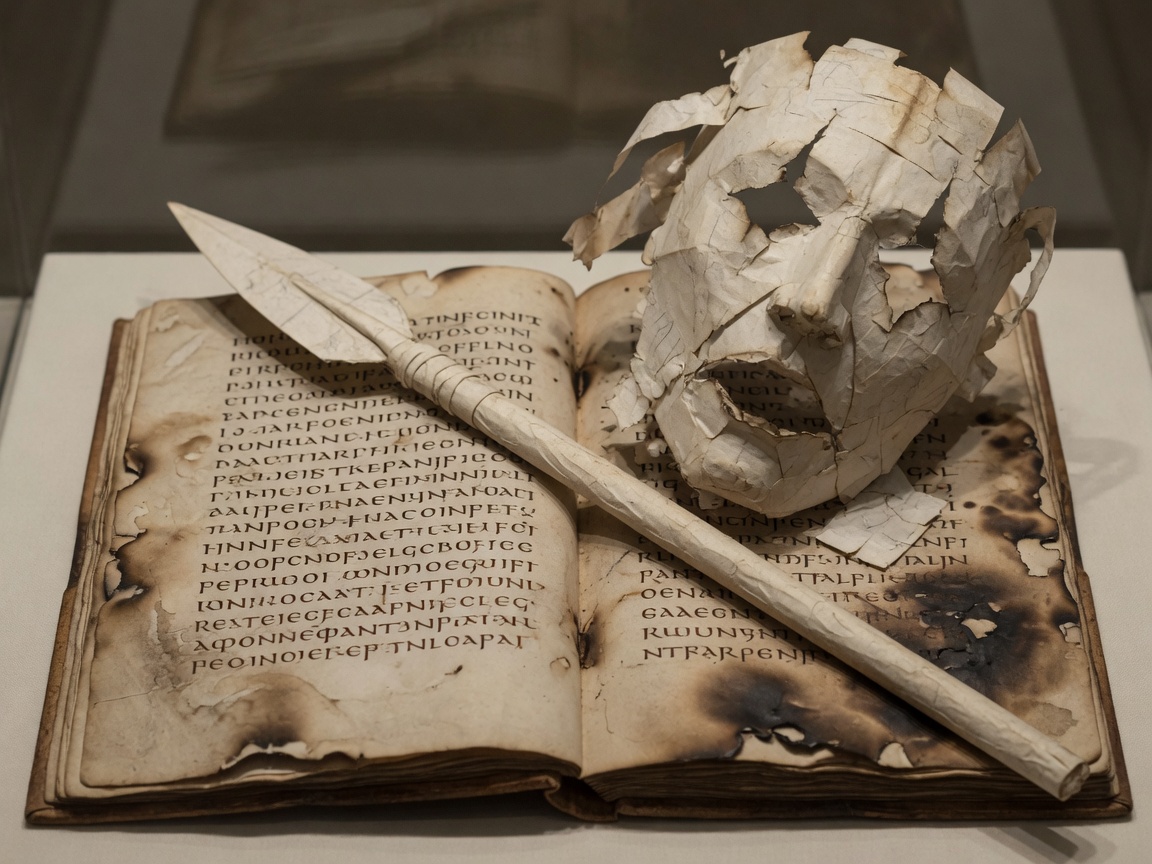
"Þonne bið on hreðre under helm drepen"biteran stræle: him bebeorgan ne con"wom wundor-bebodum wergan gâstes;"þinceð him tô lytel, þät he tô lange heóld,"gýtsað grom-hydig, nallas on gylp seleð"fätte beágas and he þâ forð-gesceaft"forgyteð and forgýmeð, þäs þe him ær god sealde"wuldres waldend, weorð-mynda dæl."Hit on ende-stäf eft gelimpeð,"þät se lîc-homa læne gedreóseð,"fæge gefealleð; fêhð ôðer tô,"se þe unmurnlîce mâdmas dæleð,"eorles ær-gestreón, egesan ne gýmeð."Bebeorh þe þone bealo-nîð, Beówulf leófa,"secg se betsta, and þe þät sêlre geceós,
“Then he is struck under his helmetwith a bitter arrow; he knows nothing to shield himself withfrom the wicked, uncanny commandsof the accursed spirit; what he has long heldseems too little to him now, he covets more,angry at heart, gives out no rings for glory,and he forgets and disregards the fate to come,the portion of honor that God, ruler of glory,had already given him.It happens at lastthat the borrowed body decays, falls, doomed;another succeeds him, one who deals out treasurewithout a second thought, the earl’s ancient hoard,and cares nothing for terror. Guard against that evil,dear Beowulf, best of men, and choose
"êce rædas; oferhyda ne gým,"mære cempa! Nu is þînes mägnes blæd"âne hwîle; eft sôna bið,"þät þec âdl oððe ecg eafoðes getwæfeð,"oððe fýres feng oððe flôdes wylm,"oððe gripe mêces oððe gâres fliht,"oððe atol yldo, oððe eágena bearhtm"forsiteð and forsworceð; semninga bið,"þät þec, dryht-guma, deáð oferswýðeð."Swâ ic Hring-Dena hund missera"weóld under wolcnum, and hig wîge beleác"manigum mægða geond þysne middan-geard,"äscum and ecgum, þät ic me ænigne"under swegles begong gesacan ne tealde."Hwät! me þäs on êðle edwenden cwom,
the better part, the eternal gain;do not give in to pride, famous champion!The glory of your strength is only for a while now;soon enough it will be that sickness or the swordwill part you from that power,or the grip of fire,or the surge of a flood, or the clutch of a blade,or the flight of a spear, or dreadful old age,or the light of your eyes will fail and go dark;suddenly it will happen that death overtakes you, warrior.So I ruled the Ring-Danes under the skyfor fifty years, and shielded them in warfrom many peoples throughout this middle-earth,with spear and sword, so that I did not countany man under the wide sky my equal in battle.
"gyrn äfter gomene, seoððan Grendel wearð,"eald-gewinna, in-genga mîn:"ic þære sôcne singales wäg"môd-ceare micle. Þäs sig metode þanc,"êcean drihtne, þäs þe ic on aldre gebâd,"þät ic on þone hafelan heoro-dreórigne"ofer eald gewin eágum starige!"Gâ nu tô setle, symbel-wynne dreóh"wîgge weorðad: unc sceal worn fela"mâðma gemænra, siððan morgen bið."Geát wäs gläd-môd, geóng sôna tô,setles neósan, swâ se snottra hêht.Þâ wäs eft swâ ær ellen-rôfum,flet-sittendum fägere gereorded
Listen — reversal came to me, in my own homeland,grief after joy, once Grendel becamemy invader, my old enemy:I carried, from that persecution,a great and constant heart-sorrow. Thanks beto the Measurer, to the eternal Lord,that I have lived to see this, that I can lookwith my own eyes on that bloody head,after such old strife! Go now to your seat,enjoy the feast’s joy, honored in war:a great many treasures shall be shared between us,once morning comes.” The Geat was glad-hearted,went at once to find his seat, as the wise one bade.Then again, as before, for those famous ones,
niówan stefne. Niht-helm geswearcdeorc ofer dryht-gumum. Duguð eal ârâs;wolde blonden-feax beddes neósan,gamela Scylding. Geát ungemetes wel,rôfne rand-wîgan restan lyste:sôna him sele-þegn sîðes wêrgum,feorran-cundum forð wîsade,se for andrysnum ealle beweotedeþegnes þearfe, swylce þý dôgoreheáðo-lîðende habban scoldon.Reste hine þâ rûm-heort; reced hlifadegeáp and gold-fâh, gäst inne swäf,ôð þät hrefn blaca heofones wynneblîð-heort bodode. Þâ com beorht sunne
the hall-dwellers, a feast was handsomely servedonce more. The helm of night grew darkover the warriors. The whole company rose;the grey-haired one wanted to seek his bed,the old Scylding. The Geat, beyond measure,longed to rest, that valiant shield-warrior.At once a hall-thane led him off,one weary from his travels, come from far away,who saw to all a guest’s needs, as courtesy required,just as seafarers in those days had need of.The great-hearted man rested then; the hall towered up,spacious and gold-adorned; the guest slept within,until the black raven, glad in spirit,announced the joy of heaven. Then the bright sun came
scacan ofer grundas; scaðan onetton,wæron äðelingas eft tô leódumfûse tô farenne, wolde feor þanoncuma collen-ferhð ceóles neósan.Hêht þâ se hearda Hrunting beran,sunu Ecglâfes, hêht his sweord niman,leóflîc îren; sägde him þäs leánes þanc,cwäð he þone gûð-wine gôdne tealde,wîg-cräftigne, nales wordum lôgmêces ecge: þät wäs môdig secg.And þâ sîð-frome searwum gearwewîgend wæron, eode weorð Denumäðeling tô yppan, þær se ôðer wäshäle hilde-deór, Hrôðgâr grêtte.
moving over the land;the warriors hastened,the nobles were eager to travel backto their own people; the bold-spirited visitorwanted to find his ship, far away from there.Then the brave man ordered Hrunting carriedto Ecglaf’s son, told him to take his sword,that beloved iron; said he thought that war-friend good,effective in battle, did not fault its edgein words at all: that was a courageous man.And then, ready in their gear, eager to be gone,the warriors made themselves ready; the prince, honored by the Danes,went up to the dais, where the other one sat,that battle-brave hero, and greeted Hrothgar.
Beówulf maðelode, bearn Ecgþeówes:"Nu we sæ-lîðend secgan wyllað"feorran cumene, þät we fundiað"Higelâc sêcan. Wæron her tela"willum bewenede; þu ûs wel dohtest."Gif ic þonne on eorðan ôwihte mäg"þînre môd-lufan mâran tilian,"gumena dryhten, þonne ic gyt dyde,"gûð-geweorca ic beó gearo sôna."Gif ic þät gefricge ofer flôda begang,"þät þec ymbe-sittend egesan þýwað,"swâ þec hetende hwîlum dydon,"ic þe þûsenda þegna bringe,"häleða tô helpe. Ic on Higelâce wât,"Geáta dryhten, þeáh þe he geong sý,
Beowulf spoke, son of Ecgtheow:“Now we seafarers wish to say,we who have comefrom far away, that we are eager to seek Hygelac.We were entertained here well, exactly as we wished;you have treated us with honor.If there is anything moreI can ever do, on this earth, to win your heart’s love,ruler of men, than what I have already done,I will be ready at once for deeds of war.If I learn, across the sea’s expanse,that your neighbors threaten you with terror,as enemies did before, I will bring youa thousand thanes, warriors to help you.I know of Hygelac, lord of the Geats,
"folces hyrde, þät he mec fremman wile"wordum and worcum, þät ic þe wel herige,"and þe tô geóce gâr-holt bere"mägenes fultum, þær þe bið manna þearf;"gif him þonne Hrêðrîc tô hofum Geáta"geþingeð, þeódnes bearn, he mäg þær fela"freónda findan: feor-cýððe beóð"sêlran gesôhte þäm þe him selfa deáh."Hrôðgâr maðelode him on andsware:"Þe þâ word-cwydas wittig drihten"on sefan sende! ne hýrde ic snotorlîcor"on swâ geongum feore guman þingian:"þu eart mägenes strang and on môde frôd,"wîs word-cwida. Wên ic talige,
protector of the people, that though he is young,he will back me with words and with deeds,so that I may honor you properly,and bring you a forest of spears as aid,the strength of my hand, wherever you need men;and if Hrethric should ever come to the court of the Geats,the king’s own son,he will find many friends there:far countries are best sought by one who is worthy in himself.”Hrothgar spoke to him in answer:“The wise Lord sent those very words into your mind!I never heard a man speak so wisely,and so young. You are strong in mightand wise in mind, careful in your speech.
"gif þät gegangeð, þät þe gâr nymeð,"hild heoru-grimme Hrêðles eaferan,"âdl oððe îren ealdor þînne,"folces hyrde, and þu þîn feorh hafast,"þät þe Sæ-Geátas sêlran näbben"tô geceósenne cyning ænigne,"hord-weard häleða, gif þu healdan wylt"mâga rîce. Me þîn môd-sefa"lîcað leng swâ wel, leófa Beówulf:"hafast þu gefêred, þät þâm folcum sceal,"Geáta leódum and Gâr-Denum"sib gemænum and sacu restan,"inwit-nîðas, þe hie ær drugon;"wesan, þenden ic wealde wîdan rîces,
I trust and hope, if it should ever happenthat the spear, savage battle, takes Hrethel’s heir,illness or iron takes your own ruler,the shepherd of his people, and you still have your life,that the Sea-Geats will find no better manto choose as king, as guardian of the hoard of heroes,if you are willing to hold your kinsmen’s kingdom.Your character pleases me more, the longer I know it,dear Beowulf: you have brought it aboutthat between these peoples,the Geats and the Spear-Danes,there shall be peace in common, and strife shall rest,the old hostilities they suffered through;and that, as long as I rule this wide kingdom,
"mâðmas gemæne, manig ôðerne"gôdum gegrêtan ofer ganotes bäð;"sceal hring-naca ofer heáðu bringan"lâc and luf-tâcen. Ic þâ leóde wât"ge wið feónd ge wið freónd fäste geworhte"æghwäs untæle ealde wîsan."Þâ git him eorla hleó inne gesealde,mago Healfdenes mâðmas twelfe,hêt hine mid þæm lâcum leóde swæsesêcean on gesyntum, snûde eft cuman.Gecyste þâ cyning äðelum gôd,þeóden Scildinga, þegen betstanand be healse genam; hruron him teáras,blonden-feaxum: him wäs bega wên,
treasure shall be shared, many a man shall greet anotherwith fine gifts across the gannet’s bath;the ring-necked ship shall carry over the seapresents and tokens of love. I know this peoplestand firm toward both friend and foe,blameless in every way, by the old custom.”Then the protector of earls gave him even more,the kinsman of Healfdene, twelve treasures;bade him seek his own dear people safelywith those gifts, and come back again soon.Then the king, noble by birth, kissed that best of thanesand took him by the neck; tears fell from him,the grey-haired man:he expected, old and wise as he was,
ealdum infrôdum, ôðres swîðor,þät hî seoððan geseón môstonmôdige on meðle. Wäs him se man tô þon leóf,þät he þone breóst-wylm forberan ne mehte,ac him on hreðre hyge-bendum fästäfter deórum men dyrne langaðbeorn wið blôde. Him Beówulf þanan,gûð-rinc gold-wlanc gräs-moldan träd,since hrêmig: sæ-genga bâdâgend-freán, se þe on ancre râd.Þâ wäs on gange gifu Hrôðgâresoft geæhted: þät wäs ân cyningæghwäs orleahtre, ôð þät hine yldo benammägenes wynnum, se þe oft manegum scôd.
both things might happen, but feared the second more —that they would never see each other again,brave men in council. The man was so dear to himthat he could not hold back the welling in his breast,but in his heart, bound fast by feeling,a secret longing for the beloved manburned in his blood. Beowulf then went from there,treading the grassy ground, a warrior proud with gold,exulting in treasure; the sea-goer waitedfor its owner, riding fast at anchor.Then, on the journey, Hrothgar’s giftwas often praised: that was a king without faultin anything, until old age took from himthe joys of his strength — as it has injured many.
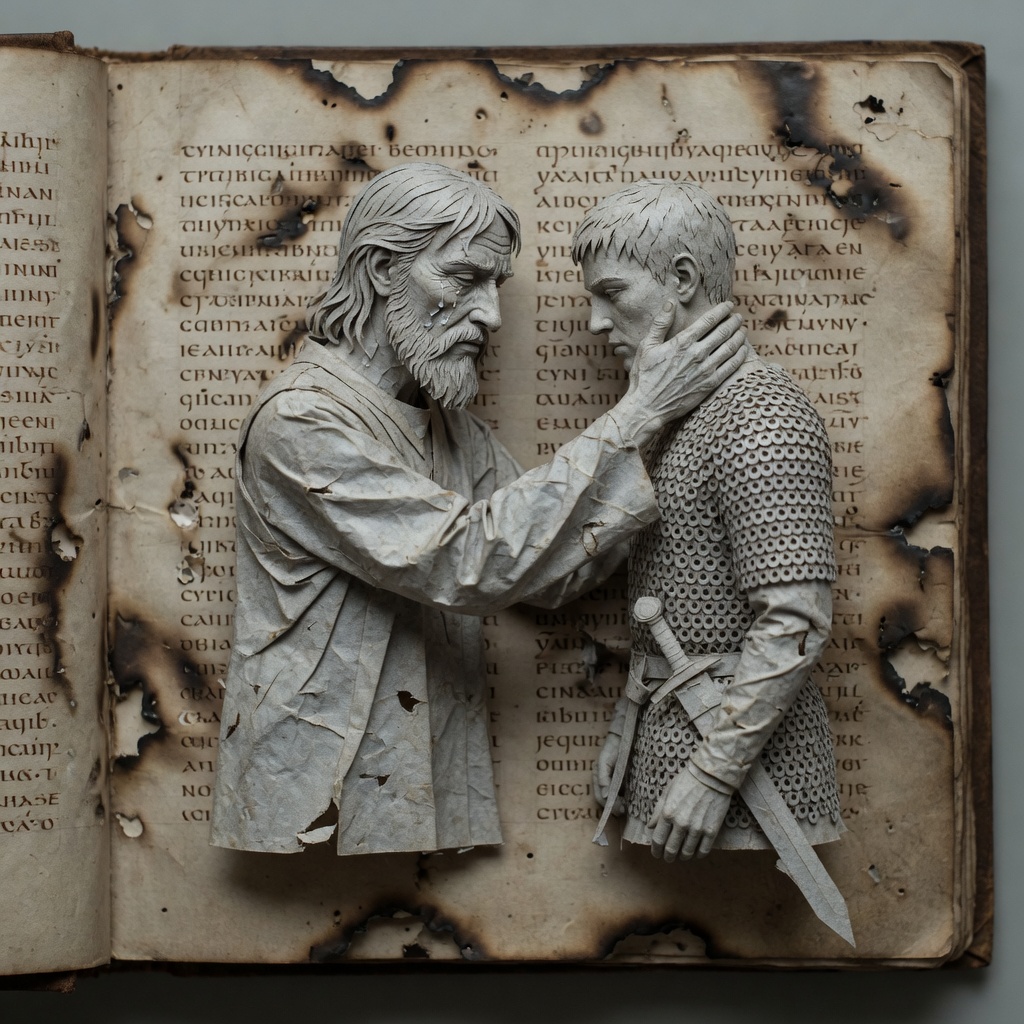
Cwom þâ tô flôde fela-môdigrahäg-stealdra heáp; hring-net bæron,locene leoðo-syrcan. Land-weard onfandeft-sîð eorla, swâ he ær dyde;nô he mid hearme of hliðes nosangästas grêtte, ac him tôgeánes râd;cwäð þät wilcuman Wedera leódumscawan scîr-hame tô scipe fôron.Þâ wäs on sande sæ-geáp nacahladen here-wædum, hringed-stefnamearum and mâðmum: mäst hlifadeofer Hrôðgâres hord-gestreónum.He þäm bât-wearde bunden goldeswurd gesealde, þät he syððan wäson meodu-bence mâðme þý weorðra,
Then that band of very brave young warriorscame down to the water; they wore ring-mail,locked limb-armor. The coast-guard noticedthe earls’ return, just as he had before;he did not greet those guests rudelyfrom the cliff’s headland,but rode down to meet them;said that those bright-armored men, bound for their ship,were welcome to the people of the Weders.Then on the sand the broad-hulled ship layloaded with war-gear, the ring-prowed vessel,with horses and treasure;the mast toweredover Hrothgar’s hoard-gifts. Beowulf gavethe boat-guard a sword bound with gold,
yrfe-lâfe. Gewât him on ýð-nacan,drêfan deóp wäter, Dena land ofgeaf.Þâ wäs be mäste mere-hrägla sum,segl sâle fäst. Sund-wudu þunede,nô þær wêg-flotan wind ofer ýðumsîðes getwæfde; sæ-genga fôr,fleát fâmig-heals forð ofer ýðe,bunden-stefna ofer brim-streámas,þät hie Geáta clifu ongitan meahton,cûðe nässas. Ceól up geþrang,lyft-geswenced on lande stôd.Hraðe wäs ät holme hýð-weard gearo,se þe ær lange tîd, leófra mannafûs, ät faroðe feor wlâtode;sælde tô sande sîd-fäðme scip
so that afterward he was the more honoredon the mead-bench for that treasure, that heirloom.He set out then in his wave-riding ship,to churn the deep water, left the land of the Danes.Then by the mast a sea-garment, a sail,was made fast with rope. The sea-wood groaned;the wind over the waves did not at all hinderthat wave-floater from its journey;the sea-goer moved,foamy-necked, floated on over the waves,the bound-prowed ship across the ocean-streams,until they could make out the cliffs of the Geats,the headlands they knew. The keel drove forward,pushed by the wind, ran up on the shore.Quickly the harbor-guard was ready at the water,
oncer-bendum fäst, þý läs hym ýða þrymwudu wynsuman forwrecan meahte.Hêt þâ up beran äðelinga gestreón,frätwe and fät-gold; näs him feor þanontô gesêcanne sinces bryttan:Higelâc Hrêðling þær ät hâm wunað,selfa mid gesîðum sæ-wealle neáh;bold wäs betlîc, brego-rôf cyning,heá on healle, Hygd swîðe geong,wîs, wel-þungen, þeáh þe wintra lytunder burh-locan gebiden häbbeHäreðes dôhtor: näs hió hnâh swâ þeáh,ne tô gneáð gifa Geáta leódum,mâðm-gestreóna. Mod Þryðo wäg,fremu folces cwên, firen ondrysne:
one who for a long time had gazed far out to sea,eager for his beloved men;he tied to the sandthat wide-bellied ship, fast on its anchor-ropes,lest the force of the waves should drive offthat welcome timber. He gave the order thento carry up the nobles’ treasure, the plateand the beaten gold; it was not far from thereto seek out the treasure-giver:Hygelac, son of Hrethel,lives there at home, himself and his companions,close by the sea-wall; the building was splendid,the king powerful in war, seated high in his hall,and Hygd very young, wise, accomplished,though she had spent few winters within those walls,
nænig þät dorste deór genêðanswæsra gesîða, nefne sin-freá,þät hire an däges eágum starede;ac him wäl-bende weotode tealde,hand-gewriðene: hraðe seoððan wäsäfter mund-gripe mêce geþinged,þät hit sceaðen-mæl scyran môste,cwealm-bealu cýðan. Ne bið swylc cwênlîc þeáwidese tô efnanne, þeáh þe hió ænlîcu sý,þätte freoðu-webbe feores onsäceäfter lîge-torne leófne mannan.Hûru þät onhôhsnode Heminges mæg;ealo drincende ôðer sædan,þät hió leód-bealewa läs gefremede,inwit-nîða, syððan ærest wearð
Haereth’s daughter: yet she was no less generous for that,nor too sparing with gifts to the Geatish people,with treasures from the hoard. Modthryth, that fierce queen,practiced a terrible cruelty: none of her own dear companionsdared so much as look at her by daylight,except her lord himself;whoever did could expectdeadly bonds twisted for him by hand; quickly after,once he was seized, a sword was called for,so that the patterned blade had to settle it,make his death-sentence known. That is no fitting customfor a lady to practice, however lovely she is —that a peace-weaver should take a beloved man’s lifeover some fancied insult. But Heming’s kinsmanput a stop to that. Ale-drinking men said further
gyfen gold-hroden geongum cempan,äðelum dióre, syððan hió Offan fletofer fealone flôd be fäder lâresîðe gesôhte, þær hió syððan welin gum-stôle, gôde mære,lîf-gesceafta lifigende breác,hióld heáh-lufan wið häleða brego,ealles mon-cynnes mîne gefrægeþone sêlestan bî sæm tweónumeormen-cynnes; forþam Offa wäsgeofum and gûðum gâr-cêne man,wîde geweorðod; wîsdôme heóldêðel sînne, þonon Eómær wôchäleðum tô helpe, Heminges mæg,nefa Gârmundes, nîða cräftig.
that she did the people far less harm,far fewer wicked deeds, once she was given,gold-adorned, to that young warrior of noble house,when by her father’s counsel she sought Offa’s hall,journeying over the pale flood; there afterward,on the throne, famed for her goodness, she made good useof her life while she lived, held a high lovewith the lord of warriors — of all mankind,so I have heard it told, the best between the two seas,of the whole race of men; for Offa was,in gifts and in war, a spear-bold man,honored far and wide; he ruled his homelandwith wisdom, and from him came Eomer,a help to warriors, Heming’s kinsman,grandson of Garmund, skilled in battle.
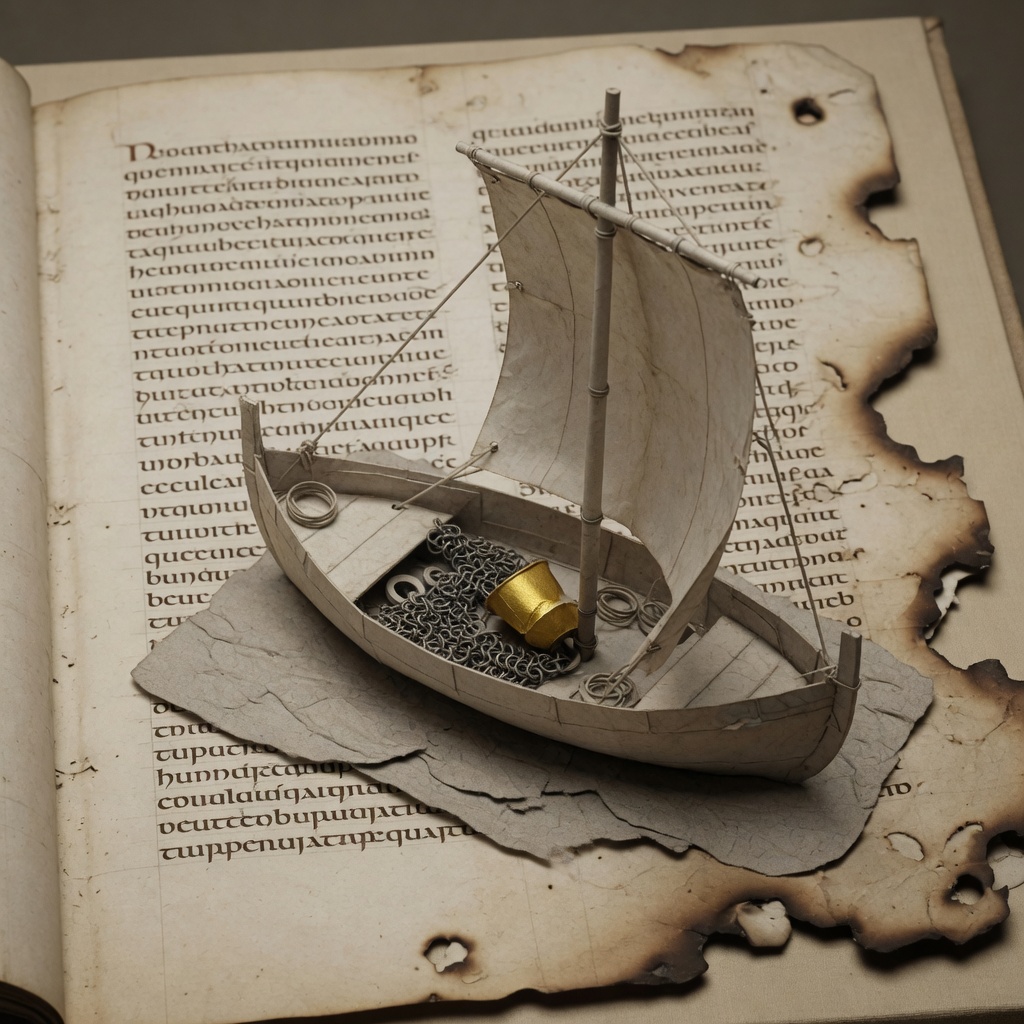
Gewât him þâ se hearda mid his hond-scolesylf äfter sande sæ-wong tredan,wîde waroðas. Woruld-candel scân,sigel sûðan fûs: hî sîð drugon,elne geeodon, tô þäs þe eorla hleó,bonan Ongenþeówes burgum on innan,geongne gûð-cyning gôdne gefrunonhringas dælan. Higelâce wässîð Beówulfes snûde gecýðed,þät þær on worðig wîgendra hleó,lind-gestealla lifigende cwom,heaðo-lâces hâl tô hofe gongan.Hraðe wäs gerýmed, swâ se rîca bebeád,fêðe-gestum flet innan-weard.
Then the brave one set out with his chosen troop,himself, along the sand, to tread the sea-plain,the wide shores. The world-candle shone,the sun eager from the south; they went on their way,went boldly, to where they had heard the earls’ protector,the slayer of Ongentheow, that young and worthy war-king,was giving out rings within his stronghold.Beowulf’s return was quickly made known to Hygelac —that there, within the enclosure, the protector of warriors,his own shield-companion, had come back alive,unhurt from the battle-play, walking to the court.Quickly the floor was cleared, as the mighty one ordered,space made in the hall for the foot-guests.He sat then facing the man who had lived through the fight,
Gesät þâ wið sylfne, se þâ säcce genäs,mæg wið mæge, syððan man-dryhtenþurh hleóðor-cwyde holdne gegrêttemeaglum wordum. Meodu-scencumhwearf geond þät reced Häreðes dôhtor:lufode þâ leóde, lîð-wæge bärhælum tô handa. Higelâc ongansînne geseldan in sele þam heánfägre fricgean, hyne fyrwet bräc,hwylce Sæ-Geáta sîðas wæron:"Hû lomp eów on lâde, leófa Biówulf,"þâ þu færinga feorr gehogodest,"säcce sêcean ofer sealt wäter,"hilde tô Hiorote? Ac þu Hrôðgâre
kinsman facing kinsman. The lord had greetedhis faithful thane with formal speech,with words that were meant. Haereth’s daughtermoved through that hall with the mead-cups;she cared for the people;she carried the drink-vesselto the warriors’ hands, one by one. Hygelac beganto question his companion, there in the high hall,with courteous curiosity, eager to knowwhat kind of venture the Sea-Geats had had:“How did your journey go, dear Beowulf,when you suddenly resolved to seek a fight so far away,over the salt sea,battle at Heorot?
"wîd-cûðne weán wihte gebêttest,"mærum þeódne? Ic þäs môd-ceare"sorh-wylmum seáð, sîðe ne trûwode"leófes mannes; ic þe lange bäd,"þät þu þone wäl-gæst wihte ne grêtte,"lête Sûð-Dene sylfe geweorðan"gûðe wið Grendel. Gode ic þanc secge,"þäs þe ic þe gesundne geseón môste."Biówulf maðelode, bearn Ecgþiówes:"Þät is undyrne, dryhten Higelâc,"mære gemêting monegum fira,"hwylc orleg-hwîl uncer Grendles"wearð on þam wange, þær he worna fela"Sige-Scildingum sorge gefremede,
Did you help Hrothgar at all with his well-known trouble,that famous prince? I brooded over thatwith surging sorrow in my heart, mistrusted your venture,my own beloved man; I begged you longnot to go anywhere near that murderous spirit,to let the South-Danes settle their own fight with Grendel.I thank God that I am allowed to see yousafe and sound.” Beowulf spoke, son of Ecgtheow:“It is no secret, lord Hygelac, that famous meeting,to many men — what a struggle I and Grendel had,there in that place where he had brought so much sorrowon the Victory-Scyldings, misery beyond measure;I avenged all of that, so that no kin of Grendel’s,none of that hateful race, need boast anywhere on earth
"yrmðe tô aldre; ic þät eal gewräc,"swâ ne gylpan þearf Grendeles mâga"ænig ofer eorðan uht-hlem þone,"se þe lengest leofað lâðan cynnes,"fenne bifongen. Ic þær furðum cwom,"tô þam hring-sele Hrôðgâr grêtan:"sôna me se mæra mago Healfdenes,"syððan he môd-sefan mînne cûðe,"wið his sylfes sunu setl getæhte."Weorod wäs on wynne; ne seah ic wîdan feorh"under heofenes hwealf heal-sittendra"medu-dreám mâran. Hwîlum mæru cwên,"friðu-sibb folca flet eall geond-hwearf,"bædde byre geonge; oft hió beáh-wriðan
of that dawn-attack, whoever of those loathsome creatureslives longest, wrapped in the fen. I came firstto that ring-hall to greet Hrothgar; soonthe famous kinsman of Healfdene,once he knew my intent,gave me a seat beside his own son.The company was full of joy; never in my lifehave I seen greater mead-hall gladnessamong hall-dwellers under the sweep of heaven.At times the famous queen, that bond of peace between nations,passed through the whole hall, cheered on the young warriors;often she gave a ring-band to a soldierbefore she went back to her seat.At times, before the gathered men,
"secge sealde, ær hió tô setle geóng."Hwîlum for duguðe dôhtor Hrôðgâres"eorlum on ende ealu-wæge bär,"þâ ic Freáware flet-sittende"nemnan hýrde, þær hió nägled sinc"häleðum sealde: sió gehâten wäs,"geong gold-hroden, gladum suna Frôdan;"hafað þäs geworden wine Scyldinga"rîces hyrde and þät ræd talað,"þät he mid þý wîfe wäl-fæhða dæl,"säcca gesette. Oft nô seldan hwær"äfter leód-hryre lytle hwîle"bon-gâr bûgeð, þeáh seó brýd duge!
Hrothgar’s daughter carried the ale-cupto the earls down the hall —I heard them call her Freawaru —where she offered the studded cup to the heroes.She is promised, young and gold-adorned,to the glad son of Froda;the friend of the Scyldings has arranged it,the guardian of that kingdom, and he counts it good policy,that with that woman he might settle his shareof deadly feuds, of old quarrels between them.Yet rarely anywhere, after a prince has fallen,does the death-spear rest for even a little while,however good the bride may be!
"Mäg þäs þonne ofþyncan þeóden Heaðobeardna"and þegna gehwâm þâra leóda,"þonne he mid fæmnan on flett gæð,"dryht-bearn Dena duguða biwenede:"on him gladiað gomelra lâfe"heard and hring-mæl, Heaðobeardna gestreón,"þenden hie þâm wæpnum wealdan môston,"ôð þät hie forlæddan tô þam lind-plegan"swæse gesîðas ond hyra sylfra feorh."Þonne cwið ät beóre, se þe beáh gesyhð,"eald äsc-wîga, se þe eall geman"gâr-cwealm gumena (him bið grim sefa),"onginneð geômor-môd geongne cempan"þurh hreðra gehygd higes cunnian,"wîg-bealu weccean and þät word âcwyð:"'Meaht þu, mîn wine, mêce gecnâwan,
“It may well displease the prince of the Heathobards,and every one of his thanes among that people,when he walks across the floor with his new bride,escorting the noble Danish company,entertained with honor:on them will gleamthe leavings of their elders, hard and ring-patterned,the Heathobards’ own treasure, back when they could stillwield those weapons — until they led them astray,into that shield-play, their own dear companionsand their own lives besides. Then, at the beer-drinking,an old spear-warrior will speak, one who sees the ringand remembers everything, the spear-death of men —grim is his spirit — begins, sad at heart,to test the mood of some young warriorthrough the thoughts in his heart, to wake war-evil,
"'þone þin fäder tô gefeohte bär"'under here-grîman hindeman sîðe,"'dýre îren, þær hyne Dene slôgon,"'weóldon wäl-stôwe, syððan wiðer-gyld läg,"'äfter häleða hryre, hwate Scyldungas?"'Nu her þâra banena byre nât-hwylces,"'frätwum hrêmig on flet gæð,"'morðres gylpeð and þone mâððum byreð,"'þone þe þu mid rihte rædan sceoldest!'""Manað swâ and myndgað mæla gehwylce"sârum wordum, ôð þät sæl cymeð,"þät se fæmnan þegn fore fäder dædum"äfter billes bite blôd-fâg swefeð,"ealdres scyldig; him se ôðer þonan"losað lifigende, con him land geare."Þonne bióð brocene on bâ healfe
and speaks these words: ‘Can you, my friend,recognize that sword your father carriedinto the fight, wearing his war-mask,on his last expedition, that precious iron,when the Danes killed him, took hold of the field —and no price was ever paid for it,after the fall of heroes,those brave Scyldings? Now here walks the sonof one of his killers, across this very floor,exulting in his gear, boasts of the murder,and carries that very treasure that by rightsshould be yours to own!’ So he goads and reminds him,on every occasion, with bitter words,until the time comes that the woman’s own thane,for his father’s deeds, lies blood-stainedafter the sword’s bite, his life forfeit;
"âð-sweord eorla; syððan Ingelde"weallað wäl-nîðas and him wîf-lufan"äfter cear-wälmum côlran weorðað."Þý ic Heaðobeardna hyldo ne telge,"dryht-sibbe dæl Denum unfæcne,"freónd-scipe fästne. Ic sceal forð sprecan"gen ymbe Grendel, þät þu geare cunne,"sinces brytta, tô hwan syððan wearð"hond-ræs häleða. Syððan heofones gim"glâd ofer grundas, gäst yrre cwom,"eatol æfen-grom, ûser neósan,"þær we gesunde säl weardodon;"þær wäs Hondsció hild onsæge,"feorh-bealu fægum, he fyrmest läg,"gyrded cempa; him Grendel wearð,"mærum magu-þegne tô mûð-bonan,
the other one gets away alive,he knows that country well. Then the sworn oathsof the nobles are broken on both sides;after that, deadly hatred rises in Ingeld,and his love for his wife grows colderafter the surge of grief. So I do not countthe Heathobards’ good faith, their part in this bond with the Danes,as sincere, nor their friendship as firm.I will go on now and tell you more about Grendel,so that you may know clearly, giver of treasure,what came after, from that hand-to-hand struggle of warriors.After heaven’s jewel had glided over the earth,an angry spirit came, terrible in his evening fury,to visit us,where, unharmed, we kept watch on the hall;there battle fell hard on Hondscio,
"leófes mannes lîc eall forswealg."Nô þý ær ût þâ gen îdel-hende"bona blôdig-tôð bealewa gemyndig,"of þam gold-sele gongan wolde,"ac he mägnes rôf mîn costode,"grâpode gearo-folm. Glôf hangode"sîd and syllîc searo-bendum fäst,"sió wäs orþoncum eall gegyrwed"deófles cräftum and dracan fellum:"he mec þær on innan unsynnigne,"diór dæd-fruma, gedôn wolde,"manigra sumne: hyt ne mihte swâ,"syððan ic on yrre upp-riht âstôd."Tô lang ys tô reccenne, hû ic þam leód-sceaðan"yfla gehwylces ond-leán forgeald;"þær ic, þeóden mîn, þîne leóde
death to that doomed man — he lay dead first,that girded champion; Grendel becamethe mouth-slayer of that famous young thane,swallowed whole the body of that beloved man.Not any the sooner did that bloody-toothed killer,mindful of evils, want to leave that gold-hallempty-handed, but, mighty in strength,he tested me, grabbed with a ready hand.A glove hung there, huge and strange,fastened with skillful bands; it was entirely madewith cunning, with devil’s craft and dragon-hides:he meant to put me inside it, guiltless as I was,one victim among many, that fierce doer of deeds —it could not happen that way, once I stood upstraight in my anger. It is too long to tellhow I paid that enemy of the people back
"weorðode weorcum. He on weg losade,"lytle hwîle lîf-wynna breác;"hwäðre him sió swîðre swaðe weardade"hand on Hiorte and he heán þonan,"môdes geômor mere-grund gefeóll."Me þone wäl-ræs wine Scildunga"fättan golde fela leánode,"manegum mâðmum, syððan mergen com"and we tô symble geseten häfdon."Þær wäs gidd and gleó; gomela Scilding"fela fricgende feorran rehte;"hwîlum hilde-deór hearpan wynne,"gomen-wudu grêtte; hwîlum gyd âwräc"sôð and sârlîc; hwîlum syllîc spell"rehte äfter rihte rûm-heort cyning."Hwîlum eft ongan eldo gebunden,
for every one of his evils; there, my prince,I brought honor to your land by what I did.He got away, lived a little longer,enjoyed what pleasure life still gave him;yet his right hand marked his trail in Heorot,and, humbled, he fell from there, sick at heart,down to the bottom of the mere.The friend of the Scyldingspaid me richly for that death-struggle,with plated gold, treasures beyond number,once morning came and we had sat down togetherat the feast. There was singing and joy;the old Scylding, well-versed in many things,told tales from far back; sometimes that battle-hardened mantouched the harp’s own joy, the joy-wood,sometimes recited a lay, true and sorrowful;
"gomel gûð-wîga gioguðe cwîðan"hilde-strengo; hreðer inne weóll,"þonne he wintrum frôd worn gemunde."Swâ we þær inne andlangne däg"nióde nâman, ôð þät niht becwom"ôðer tô yldum. Þâ wäs eft hraðe"gearo gyrn-wräce Grendeles môdor,"sîðode sorh-full; sunu deáð fornam,"wîg-hete Wedra. Wîf unhýre"hyre bearn gewräc, beorn âcwealde"ellenlîce; þær wäs Äsc-here,"frôdan fyrn-witan, feorh ûðgenge;"nôðer hy hine ne môston, syððan mergen cwom,"deáð-wêrigne Denia leóde"bronde forbärnan, ne on bæl hladan"leófne mannan: hió þät lîc ätbär
sometimes the large-hearted king told a strange tale,and told it rightly. Sometimes again, bound by his years,the old warrior mourned his youth,his battle-strength; his heart welled up within himwhen, wise with winters, he remembered so much.So we, all day long, took our pleasure there,until night came again to men. Then quicklyGrendel’s mother was ready for vengeance, grief-stricken;her son’s death, the Weders’ war-hatred, had taken him.That monstrous woman avenged her child,killed a warrior boldly; there Aeschere’s life,that old and wise counselor’s, came to its end.Nor were they allowed, when morning came,to burn his death-weary body with fire,nor lay that beloved man upon the pyre;she had carried the corpse away, held in her enemy’s arms,
"feóndes fäðmum under firgen-streám."Þät wäs Hrôðgâre hreówa tornost"þâra þe leód-fruman lange begeâte;"þâ se þeóden mec þîne lîfe"healsode hreóh-môd, þät ic on holma geþring"eorl-scipe efnde, ealdre genêðde,"mærðo fremede: he me mêde gehêt."Ic þâ þäs wälmes, þe is wîde cûð,"grimne gryrelîcne grund-hyrde fond."Þær unc hwîle wäs hand gemæne;"holm heolfre weóll and ic heáfde becearf"in þam grund-sele Grendeles môdor"eácnum ecgum, unsôfte þonan"feorh ôðferede; näs ic fæge þâ gyt,"ac me eorla hleó eft gesealde"mâðma menigeo, maga Healfdenes.
under the mountain-stream. That was to Hrothgarthe most bitter of all the griefs that had ever befallenthat leader of his people. Then the prince, troubled in spirit,implored me, by your own life, that I should performan earl’s deed in the churn of the waters,risk my life, win glory; he promised me a reward.I then found, as is widely known,the grim and terrible guardian of the deep.There, for a while, we two fought hand to hand;the water welled with blood, and I struck off the head,there in that hall at the bottom, of Grendel’s mother,with a mighty sword;I barely carried my life out of there;I was not doomed yet, but the protector of earls,the kinsman of Healfdene, gave me, afterward,a great many treasures.
"Swâ se þeód-kyning þeáwum lyfde;"nealles ic þâm leánum forloren häfde,"mägnes mêde, ac he me mâðmas geaf,"sunu Healfdenes, on sînne sylfes dôm;"þâ ic þe, beorn-cyning, bringan wylle,"êstum geýwan. Gen is eall ät þe"lissa gelong: ic lyt hafo"heáfod-mâga, nefne Hygelâc þec!"Hêt þâ in beran eafor, heáfod-segn,heaðo-steápne helm, hâre byrnan,gûð-sweord geatolîc, gyd äfter wräc:"Me þis hilde-sceorp Hrôðgâr sealde,"snotra fengel, sume worde hêt,"þät ic his ærest þe eft gesägde,"cwäð þät hyt häfde Hiorogâr cyning,"leód Scyldunga lange hwîle:
“So the great king lived by good customs;I had not, even so, lost out on reward,payment for my strength, but he gave me treasures,the son of Healfdene, at his own judgment;these I want to bring to you now, warrior-king,offer them gladly. Everything still dependson your favor; I have few close kinsmenleft now, except you, Hygelac!”He ordered then the boar-image carried in,the head-standard, the battle-steep helmet,the grey mail-coat, the splendid war-sword;and spoke these words after: “Hrothgar gave methis battle-gear, that wise prince,and told me specifically that I should firsttell you its history:he said King Heorogar had it,
"nô þý ær suna sînum syllan wolde,"hwatum Heorowearde, þeáh he him hold wære,"breóst-gewædu. Brûc ealles well!"Hýrde ic þät þâm frätwum feówer mearaslungre gelîce lâst weardode,äppel-fealuwe; he him êst geteáhmeara and mâðma. Swâ sceal mæg dôn,nealles inwit-net ôðrum bregdan,dyrnum cräfte deáð rênianhond-gesteallan. Hygelâce wäs,nîða heardum, nefa swýðe holdand gehwäðer ôðrum hrôðra gemyndig.Hýrde ic þät he þone heals-beáh Hygde gesealde,wrätlîcne wundur-mâððum, þone þe him Wealhþeó geaf,þeódnes dôhtor, þrió wicg somodswancor and sadol-beorht; hyre syððan wäs
prince of the Scyldings, for a long time —yet he did not want to give it to his own son,brave Heoroweard, loyal as he was to him,that breastplate. Use it all well!”I have heard that four horses came close behind that treasure,matched horses, dappled and pale;he granted himthe use of horses and treasures too. So a kinsman should act —never weave a web of malice for another,with secret cunning, or plot deathfor his own hand-companion. To Hygelac, hardy in battle,his nephew was very loyal, and eachwas mindful of the other’s good. I have heardthat he gave Hygd that neck-ring, that splendid wonder-treasurethat Wealhtheow had given him, the prince’s own daughter —and three horses besides, slender and saddle-bright;
äfter beáh-þege breóst geweorðod.Swâ bealdode bearn Ecgþeówes,guma gûðum cûð, gôdum dædum,dreáh äfter dôme, nealles druncne slôgheorð-geneátas; näs him hreóh sefa,ac he man-cynnes mæste cräftegin-fästan gife, þe him god sealde,heóld hilde-deór. Heán wäs lange,swâ hyne Geáta bearn gôdne ne tealdon,ne hyne on medo-bence micles wyrðnedrihten wereda gedôn wolde;swýðe oft sägdon, þät he sleac wære,äðeling unfrom: edwenden cwomtîr-eádigum menn torna gehwylces.Hêt þâ eorla hleó in gefetian,heaðo-rôf cyning, Hrêðles lâfe,
her breast was honored ever after,once she had taken that ring. So the son of Ecgtheowproved himself bold, a man known for war,for good deeds; he lived by honor,never killed his hearth-companions drunk;his heart was not savage, but he held,with the greatest strength known among mankind,the abundant gift God had given him,kept it in a battle-brave way. He had long beenheld in low regard, in that the Geats’ own sonsdid not think him worth much, nor did the lord of the Wederswish to give him much honor on the mead-bench;they said, again and again, that he was slack,an unpromising nobleman: but a reversal cameto that glorious man, for every hardship he had known.
golde gegyrede; näs mid Geátum þâsinc-mâððum sêlra on sweordes hâd;þät he on Biówulfes bearm âlegde,and him gesealde seofan þûsendo,bold and brego-stôl. Him wäs bâm samodon þam leód-scipe lond gecynde,eard êðel-riht, ôðrum swîðorsîde rîce, þam þær sêlra wäs.Eft þät geiode ufaran dôgrumhilde-hlämmum, syððan Hygelâc lägand Heardrêde hilde-mêceasunder bord-hreóðan tô bonan wurdon,þâ hyne gesôhtan on sige-þeódehearde hilde-frecan, Heaðo-Scilfingas,nîða genægdan nefan Hererîces.
Then the protector of earls, that battle-famous king,ordered Hrethel’s legacy carried in,gold-adorned; there was, among the Geats then,no finer treasure in the shape of a sword;he laid it in Beowulf’s lap, and gave him besidesseven thousand hides of land, a house and a high seat.Land by birthright belonged to them bothin that nation, but to the second, especially,wide dominions — to the one who ranked higher.It happened later, in days that followed,amid the crash of war, once Hygelac lay dead,and battle-swords brought death to Heardredunder the shield-wall, when hardy warriorssought him out among his own victorious people,the Battle-Scylfings, attacked with violence
Syððan Beówulfe brâde rîceon hand gehwearf: he geheóld telafîftig wintru (wäs þâ frôd cyning,eald êðel-weard), ôð þät ân ongandeorcum nihtum draca rîcsian,se þe on heáre hæðe hord beweotode,stân-beorh steápne: stîg under läg,eldum uncûð. Þær on innan gióngniða nât-hwylces neóde gefênghæðnum horde hond . d . . geþ . . hwylcsince fâhne, he þät syððan . . . . .. . . þ . . . lð . þ . . l . gslæpende be fýre, fyrena hyrdeþeófes cräfte, þät sie . . . . ðioð . . . . .. idh . folc-beorn, þät he gebolgen wäs.
the nephew of Hereric; then the broad kingdompassed into Beowulf’s hands: he ruled it wellfor fifty winters — by then a wise king,an old guardian of his homeland — until a certain one began,on dark nights, a dragon, to hold sway,one who on a high heath guarded a hoard,a steep stone barrow: a path lay beneath it,unknown to men. Some man or other went in there,in his need laid hold,from that heathen hoard, a hand — —stained with treasure; he then — —— — —sleeping by the fire, that guardian of crimes,by a thief’s stealth, that — —— the people’s champion, that he was enraged.
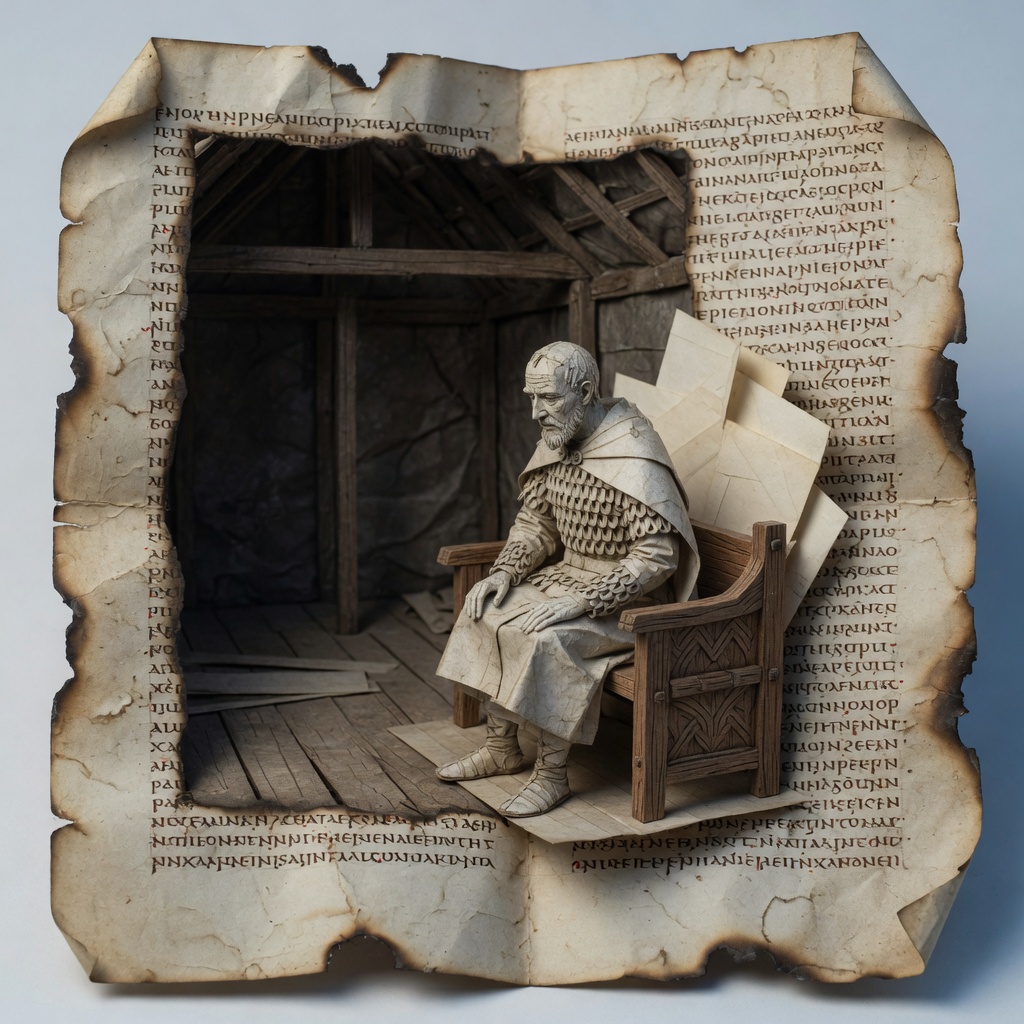
Nealles mid geweoldum wyrm-horda . . . cräftsôhte sylfes willum, se þe him sâre gesceôd,ac for þreá-nêdlan þeów nât-hwylceshäleða bearna hete-swengeas fleáh,for ofer-þearfe and þær inne fealhsecg syn-bysig. Sôna in þâ tîdeþät . . . . . þam gyste . . . . br . g . stôd,hwäðre earm-sceapen . . . . . . .. . ð . . . sceapen o . . . . i r . . e se fæs begeat,sinc-fät geseah: þær wäs swylcra felain þam eorð-scräfe ær-gestreóna,swâ hy on geâr-dagum gumena nât-hwylceormen-lâfe äðelan cynnesþanc-hycgende þær gehýdde,deóre mâðmas. Ealle hie deáð fornam
Not at all of his own free will did he seek outthat dragon-hoard’s — craft, not by his own choice —he who so grievously wounded him — but out of dire need,a servant of some man’s household, fled the hostile blowsof the sons of men, driven by great necessity,and got in there, that man burdened with guilt.At once, at that hour, — something stood before the visitor —though the wretched creature —— he saw a treasure-vessel there: a great many suchancient treasures lay in that earth-cavern,just as, long ago, some man of noble linehad hidden them there thoughtfully, an enormous legacy,dear-bought treasures. Death had taken them allin earlier days,and the one who still remained,
ærran mælum, and se ân þâ genleóda duguðe, se þær lengest hwearf,weard wine-geômor wîscte þäs yldan,þät he lytel fäc long-gestreónabrûcan môste. Beorh eal gearowunode on wonge wäter-ýðum neáh,niwe be nässe nearo-cräftum fäst:þær on innan bär eorl-gestreónahringa hyrde hard-fyrdne dælfättan goldes, feá worda cwäð:"Heald þu nu, hruse, nu häleð ne môston,"eorla æhte. Hwät! hit ær on þe"gôde begeâton; gûð-deáð fornam,"feorh-bealo frêcne fyra gehwylcne,"leóda mînra, þâra þe þis lîf ofgeaf,
the last survivor of that people’s veterans,a friend-mourning guardian, expected the same for himself —that he would be allowed to enjoy those long-lasting treasuresonly a little while. A barrow stood all readyon open ground, close by the sea-waves,new by the headland, made fast by cunning craft;there he carried in the earls’ treasure,that guardian of rings, a heavy weightof plated gold, and spoke these few words:“Hold now, earth, since heroes cannot,what earls once owned. Listen — it was won from you,long ago, by worthy men;war-death has taken them,terrible life-destroying evil, every one of my people,all who gave up this life, who once knew hall-joy.
"gesâwon sele-dreám. Nâh hwâ sweord wege"oððe fetige fäted wæge,"drync-fät deóre: duguð ellor scôc."Sceal se hearda helm hyrsted golde"fätum befeallen: feormiend swefað,"þâ þe beado-grîman býwan sceoldon,"ge swylce seó here-pâd, sió ät hilde gebâd"ofer borda gebräc bite îrena,"brosnað äfter beorne. Ne mäg byrnan hring"äfter wîg-fruman wîde fêran"häleðum be healfe; näs hearpan wyn,"gomen gleó-beámes, ne gôd hafoc"geond säl swingeð, ne se swifta mearh"burh-stede beáteð. Bealo-cwealm hafað"fela feorh-cynna feorr onsended!"
I have no one now to bear a sword, or polishthat plated cup,that precious drinking-vessel;that noble company has gone elsewhere.The hard helmet, gold-adorned, must lose its plating;the polishers sleep,those who once keptthe battle-mask bright; and that war-coat too,which endured the bite of blades in battle,over the crash of shields, decays now with the warrior.Nor can the ringed mail-shirt travel far and wideat a war-leader’s side, among heroes;there is no harp-joy now,no delight of the glee-wood, no good hawkswings through the hall, no swift horse
Swâ giômor-môd giohðo mænde,ân äfter eallum unblîðe hweóp,däges and nihtes, ôð þät deáðes wylmhrân ät heortan. Hord-wynne fondeald uht-sceaða opene standan,se þe byrnende biorgas sêceðnacod nîð-draca, nihtes fleógeðfýre befangen; hyne fold-bûendwîde gesâwon. He gewunian sceallhlâw under hrusan, þær he hæðen goldwarað wintrum frôd; ne byð him wihte þê sêl.Swâ se þeód-sceaða þreó hund wintraheóld on hrusan hord-ärna sumeácen-cräftig, ôð þät hyne ân âbealhmon on môde: man-dryhtne bär
stamps in the courtyard. Baleful death has sent awayso many of the living!” So, sad at heart,he mourned his grief, alone after all the rest,unhappy, by day and by night, until death’s tidetouched him at the heart. That old twilight-marauderfound the hoard-joy standing open —he who, burning,seeks out barrows, the naked, hostile dragon,flies by night wrapped in fire; the land-dwellersdread him greatly. He is fated to seek a hoardin the earth, where, old, he guards heathen gold;it does him no good at all. So that people’s tormentorheld that hoard-house in the earth for three hundred winters,immense in his strength, until a certain manangered him to the heart:
fäted wæge, frioðo-wære bädhlâford sînne. Þâ wäs hord râsod,onboren beága hord, bêne getîðadfeá-sceaftum men. Freá sceáwodefira fyrn-geweorc forman sîðe.Þâ se wyrm onwôc, wrôht wäs geniwad;stonc þâ äfter stâne, stearc-heort onfandfeóndes fôt-lâst; he tô forð gestôp,dyrnan cräfte, dracan heáfde neáh.Swâ mäg unfæge eáðe gedîganweán and wräc-sîð, se þe waldendeshyldo gehealdeð. Hord-weard sôhtegeorne äfter grunde, wolde guman findan,þone þe him on sweofote sâre geteóde:hât and hreóh-môd hlæw oft ymbe hwearf,
he brought his lorda plated cup, begged his lord for terms of peace.Then the hoard was ransacked, the ring-treasure taken away,the plea granted to that wretched man;his lord looked, for the first time, on that ancient work of men.Then the dragon woke, and strife began again;it went sniffing along the stone, stout-hearted,found the enemy’s footprint: he had stepped too close,with stealthy craft, right by the dragon’s head.So a man not marked for death may easily survivemisfortune and exile, if he keepsthe Ruler’s favor! The hoard-guardian searchedeagerly along the ground, wanted to find the manwho had done him this wrong while he slept;hot and fierce
ealne ûtan-weardne; ne þær ænig monwäs on þære wêstenne. Hwäðre hilde gefeh,beado-weorces: hwîlum on beorh äthwearf,sinc-fät sôhte; he þät sôna onfand,þät häfde gumena sum goldes gefandodheáh-gestreóna. Hord-weard onbâdearfoðlîce, ôð þät æfen cwom;wäs þâ gebolgen beorges hyrde,wolde se lâða lîge forgyldandrinc-fät dýre. Þâ wäs däg sceacenwyrme on willan, nô on wealle lengbîdan wolde, ac mid bæle fôr,fýre gefýsed. Wäs se fruma egeslîcleódum on lande, swâ hyt lungre wearðon hyra sinc-gifan sâre geendod.
in his spirit, he circled the barrow again and again,all the way round; there was no man at allin that wasteland. Even so he took joy in the thought of battle,of war-work; now and then he turned back into the barrow,hunted for the treasure-cup; he soon found outthat some man had tampered with the gold, the high treasure.The hoard-guardian waited, hardly able to bear it,until evening came; then the barrow’s keeper was enraged,that hateful one wanted to pay back with firefor that precious drinking-cup. Then the day was gone,just as the dragon wished; it would no longer waiton the wall, but set out with fire,girded in flame. The beginning was terribleto the people of that land, just as, soon after,it came harshly to an end for their treasure-giver.
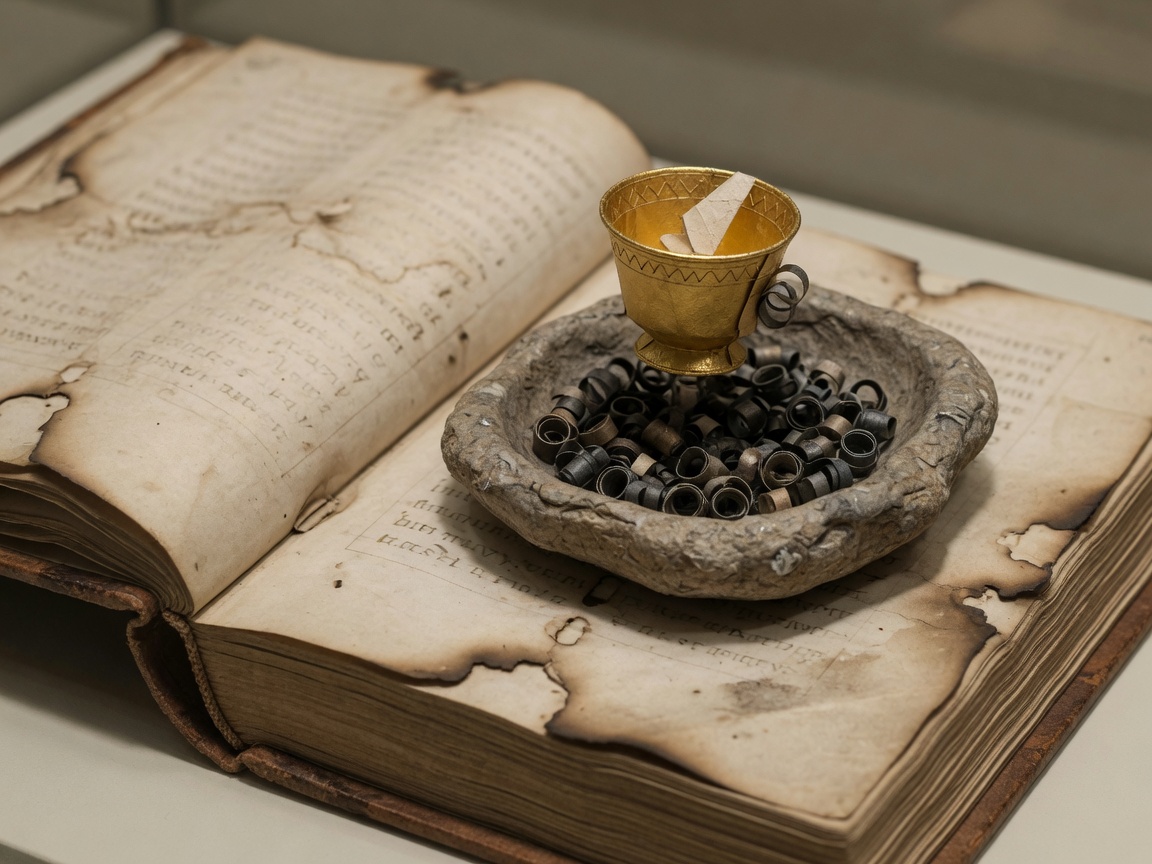
Þâ se gäst ongan glêdum spîwan,beorht hofu bärnan; bryne-leóma stôdeldum on andan; nô þær âht cwiceslâð lyft-floga læfan wolde.Wäs þäs wyrmes wîg wîde gesýne,nearo-fâges nîð neán and feorran,hû se gûð-sceaða Geáta leódehatode and hýnde: hord eft gesceát,dryht-sele dyrnne ær däges hwîle.Häfde land-wara lîge befangen,bæle and bronde; beorges getrûwode,wîges and wealles: him seó wên geleáh.Þâ wäs Biówulfe brôga gecýðedsnûde tô sôðe, þät his sylfes himbolda sêlest bryne-wylmum mealt,gif-stôl Geáta. Þät þam gôdan wäs
The stranger began to spew flames,to burn the bright dwellings; the fire-glow stood there,a terror to men; that hateful sky-flierwanted to leave nothing alive there.The dragon’s war-makingwas widely seen, that narrow-minded creature’s malice,near and far, how that war-ravagerhated and humbled the Geatish people;he shot back to the hoard, to his secret, splendid hall,before daybreak. He had wrapped the land-dwellersin flame, in fire and burning;he trusted in his barrow,in his war-craft and his walls; that hope betrayed him.Then the terror was made known to Beowulf,quickly, in truth, that his own home,the best of buildings, the Geats’ own gift-seat,
hreów on hreðre, hyge-sorga mæst:wênde se wîsa, þät he wealdende,ofer ealde riht, êcean dryhtnebitre gebulge: breóst innan weóllþeóstrum geþoncum, swâ him geþýwe ne wäs.Häfde lîg-draca leóda fästen,eá-lond ûtan, eorð-weard þoneglêdum forgrunden. Him þäs gûð-cyning,Wedera þióden, wräce leornode.Hêht him þâ gewyrcean wîgendra hleóeall-îrenne, eorla dryhtenwîg-bord wrätlîc; wisse he gearwe,þät him holt-wudu helpan ne meahte,lind wið lîge. Sceolde læn-dagaäðeling ær-gôd ende gebîdanworulde lîfes and se wyrm somod;
had melted away in surging flame. That was anguish of heartto the good man,the greatest of sorrows;the wise one thought that he had bitterly angeredthe Ruler, the eternal Lord, against ancient law;his breast welled up within him with dark thoughts,which was not his usual way. The fire-dragonhad burned the people’s stronghold to ashes,that island-fastness, the earthwork outside it, with flame.For that the war-king, prince of the Weders,began planning his revenge. Then the protector of warriors,lord of earls, ordered a war-shield made for him,entirely of iron, a wondrous battle-board;he knew well enough that forest-wood could not help him,linden against flame. That excellent old princehad to face the end of his loaned days,
þeáh þe hord-welan heólde lange.Oferhogode þâ hringa fengel,þät he þone wîd-flogan weorode gesôhte,sîdan herge; nô he him þâ säcce ondrêd,ne him þäs wyrmes wîg for wiht dyde,eafoð and ellen; forþon he ær felanearo nêðende nîða gedîgde,hilde-hlemma, syððan he Hrôðgâres,sigor-eádig secg, sele fælsodeand ät gûðe forgrâp Grendeles mægum,lâðan cynnes. Nô þät läsest wäshond-gemota, þær mon Hygelâc slôh,syððan Geáta cyning gûðe ræsum,freá-wine folces Freslondum on,Hrêðles eafora hioro-dryncum swealt,bille gebeáten; þonan Biówulf com
of this world’s life, and the dragon along with him,though he had held the hoard-wealth long.Then the ring-prince scorned to seek out the wide-flierwith a troop, with a great army;he did not fear the fight at all,nor did he think much of the dragon’s war-craft,his strength and courage; for he had already survivedmany dangers, ventured into narrow places,battle-crashes, since he had, blessed with victory,cleansed Hrothgar’s hall, and in battle crushedGrendel’s kin, that hateful race. That was not the leastof hand-to-hand fights, when Hygelac was slain,when the king of the Geats, in the rush of battle,the people’s own friendly lord,in the land of the Frisians,Hrethel’s son, died by the sword’s drink,
sylfes cräfte, sund-nytte dreáh;† häfde him on earme ... XXXhilde-geatwa, þâ he tô holme stâg.Nealles Hetware hrêmge þorftonfêðe-wîges, þe him foran ongeánlinde bæron: lyt eft becwomfram þam hild-frecan hâmes niósan.Oferswam þâ sióleða bigong sunu Ecgþeówes,earm ân-haga eft tô leódum,þær him Hygd gebeád hord and rîce,beágas and brego-stôl: bearne ne trûwode,þät he wið äl-fylcum êðel-stôlashealdan cûðe, þâ wäs Hygelâc deád.Nô þý ær feá-sceafte findan meahtonät þam äðelinge ænige þinga,þät he Heardrêde hlâford wære,
struck down by the blade; from there Beowulf got awayby his own strength, made use of his swimming;he had on his arm, alone, thirty setsof battle-gear, when he took to the sea.The Hetware had no cause to boast of that foot-fight,those who bore linden shields against him:few came back from that battle-hardened manto seek their homes again. Then Ecgtheow’s sonswam back across the wide sea, wretched and alone,to his own people, where Hygd offered himthe hoard and the kingdom,rings and the royal seat;she did not trust that her own son could holdthe ancestral throne against foreign armies,now that Hygelac was dead. Yet the grieving peoplecould not, for anything, persuade that nobleman
oððe þone cyne-dôm ciósan wolde;hwäðre he him on folce freónd-lârum heóld,êstum mid âre, ôð þät he yldra wearð,Weder-Geátum weóld. Hyne wräc-mäcgasofer sæ sôhtan, suna Ôhteres:häfdon hy forhealden helm Scylfinga,þone sêlestan sæ-cyninga,þâra þe in Swió-rîce sinc brytnade,mærne þeóden. Him þät tô mearce wearð;he þær orfeorme feorh-wunde hleátsweordes swengum, sunu Hygelâces;and him eft gewât Ongenþiówes bearnhâmes niósan, syððan Heardrêd läg;lêt þone brego-stôl Biówulf healdan,Geátum wealdan: þät wäs gôd cyning.
to become lord over Heardred, or choose to be king;even so, he supported him among the peoplewith friendly counsel, kindly, with honor,until he grew older, and ruled the Weder-Geats.Exiles sought him out over the sea,the sons of Ohthere; they had rebelledagainst the protector of the Scylfings,the best of sea-kings,of those who dealt out treasure in Sweden, a famous prince.That became Heardred’s limit; he took therea mortal wound from a sword’s blow,the son of Hygelac; and then Ongentheow’s sonwent back home again, once Heardred lay dead,let Beowulf hold the royal seat,rule the Geats: that was a good king.
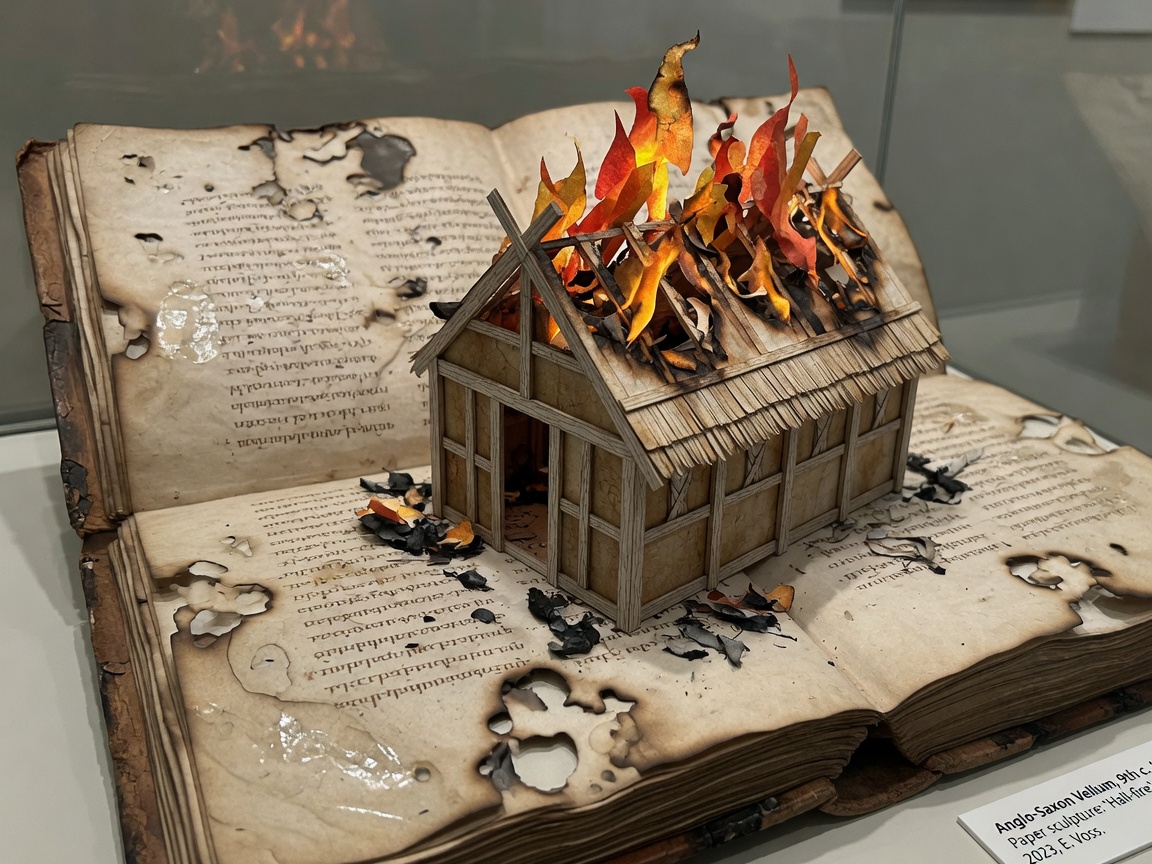
Se þäs leód-hryres leán gemundeuferan dôgrum, Eádgilse wearðfeá-sceaftum feónd. Folce gestepteofer sæ sîde sunu Ôhtereswîgum and wæpnum: he gewräc syððancealdum cear-sîðum, cyning ealdre bineát.Swâ he nîða gehwane genesen häfde,slîðra geslyhta, sunu Ecgþiówes,ellen-weorca, ôð þone ânne däg,þe he wið þam wyrme gewegan sceolde.Gewât þâ twelfa sum torne gebolgendryhten Geáta dracan sceáwian;häfde þâ gefrunen, hwanan sió fæhð ârâs,bealo-nîð biorna; him tô bearme cwom
He planned repayment for that prince’s fallin later days, became a friendto the wretched Eadgils. He backed, across the wide sea,the son of Ohthere with warriors and weapons;he later took his revenge, through cold, sorrowful campaigns,stripped that king of his life.So he had come throughevery conflict, every dangerous battle,the son of Ecgtheow, through deeds of courage,right up to that one day when he had to fightagainst the dragon. Then he set out, one of twelve,swollen with anger, the lord of the Geats,to look at the dragon; by then he had learnedhow the feud had begun,
mâððum-fät mære þurh þäs meldan hond,Se wäs on þam þreáte þreotteoða secg,se þäs orleges ôr onstealde,häft hyge-giômor, sceolde heán þononwong wîsian: he ofer willan gióngtô þäs þe he eorð-sele ânne wisse,hlæw under hrusan holm-wylme nêh,ýð-gewinne, se wäs innan fullwrätta and wîra: weard unhióre,gearo gûð-freca, gold-mâðmas heóld,eald under eorðan; näs þät ýðe ceáp,tô gegangenne gumena ænigum.Gesät þâ on nässe nîð-heard cyning,þenden hælo âbeád heorð-geneátum
that men’s evil deed;that famous treasure-cup had come into his handsthrough the informer’s own. He was the thirteenth manin that company, the one who had startedthe whole conflict, a captive, sad at heart;he had to lead them, humbled, to that place;he went against his will to where he alone knewof an earth-hall, a barrow beneath the ground,close to the sea’s surging, the strife of the waves,which was full within of wire-work and jewels;a monstrous guardian, ready for battle,held the gold treasures, old beneath the earth;that was no easy bargain for any man to strike.Then the battle-hardened king sat down on the headland,
gold-wine Geáta: him wäs geômor sefa,wäfre and wäl-fûs, Wyrd ungemete neáh,se þone gomelan grêtan sceolde,sêcean sâwle hord, sundur gedælanlîf wið lîce: nô þon lange wäsfeorh äðelinges flæsce bewunden.Biówulf maðelade, bearn Ecgþeówes:"Fela ic on giogoðe guð-ræsa genäs,"orleg-hwîla: ic þät eall gemon."Ic wäs syfan-wintre, þâ mec sinca baldor,"freá-wine folca ät mînum fäder genam,"heóld mec and häfde Hrêðel cyning,"geaf me sinc and symbel, sibbe gemunde;"näs ic him tô lîfe lâðra ôwihte
while he wished good luck to his hearth-companions,the gold-friend of the Geats;his spirit was sorrowful,restless and death-ready, his fate immeasurably near,the fate that was to greet that old man,seek out his soul’s treasure, tear life from body:not for long after that was the prince’s spiritstill wrapped in flesh. Beowulf spoke, son of Ecgtheow:“I survived many battle-rushes in my youth,times of war: I remember all of that.I was seven years old when the lord of treasures,the friendly lord of the people, took me from my father;King Hrethel kept me and had me in his household,gave me treasure and feasting, remembered our kinship;
"beorn in burgum, þonne his bearna hwylc,"Herebeald and Hæðcyn, oððe Hygelâc mîn."Wäs þam yldestan ungedêfelîce"mæges dædum morðor-bed strêd,"syððan hyne Hæðcyn of horn-bogan,"his freá-wine flâne geswencte,"miste mercelses and his mæg ofscêt,"brôðor ôðerne, blôdigan gâre:"þät wäs feoh-leás gefeoht, fyrenum gesyngad"hreðre hyge-mêðe; sceolde hwäðre swâ þeáh"äðeling unwrecen ealdres linnan."Swâ bið geômorlîc gomelum ceorle"tô gebîdanne, þät his byre rîde"giong on galgan, þonne he gyd wrece,
I was to him, while I lived, no less dear,a warrior in his strongholds, than any of his own sons,Herebeald and Haethcyn, or my own Hygelac.For the eldest, unfittingly, through a kinsman’s own act,a death-bed was spread, when Haethcyn, from his horn-bow,struck down his own friendly lord with an arrow,missed his mark and shot his own kinsman,one brother the other, with a bloody shaft:that was a fight with no compensation,a wrongful sin,heavy on the heart; even so, the princehad to lose his life unavenged.So it is a sorrowful thing for an old manto live to see his son ride, young, on the gallows;
"sârigne sang, þonne his sunu hangað"hrefne tô hrôðre and he him helpe ne mäg,"eald and in-frôd, ænige gefremman."Symble bið gemyndgad morna gehwylce"eaforan ellor-sîð; ôðres ne gýmeð"tô gebîdanne burgum on innan"yrfe-weardes, þonne se ân hafað"þurh deáðes nýd dæda gefondad."Gesyhð sorh-cearig on his suna bûre"wîn-sele wêstne, wind-gereste,"reóte berofene; rîdend swefað"häleð in hoðman; nis þær hearpan swêg,"gomen in geardum, swylce þær iú wæron.
then he may speak a lament, a grieving song,while his son hangs there for the raven’s pleasure,and he, old and worn with experience, can donothing at all to help him. He is reminded,every single morning, of his son’s going elsewhere;he cares nothing to wait for another heirwithin his walls, once that one has, through death’s compulsion,already tasted his own deeds. He looks, sorrowful,on his son’s dwelling, the deserted wine-hall,the wind’s own resting-place, stripped of joy;the riders sleep, the warriors, in the grave;there is no sound of the harp, no joy in the yards,such as there once were.
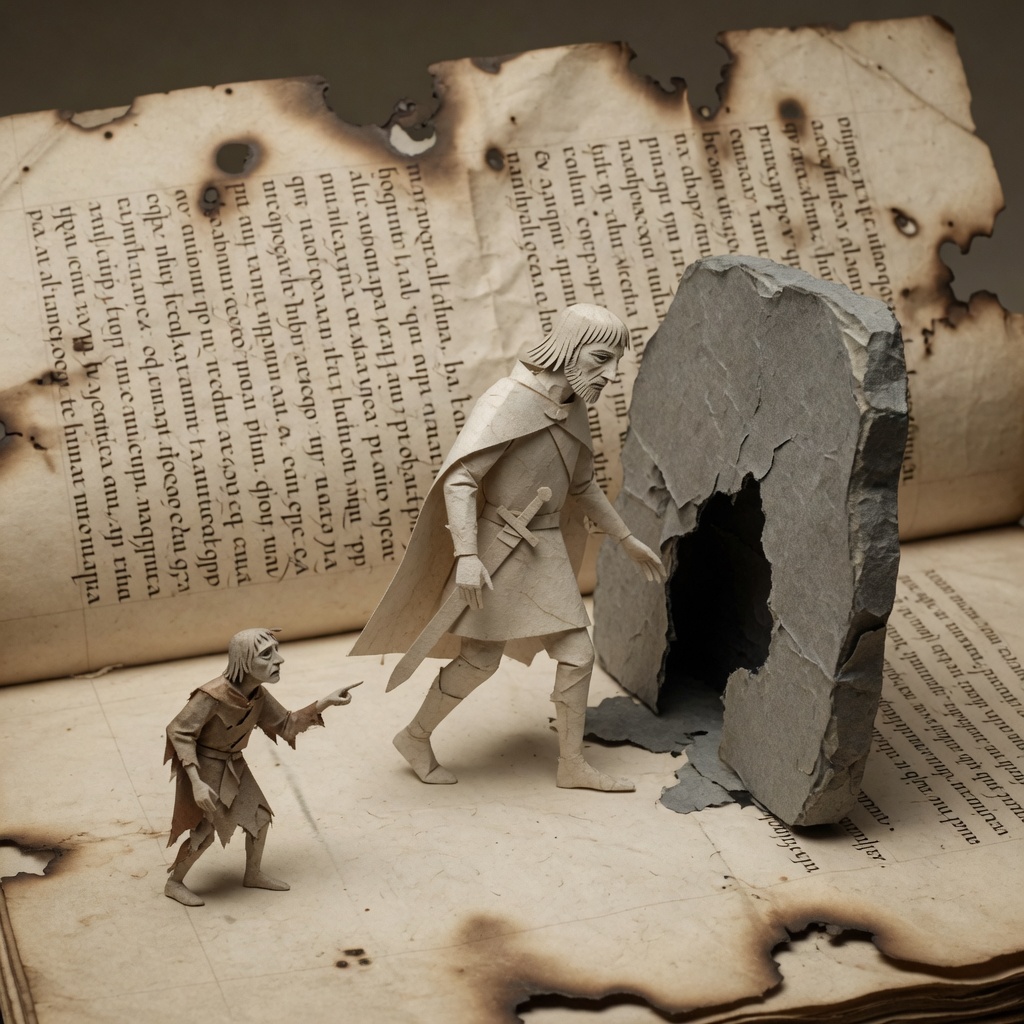
"Gewîteð þonne on sealman, sorh-leóð gäleð"ân äfter ânum: þûhte him eall tô rûm,"wongas and wîc-stede. Swâ Wedra helm"äfter Herebealde heortan sorge"weallende wäg, wihte ne meahte"on þam feorh-bonan fæhðe gebêtan:"nô þý ær he þone heaðo-rinc hatian ne meahte"lâðum dædum, þeáh him leóf ne wäs."He þâ mid þære sorge, þe him sió sâr belamp,"gum-dreám ofgeaf, godes leóht geceás;"eaferum læfde, swâ dêð eádig mon,"lond and leód-byrig, þâ he of lîfe gewât."Þâ wäs synn and sacu Sweona and Geáta,"ofer wîd wäter wrôht gemæne,"here-nîð hearda, syððan Hrêðel swealt,"oððe him Ongenþeówes eaferan wæran
“He goes then to his sleeping-chamber, sings a sorrow-song,one man alone for the other; it all seemed to himtoo spacious now, the fields and the dwelling-place.So the protector of the Weders carried surging heart-sorrowafter Herebeald’s death;he could not at allsettle the feud with that killer,nor could he hate that warrior for his hateful deed,though he was no longer dear to him.He then,with that grief that had befallen him so painfully,gave up the joys of men, chose God’s own light;he left to his sons, as a wealthy man does,his land and his strongholds, when he departed from life.Then there was crime and strife between the Swedes and the Geats,a shared hostility, across the wide water,
"frome fyrd-hwate, freóde ne woldon"ofer heafo healdan, ac ymb Hreosna-beorh"eatolne inwit-scear oft gefremedon."Þät mæg-wine mîne gewræcan,"fæhðe and fyrene, swâ hyt gefræge wäs,"þeáh þe ôðer hit ealdre gebohte,"heardan ceápe: Hæðcynne wearð,"Geáta dryhtne, gûð onsæge."Þâ ic on morgne gefrägn mæg ôðerne"billes ecgum on bonan stælan,"þær Ongenþeów Eofores niósade:"gûð-helm tôglâd, gomela Scylfing"hreás heoro-blâc; hond gemunde"fæhðo genôge, feorh-sweng ne ofteáh."Ic him þâ mâðmas, þe he me sealde,"geald ät gûðe, swâ me gifeðe wäs,
harsh warfare, once Hrethel died,and Ongentheow’s sons were bold and battle-eager,would not keep peace across the seas,but around Hreosnabeorhoften carried out terrible, malicious raids.My own kinsmen avenged that,the feud and the wrong,as is well known,though one of them paid for it with his life,a hard bargain: that battle proved fatalfor Haethcyn, lord of the Geats. Then, I heard,in the morning, one kinsman avenged the otheron his killer, with the sword’s edge,when Ongentheow struck at Eofor:his war-helmet split apart,the old Scylfing fell, pale from the sword-stroke;
"leóhtan sweorde: he me lond forgeaf,"eard êðel-wyn. Näs him ænig þearf,"þät he tô Gifðum oððe tô Gâr-Denum"oððe in Swió-rîce sêcean þurfe"wyrsan wîg-frecan, weorðe gecýpan;"symle ic him on fêðan beforan wolde,"âna on orde, and swâ tô aldre sceall"säcce fremman, þenden þis sweord þolað,"þät mec ær and sîð oft gelæste,"syððan ic for dugeðum Däghrefne wearð"tô hand-bonan, Hûga cempan:"nalles he þâ frätwe Fres-cyninge,"breóst-weorðunge bringan môste,"ac in campe gecrong cumbles hyrde,"äðeling on elne. Ne wäs ecg bona,"ac him hilde-grâp heortan wylmas,
his hand remembered feuds enough,did not hold back the death-blow. I repaid him in battlefor the treasures he had given me, with a shining sword,as was granted to me; he gave me land,a homeland to enjoy. There was no need for himto seek out a worse warrior among the Gifthas,or the Spear-Danes, or in Sweden,and buy him with wealth;I would always go before him on foot,alone in the vanguard, and so I shall alwayswage battle, as long as this sword holds out,which has served me well, early and late,ever since I became, before the assembled troops,the hand-slayer of Daeghrefn, champion of the Hugas:he was never able to carry off those trophies,that breast-ornament, to the Frisian king,
"bân-hûs gebräc. Nu sceall billes ecg,"hond and heard sweord ymb hord wîgan."Beówulf maðelode, beót-wordum spräcniéhstan sîðe: "Ic genêðde fela"gûða on geogoðe; gyt ic wylle,"frôd folces weard, fæhðe sêcan,"mærðum fremman, gif mec se mân-sceaða"of eorð-sele ût gesêceð!"Gegrêtte þâ gumena gehwylcne,hwate helm-berend hindeman sîðe,swæse gesîðas: "Nolde ic sweord beran,"wæpen tô wyrme, gif ic wiste hû"wið þam aglæcean elles meahte"gylpe wiðgrîpan, swâ ic gió wið Grendle dyde;"ac ic þær heaðu-fýres hâtes wêne,"rêðes and-hâttres: forþon ic me on hafu
but he fell in battle, that standard-bearer,a nobleman in his courage.No edge was his slayer,but a battle-grip crushed the surging of his heart,broke his bone-house. Now the sword’s edge,hand and hard blade, shall fight for the hoard.”Beowulf spoke, uttered boast-wordsfor the last time: “I risked much in battlein my youth;even now, old as I am, guardian of this people,I will seek out this feud, perform a glorious deed,if that evil-doer will come out to mefrom his earth-hall!” Then he addressed each of his men,brave helmet-bearers, for the last time,his dear companions: “I would not carry a sword,a weapon, against the dragon, if I knew any other way
"bord and byrnan. Nelle ic beorges weard"oferfleón fôtes trem, feónd unhýre,"ac unc sceal weorðan ät wealle, swâ unc Wyrd geteóð,"metod manna gehwäs. Ic eom on môde from,"þät ic wið þone gûð-flogan gylp ofersitte."Gebîde ge on beorge byrnum werede,"secgas on searwum, hwäðer sêl mæge"äfter wäl-ræse wunde gedýgan"uncer twega. Nis þät eówer sîð,"ne gemet mannes, nefne mîn ânes,"þät he wið aglæcean eofoðo dæle,"eorl-scype efne. Ic mid elne sceall"gold gegangan oððe gûð nimeð,"feorh-bealu frêcne, freán eówerne!"Ârâs þâ bî ronde rôf oretta,heard under helm, hioro-sercean bär
I might grapple with this monster, as I once did with Grendel;but I expect hot battle-fire there,poisonous breath, and so I have onshield and mail-coat. I will not flee a single foot’s lengthfrom the barrow’s guardian, but it shall go for us at the walljust as fate allots it,the Measurer of every man.I am resolute in spirit, so that I will forgoboasting against this war-flier. Wait for me on the barrow,protected by your mail-shirts, you warriors in your gear,to see which of the two of us can better bear his woundsafter this deadly onslaught. This is not your undertaking,nor is it fitting for any man but me alone,that he should match his strength against this monster,perform this earl’s deed. I shall win the gold by courage,or else battle, terrible, life-destroying evil,
under stân-cleofu, strengo getrûwodeânes mannes: ne bið swylc earges sîð.Geseah þâ be wealle, se þe worna fela,gum-cystum gôd, gûða gedîgde,hilde-hlemma, þonne hnitan fêðan,(stôd on stân-bogan) streám ût þonanbrecan of beorge; wäs þære burnan wälmheaðo-fýrum hât: ne meahte horde neáhunbyrnende ænige hwîledeóp gedýgan for dracan lêge.Lêt þâ of breóstum, þâ he gebolgen wäs,Weder-Geáta leód word ût faran,stearc-heort styrmde; stefn in becomheaðo-torht hlynnan under hârne stân.Hete wäs onhrêred, hord-weard oncniówmannes reorde; näs þær mâra fyrst,
will take your lord!” Then the famous championrose up by his shield, hard under his helmet,bore his battle-shirt in under the stone cliffs,trusted in the strength of one man alone:that is no coward’s way. Then he who had lived throughvery many battles, many crashes of war,when troops of foot-soldiers clashed together,saw, standing by the wall —there was a stone archway there —a stream breaking out from the barrow; the surge of that springwas hot with battle-fires: he could not survive there,near the hoard, for any length of time without burning,because of the dragon’s flame. Then, since he was enraged,the prince of the Weder-Geats let words burst from his chest,stout-hearted, shouted out; his voice went in,battle-clear, ringing under the grey stone.
freóde tô friclan. From ærest cwomoruð aglæcean ût of stâne,hât hilde-swât; hruse dynede.Biorn under beorge bord-rand onswâfwið þam gryre-gieste, Geáta dryhten:þâ wäs hring-bogan heorte gefýsedsäcce tô sêceanne. Sweord ær gebrädgôd gûð-cyning gomele lâfe,ecgum ungleáw, æghwäðrum wäsbealo-hycgendra brôga fram ôðrum.Stîð-môd gestôd wið steápne rondwinia bealdor, þâ se wyrm gebeáhsnûde tôsomne: he on searwum bâd.Gewât þâ byrnende gebogen scrîðan tô,gescîfe scyndan. Scyld wel gebearglîfe and lîce lässan hwîle
Hatred was stirred up; the hoard-guardian knewa man’s voice for what it was;there was no more time nowto look for friendship. First the monster’s breathcame out of the stone, hot battle-vapor;the earth resounded. The man under the barrowswung his shield-board up against the terrible stranger,the lord of the Geats; then the coiled creature’s heartwas roused to seek out battle. The good war-kinghad already drawn his sword, that ancient heirloom,its edges not blunt; each of the two, bent on destruction,felt terror of the other.The lord of his troopstood resolute behind his tall shield,when the dragon coiled itself quickly together:he waited there in his armor. Then, burning, coiled,
mærum þeódne, þonne his myne sôhte,þær he þý fyrste forman dôgorewealdan môste, swâ him Wyrd ne gescrâfhrêð ät hilde. Hond up âbrädGeáta dryhten, gryre-fâhne slôhincge lâfe, þät sió ecg gewâcbrûn on bâne, bât unswîðor,þonne his þiód-cyning þearfe häfde,bysigum gebæded. Þâ wäs beorges weardäfter heaðu-swenge on hreóum môde,wearp wäl-fýre, wîde sprungonhilde-leóman: hrêð-sigora ne gealpgold-wine Geáta, gûð-bill geswâcnacod ät nîðe, swâ hyt nô sceolde,îren ær-gôd. Ne wäs þät êðe sîð,
it came gliding on, rushing toward its fate.The shield protected well the life and bodyof that famous prince, for a shorter timethan his purpose demanded, if he was to prevail,for the first time in his life, that day,since fate had not decreed him glory in that battle.The lord of the Geats raised up his hand,struck the terror-streaked one with his ancestral blade,so that the edge failed, bright against the bone,bit less strongly than the king had need of,hard-pressed as he was by his troubles. Then the barrow’s guardianwas fierce in spirit after that battle-stroke,flung out deadly fire, war-flames sprang wide;the gold-friend of the Geats had no victory to boast of,his war-blade had failed him, naked, in the fight,
þät se mæra maga Ecgþeówesgrund-wong þone ofgyfan wolde;sceolde wyrmes willan wîc eardianelles hwergen, swâ sceal æghwylc monâlætan læn-dagas. Näs þâ long tô þon,þät þâ aglæcean hy eft gemêtton.Hyrte hyne hord-weard, hreðer æðme weóll,niwan stefne: nearo þrowodefýre befongen se þe ær folce weóld.Nealles him on heápe hand-gesteallan,äðelinga bearn ymbe gestôdonhilde-cystum, ac hy on holt bugon,ealdre burgan. Hiora in ânum weóllsefa wið sorgum: sibb æfre ne mägwiht onwendan, þam þe wel þenceð.
as it should not have, that excellent ancient iron.It was no easy journey, that the famous son of Ecgtheowshould have to give up that ground; he had to takea dwelling elsewhere, against his will, in some other place,just as every man must give up these loaned days.It was not long after that before the two combatants met again.The hoard-guardian took heart,his chest heaved with breathonce more; he suffered anguish, wrapped in fire,he who had once ruled his people. His companions did notstand around him in a body, sons of nobles,with warlike courage, but they fled into the woods,saved their own lives. Only in one of themdid his heart surge with sorrow: nothing can everset kinship aside, in a man who thinks rightly.
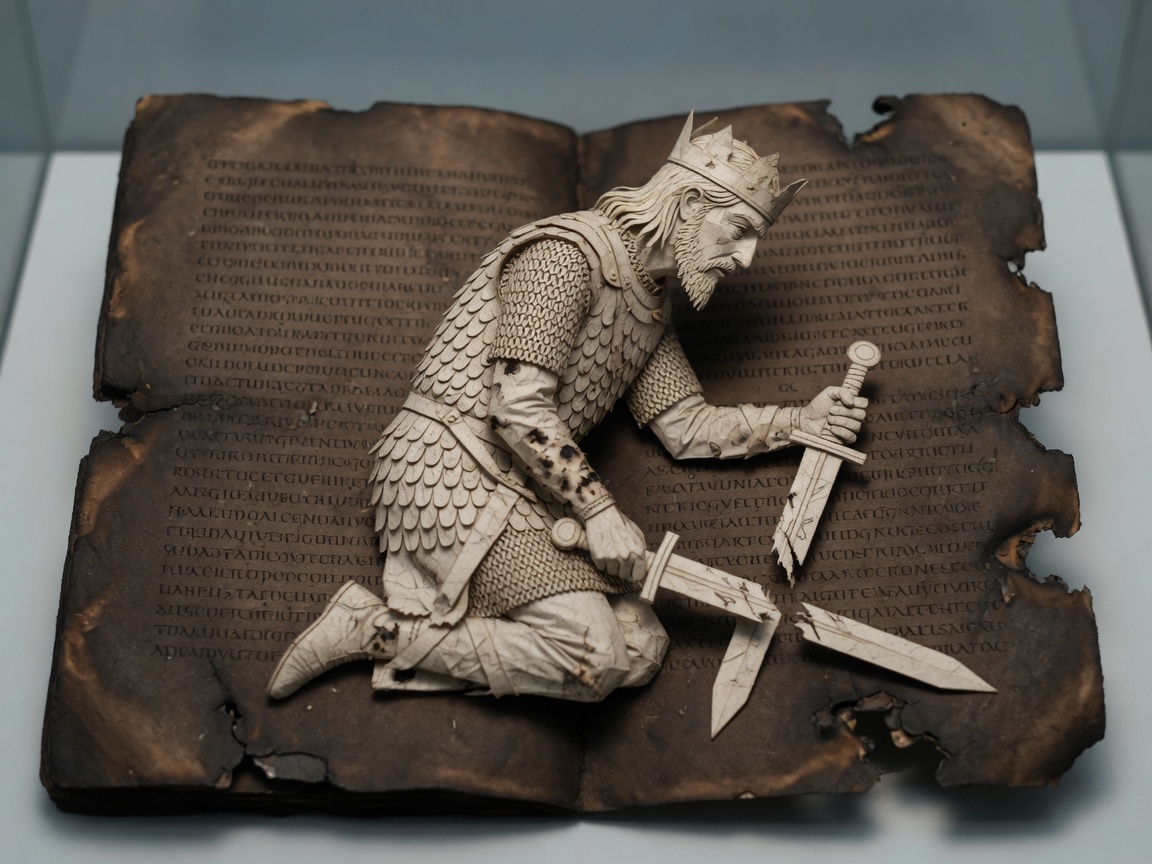
Wîglâf wäs hâten Weoxstânes sunu,leóflîc lind-wiga, leód Scylfinga,mæg Älfheres: geseah his mon-dryhtenunder here-grîman hât þrowian.Gemunde þâ þâ âre, þe he him ær forgeafwîc-stede weligne Wægmundinga,folc-rihta gehwylc, swâ his fäder âhte;ne mihte þâ forhabban, hond rond gefêng,geolwe linde, gomel swyrd geteáh,þät wäs mid eldum Eánmundes lâf,suna Ôhteres, þam ät säcce wearðwracu wine-leásum Weohstânes banamêces ecgum, and his mâgum ätbärbrûn-fâgne helm, hringde byrnan,eald sweord eotonisc, þät him Onela forgeaf,his gädelinges gûð-gewædu,
Wiglaf was he called, son of Weohstan,a beloved shield-warrior, a prince of the Scylfings,kinsman of Aelfhere: he saw his lordsuffering the heat under his war-mask.He remembered then the favor his lord had granted him,the wealthy dwelling of the Waegmundings,every folk-right his father had held;he could not hold back then —his hand seized the shield,the yellow linden-wood, drew his old sword,known among men as the legacy of Eanmund,son of Ohthere, whom, friendless in exile,Weohstan killed with the sword’s edge in battle,and carried off to his kinsmen the brown-gleaming helmet,the ringed mail-coat, the old giant-made swordthat Onela had given him, his kinsman’s own war-gear,
fyrd-searo fûslîc: nô ymbe þâ fæhðe spräc,þeáh þe he his brôðor bearn âbredwade.He frätwe geheóld fela missera,bill and byrnan, ôð þät his byre mihteeorl-scipe efnan, swâ his ær-fäder;geaf him þâ mid Geátum gûð-gewædaæghwäs unrîm; þâ he of ealdre gewât,frôd on forð-weg. Þâ wäs forma sîðgeongan cempan, þät he gûðe ræsmid his freó-dryhtne fremman sceolde;ne gemealt him se môd-sefa, ne his mæges lâfgewâc ät wîge: þät se wyrm onfand,syððan hie tôgädre gegân häfdon.Wîglâf maðelode word-rihta fela,sägde gesîðum, him wäs sefa geômor:"Ic þät mæl geman, þær we medu þêgun,
ready battle-equipment:he did not speak of that feud,though he had cut down his brother’s son.He kept that gear for many a long year,the sword and the mail-coat, until his own soncould perform deeds of courage, as his father had before him;then he gave him,among the Geats, war-gear beyond counting,when he departed from life, old, on his way onward.This was the young champion’s first occasionto carry out a battle-charge beside his noble lord;his courage did not melt, nor did his kinsman’s legacyfail him in the fight:the dragon found that out,once the two of them had come together.Wiglaf spoke many fitting words,
"þonne we gehêton ûssum hlâforde"in biór-sele, þe ûs þâs beágas geaf,"þät we him þâ gûð-geatwa gyldan woldon,"gif him þyslîcu þearf gelumpe,"helmas and heard sweord: þê he ûsic on herge geceás"tô þyssum sîð-fate sylfes willum,"onmunde ûsic mærða and me þâs mâðmas geaf,"þê he ûsic gâr-wîgend gôde tealde,"hwate helm-berend, þeáh þe hlâford ûs"þis ellen-weorc âna âþôhte"tô gefremmanne, folces hyrde,"forþam he manna mæst mærða gefremede,"dæda dollîcra. Nu is se däg cumen,"þät ûre man-dryhten mägenes behôfað"gôdra gûð-rinca: wutun gangan tô,
said to his companions — his heart was sorrowful:“I remember the time when we drank mead together,when we promised our lord, in the beer-hall,the one who gave us these rings, that we would repay himfor this war-gear, should such need ever befall him,these helmets and hard swords: he chose us out of the armyfor this venture of his own will, thought us worth glory,and gave me these treasures, because he counted usgood spear-warriors, brave helmet-bearers —even though our lord meant to carry out this deed of couragealone, protector of his people, since he has donethe most glorious deeds, the boldest actions, of any man.Now the day has come that our liege-lordhas need of the strength of good warriors: let us go to him,help our battle-leader, while the terror lasts,
"helpan hild-fruman, þenden hyt sý,"glêd-egesa grim! God wât on mec,"þät me is micle leófre, þät mînne lîc-haman"mid mînne gold-gyfan glêd fäðmie."Ne þynceð me gerysne, þät we rondas beren"eft tô earde, nemne we æror mægen"fâne gefyllan, feorh ealgian"Wedra þiódnes. Ic wât geare,"þät næron eald-gewyrht, þät he âna scyle"Geáta duguðe gnorn þrowian,"gesîgan ät säcce: sceal ûrum þät sweord and helm,"byrne and byrdu-scrûd bâm gemæne."Wôd þâ þurh þone wäl-rêc, wîg-heafolan bärfreán on fultum, feá worda cwäð:"Leófa Biówulf, læst eall tela,
this grim dread of fire! God knows in methat it is far dearer to me that the flame should take my bodyalong with my gold-giver.It does not seem right to methat we should carry our shields back home,unless we can first bring down the enemy,defend the life of the prince of the Weders.I know well that his past deeds do not deservethat he alone, of all the troop of Geats,should suffer this grief, sink in this struggle:sword and helmet, mail-coat and war-dress,shall be shared between the two of us.”He waded then through the deadly smoke,bore his war-helmet to help his lord,spoke a few words: “Beloved Beowulf,
"swâ þu on geoguð-feore geâra gecwæde,"þät þu ne âlæte be þe lifigendum"dôm gedreósan: scealt nu dædum rôf,"äðeling ân-hydig, ealle mägene"feorh ealgian; ic þe fullæstu!"Äfter þâm wordum wyrm yrre cwom,atol inwit-gäst ôðre sîðe,fýr-wylmum fâh fiónda niósan,lâðra manna; lîg-ýðum forbornbord wið ronde: byrne ne meahtegeongum gâr-wigan geóce gefremman:ac se maga geonga under his mæges scyldelne geeode, þâ his âgen wäsglêdum forgrunden. Þâ gen gûð-cyningmærða gemunde, mägen-strengo,
carry it all through well, just as you said, long ago,in your youth, that while you livedyou would not let your glory fail: you must now,resolute in your deeds, noble-minded prince,defend your life with all your strength;I will stand by you!” After these wordsthe dragon came in fury a second time,that terrible, hostile spirit, with surging flames,to seek out its enemies, those hated men;the shield burned to the boss in waves of fire;the mail-coat could offer no help at allto the young spear-warrior;but the young man pressed on boldlyunder his kinsman’s shield, once his own had been destroyed by the flames.Then the war-king still remembered glory,
slôh hilde-bille, þät hyt on heafolan stôdnîðe genýded: Nägling forbärst,geswâc ät säcce sweord Biówulfesgomol and græg-mæl. Him þät gifeðe ne wäs,þät him îrenna ecge mihtonhelpan ät hilde; wäs sió hond tô strong,se þe mêca gehwane mîne gefrægeswenge ofersôhte, þonne he tô säcce bärwæpen wundrum heard, näs him wihte þê sêl.Þâ wäs þeód-sceaða þriddan sîðe,frêcne fýr-draca fæhða gemyndig,ræsde on þone rôfan, þâ him rûm âgeald,hât and heaðo-grim, heals ealne ymbefêngbiteran bânum; he geblôdegod wearðsâwul-drióre; swât ýðum weóll.
struck with his battle-sword with all his might,so that it stuck in the head, driven by hatred:Naegling shattered, Beowulf’s own swordfailed him in the fight, old and grey.It was not granted to him that edges of ironcould help him in that battle; his hand was too strong —the hand that, I have heard, overtaxed every bladewith its own stroke, whenever he carried into battlea weapon wondrously hard — it did him no good, even so.Then the people’s tormentor, for the third time,that terrible fire-dragon, mindful of feuds,rushed at that brave man, when the chance was given,hot and battle-fierce, seized his whole neckbetween its sharp teeth; he grew bloodied with his own life’s blood;blood welled out in waves.
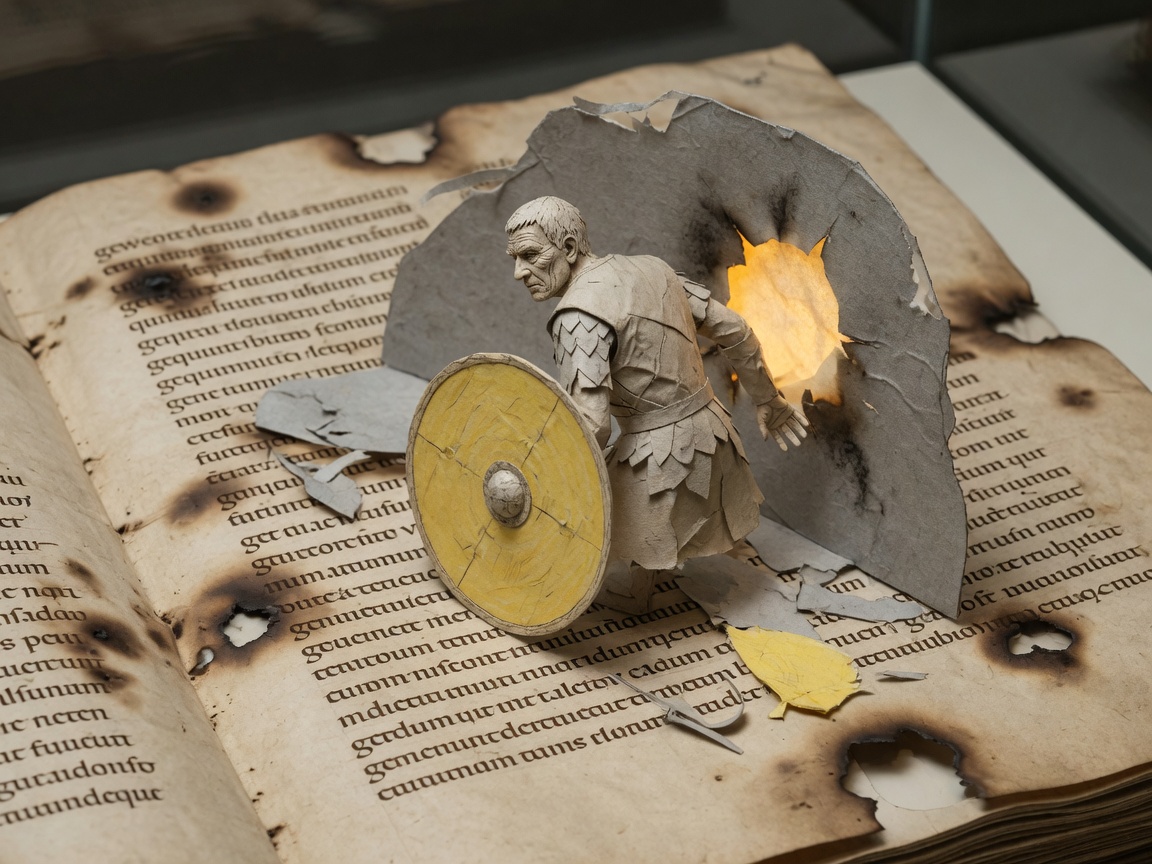
Þâ ic ät þearfe gefrägn þeód-cyningesand-longne eorl ellen cýðan,cräft and cênðu, swâ him gecynde wäs;ne hêdde he þäs heafolan, ac sió hand gebarnmôdiges mannes, þær he his mæges healp,þät he þone nîð-gäst nioðor hwêne slôh,secg on searwum, þät þät sweord gedeáffâh and fäted, þät þät fýr ongonsweðrian syððan. Þâ gen sylf cyninggeweóld his gewitte, wäll-seaxe gebräd,biter and beadu-scearp, þät he on byrnan wäg:forwrât Wedra helm wyrm on middan.Feónd gefyldan (ferh ellen wräc),and hi hyne þâ begen âbroten häfdon,sib-äðelingas: swylc sceolde secg wesan,
Then I have heard that, in his king’s need,the earl at his side showed his courage,his strength and boldness, just as was natural to him;he paid no mind to his own head, but the brave man’s handwas burned, as he helped his kinsman,so that he struck that hostile creaturesomewhat lower down, the man in his war-gear,so that the sword sank in, bright and gold-adorned,so that the fire then began to die down afterward.Then again the king himself came back to his senses,drew his war-knife, bitter and battle-sharp,which he wore on his mail-coat; the protector of the Wederscut the dragon through the middle. They brought down their enemy —courage drove out its life — and the two of them together
þegn ät þearfe. Þät þam þeódne wässîðast sîge-hwîle sylfes dædum,worlde geweorces. Þâ sió wund ongon,þe him se eorð-draca ær geworhte,swêlan and swellan. He þät sôna onfand,þät him on breóstum bealo-nîð weóll,âttor on innan. Þâ se äðeling gióng,þät he bî wealle, wîs-hycgende,gesät on sesse; seah on enta geweorc,hû þâ stân-bogan stapulum fästeêce eorð-reced innan heóldon.Hyne þâ mid handa heoro-dreórigneþeóden mærne þegn ungemete till,wine-dryhten his wätere gelafede,hilde-sädne and his helm onspeón.
had destroyed it, those noble kinsmen:so should a man be, a thane in time of need!That was, for the prince, the last of his moments of victory,by his own deeds, the last of his work in the world.Then the wound the earth-dragon had given him earlierbegan to burn and to swell; he soon discoveredthat a deadly evil was welling in his chest,poison within. Then the nobleman went,still clear in his thought, to where he could siton a seat by the wall; he looked on the work of giants,saw how those stone arches, fixed on their pillars,held up that eternal earth-hall from within.Then with his own hands, that most loyal of thanes,beyond all measure faithful, bathed his blood-stained lord,
Biówulf maðelode, he ofer benne spräc,wunde wäl-bleáte (wisse he gearwe,þät he däg-hwîla gedrogen häfdeeorðan wynne; þâ wäs eall sceacendôgor-gerîmes, deáð ungemete neáh):"Nu ic suna mînum syllan wolde"gûð-gewædu, þær me gifeðe swâ"ænig yrfe-weard äfter wurde,"lîce gelenge. Ic þâs leóde heóld"fîftig wintra: näs se folc-cyning"ymbe-sittendra ænig þâra,"þe mec gûð-winum grêtan dorste,"egesan þeón. Ic on earde bâd"mæl-gesceafta, heóld mîn tela,
glorious in battle, refreshed him with water,and loosened his helmet. Beowulf spoke,spoke despite his wound, his mortal injury(he knew well enough that he had lived outhis allotted days, enjoyed his time on earth;his full count of days was entirely spent,death immeasurably near): “Now I would wantto give my war-gear to my own son,had any heir of my body been granted me,to come after me. I have held this peoplefifty winters; there was no king among the neighboring nationswho dared to face me with battle-friends,threaten me with terror. I waited out my time on earth,held what was mine well, looked for no treacherous quarrels,
"ne sôhte searo-nîðas, ne me swôr fela"âða on unriht. Ic þäs ealles mäg,"feorh-bennum seóc, gefeán habban:"forþam me wîtan ne þearf waldend fira"morðor-bealo mâga, þonne mîn sceaceð"lîf of lîce. Nu þu lungre"geong, hord sceáwian under hârne stân,"Wîglâf leófa, nu se wyrm ligeð,"swefeð sâre wund, since bereáfod."Bió nu on ôfoste, þät ic ær-welan,"gold-æht ongite, gearo sceáwige"swegle searo-gimmas, þät ic þý sêft mæge"äfter mâððum-welan mîn âlætan"lîf and leód-scipe, þone ic longe heóld."
swore no false oaths. For all of thisI may have joy, sick as I am with mortal wounds,since the Ruler of men need not blame mefor the murder of kinsmen, once my lifedeparts from my body. Now go quickly,look at the hoard under the grey stone,dear Wiglaf, now that the dragon lies there,sleeping, sorely wounded, stripped of his treasure.Be quick, so that I may see that ancient wealth,that gold, may look with my own eyeson the bright, precious gems, so that I may,because of that great store of treasure,more easily give up my life and this lordshipthat I have held so long.”
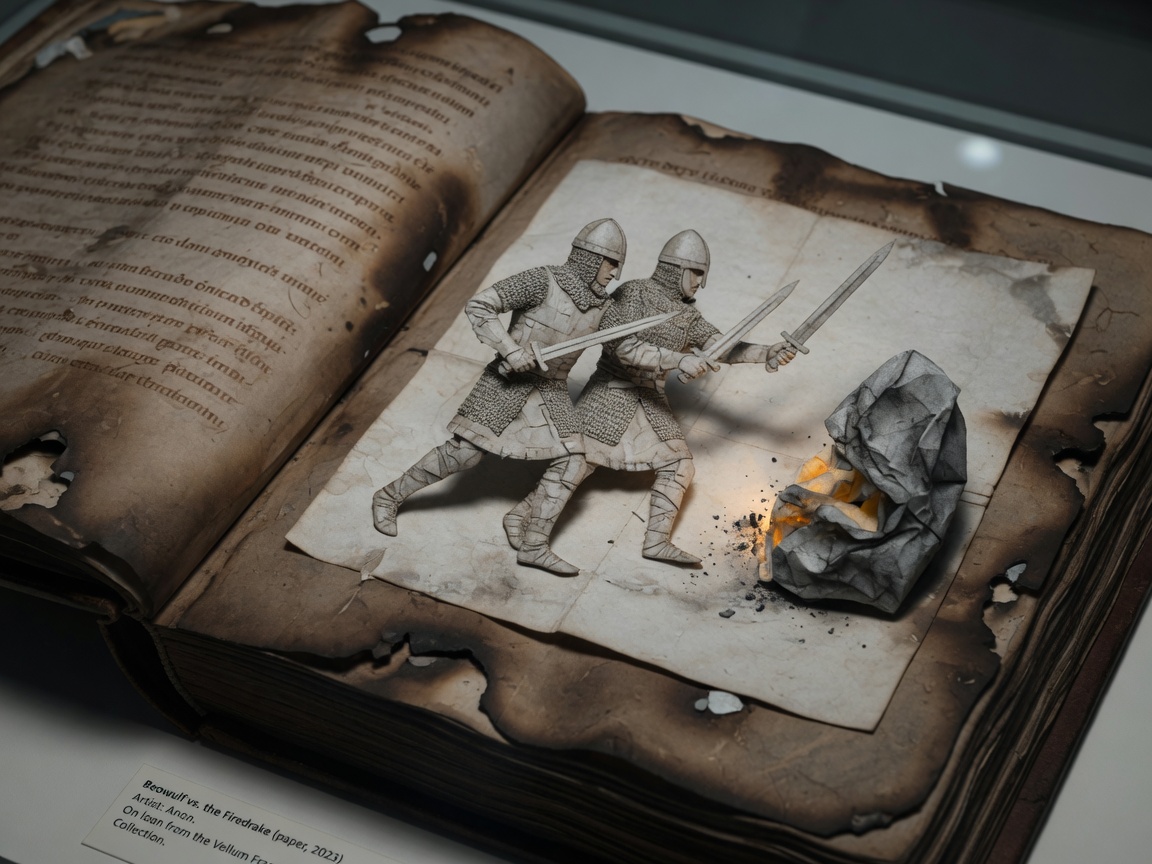
Þâ ic snûde gefrägn sunu Wihstânesäfter word-cwydum wundum dryhtnehýran heaðo-siócum, hring-net beran,brogdne beadu-sercean under beorges hrôf.Geseah þâ sige-hrêðig, þâ he bî sesse geóng,mago-þegn môdig mâððum-sigla fela,gold glitinian grunde getenge,wundur on wealle and þäs wyrmes denn,ealdes uht-flogan, orcas stondan,fyrn-manna fatu feormend-leáse,hyrstum behrorene: þær wäs helm monig,eald and ômig, earm-beága fela,searwum gesæled. Sinc eáðe mäg,gold on grunde, gumena cynnes
Then, I have heard, the son of Weohstan,quickly, after these words, obeyed his wounded lord,sick from battle, wore his ring-net,his woven battle-shirt, in under the barrow’s roof.Then, triumphant, as he passed by the seat,that brave young thane saw many treasures,gold glittering, lying on the ground,wonders on the wall, and the dragon’s den,that old dawn-flier’s;he saw cups standing there,vessels of men long gone, without a keeper,stripped of their ornaments; there was many a helmet,old and rusted, many arm-rings,skillfully twisted. Treasure can easily,
gehwone ofer-higian, hýde se þe wylle!Swylce he siomian geseah segn eall-gyldenheáh ofer horde, hond-wundra mæst,gelocen leoðo-cräftum: of þam leóma stôd,þät he þone grund-wong ongitan meahte,wräte giond-wlîtan. Näs þäs wyrmes þæronsýn ænig, ac hyne ecg fornam.Þâ ic on hlæwe gefrägn hord reáfian,eald enta geweorc ânne mannan,him on bearm hladan bunan and discassylfes dôme, segn eác genom,beácna beorhtost; bill ær-gescôd(ecg wäs îren) eald-hlâfordesþam þâra mâðma mund-bora wäs
gold in the ground, get the better of any manalive, hide it who will! Likewise he sawan all-golden banner hanging high over the hoard,the greatest of hand-wonders, woven with skill;a light shone from it, so that he could make outthe floor of the cavern, examine the treasures.There was no sign of the dragon there at all;a blade had taken him. Then, I have heard,one man plundered that hoard in the barrow,that ancient work of giants, loaded into his armscups and platters at his own discretion,took the banner too, brightest of beacons;a blade had already wounded —the edge was iron —
longe hwîle, lîg-egesan wäghâtne for horde, hioro-weallende,middel-nihtum, ôð þät he morðre swealt.Âr wäs on ôfoste eft-sîðes georn,frätwum gefyrðred: hyne fyrwet bräc,hwäðer collen-ferð cwicne gemêttein þam wong-stede Wedra þeóden,ellen-siócne, þær he hine ær forlêt.He þâ mid þâm mâðmum mærne þióden,dryhten sînne driórigne fandealdres ät ende: he hine eft ongonwäteres weorpan, ôð þät wordes ordbreóst-hord þurhbräc. Beówulf maðelode,gomel on giohðe (gold sceáwode):
that old guardian’s weapon, he who had long kept watchover those treasures, carried a terrifying fire,hot for the hoard, surging in battle,at midnight, until he died by violence.The messenger was in haste, eager for the way back,urged on by the treasures; curiosity gnawed at him,whether, bold in spirit, he would find the lord of the Wedersstill alive, in the place where he had left him,weakened by the fight. Then, with the treasures,he found the famous prince, his own lord,bleeding, at the end of his life; he began againto sprinkle him with water, until the point of his wordsbroke through his breast’s own hoard.Beowulf spoke —
"Ic þâra frätwa freán ealles þanc"wuldur-cyninge wordum secge,"êcum dryhtne, þe ic her on starie,"þäs þe ic môste mînum leódum"ær swylt-däge swylc gestrýnan."Nu ic on mâðma hord mîne bebohte"frôde feorh-lege, fremmað ge nu"leóda þearfe; ne mäg ic her leng wesan."Hâtað heaðo-mære hlæw gewyrcean,"beorhtne äfter bæle ät brimes nosan;"sê scel tô gemyndum mînum leódum"heáh hlifian on Hrones nässe,"þät hit sæ-lîðend syððan hâtan"Biówulfes biorh, þâ þe brentingas
the old man, in his grief, looked at the gold:“I speak my thanks, in words, to the Lord of all,to the King of glory, the eternal Ruler,for these treasures I look upon here,that I was allowed, before my death-day,to win such wealth for my people. Now that I have paidfor this hoard of treasures with my own old life,you all attend now to the people’s needs;I can stay here no longer. Command the battle-famous onesto build a burial mound, bright, after the funeral fire,on the sea’s headland; let it tower highon Whale’s Ness, as a memorial for my people,so that seafarers afterward will call itBeowulf’s Barrow, those who drive their ships
"ofer flôda genipu feorran drîfað."Dyde him of healse hring gyldenneþióden þrîst-hydig, þegne gesealde,geongum gâr-wigan, gold-fâhne helm,beáh and byrnan, hêt hyne brûcan well:"Þu eart ende-lâf ûsses cynnes,"Wægmundinga; ealle Wyrd forsweóf,"mîne mâgas tô metod-sceafte,"eorlas on elne: ic him äfter sceal."Þät wäs þam gomelan gingeste wordbreóst-gehygdum, ær he bæl cure,hâte heaðo-wylmas: him of hreðre gewâtsâwol sêcean sôð-fästra dôm.
from far off over the darkness of the floods.”The bold-minded prince took from his necka golden ring, gave it to his thane,to the young spear-warrior, and his gold-plated helmet,ring and mail-coat, bade him use them well:“You are the last remnant of our family,of the Waegmundings;fate has swept away all my kinsmen,earls in their courage, to their destined end;I must follow them.” That was the old man’s last wordfrom the thoughts of his heart, before he chose the funeral fire,the hot, surging flames; from his breast departedhis soul, to seek the glory of those who deal fairly.
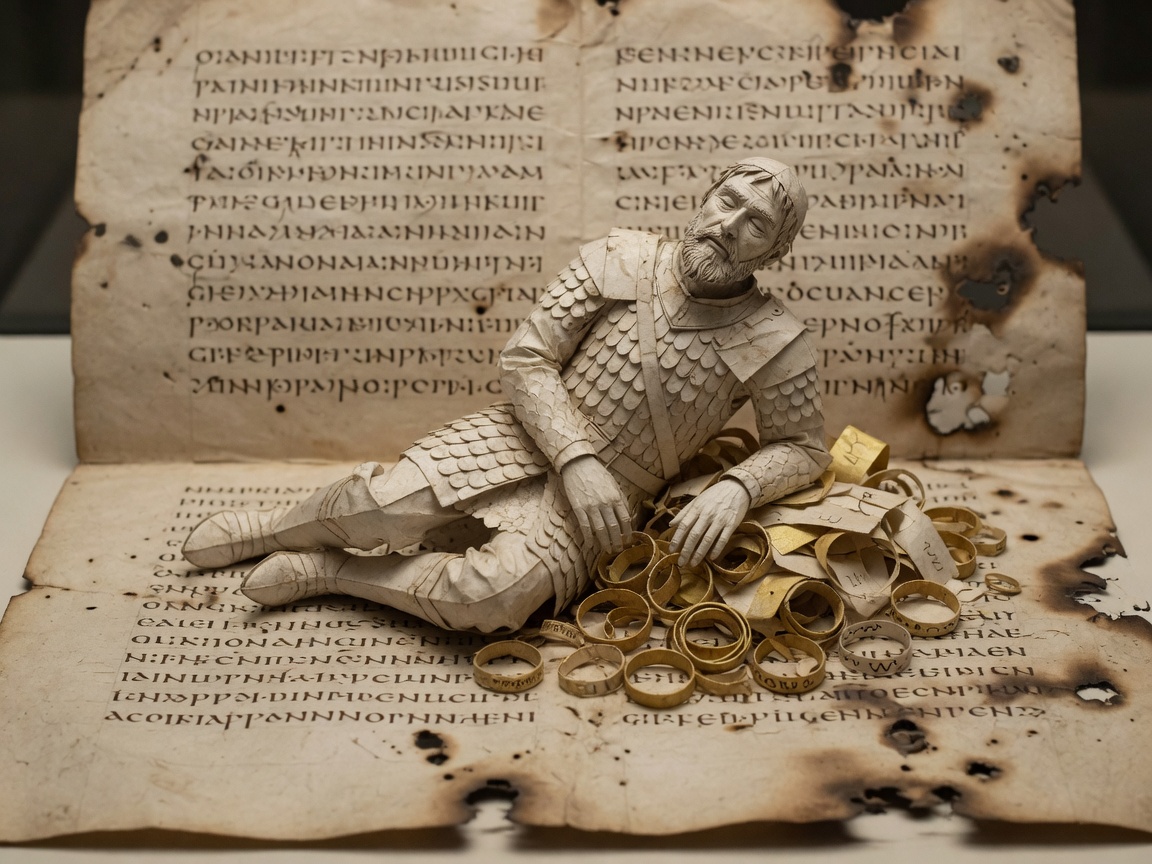
Þâ wäs gegongen guman unfrôdumearfoðlîce, þät he on eorðan geseahþone leófestan lîfes ät endebleáte gebæran. Bona swylce läg,egeslîc eorð-draca, ealdre bereáfod,bealwe gebæded: beáh-hordum lengwyrm woh-bogen wealdan ne môste,ac him îrenna ecga fornâmon,hearde heaðo-scearpe homera lâfe,þät se wîd-floga wundum stillehreás on hrusan hord-ärne neáh,nalles äfter lyfte lâcende hwearfmiddel-nihtum, mâðm-æhta wloncansýn ýwde: ac he eorðan gefeóllfor þäs hild-fruman hond-geweorce.
It had gone hard, then, for that young man,to have to watch on the ground the dearest of mensuffering so pitifully, at the end of his life.His slayer lay there too, that terrible earth-dragon,stripped of life,brought down by disaster:the coiled worm was no longer allowed to guardthe ring-hoard,but iron edges had taken him,hard and battle-sharp, leavings of the hammer,so that the wide-flier, stilled now by his wounds,fell to the ground near his hoard-hall;no longerdid he go flying through the air at midnight,showing himself, proud of his treasures,
Hûru þät on lande lyt manna þâhmägen-âgendra mîne gefræge,þeáh þe he dæda gehwäs dyrstig wære,þät he wið âttor-sceaðan oreðe geræsde,oððe hring-sele hondum styrede,gif he wäccende weard onfundebûan on beorge. Biówulfe wearðdryht-mâðma dæl deáðe forgolden;häfde æghwäðer ende gefêredlænan lîfes. Näs þâ lang tô þon,þät þâ hild-latan holt ofgêfan,tydre treów-logan tyne ätsomne,þâ ne dorston ær dareðum lâcanon hyra man-dryhtnes miclan þearfe;
but he fell to earth through that battle-leader’s handiwork.Indeed, few men of strength in that land,as I have heard, though daring in every deed,had any luck rushing against that poisonous breath,or laying hands on the ring-hall,if they had found its guardian awake,keeping watch in the barrow. Beowulf’s shareof that precious hoard was paid for with death;each of the two had reached the endof this loaned life. It was not long, then,before those battle-slow ones came out of the woods,ten faithless men together, who had not dared beforeto play with spears in their lord’s great need;but now, ashamed, they carried their shields,
ac hy scamiende scyldas bæran,gûð-gewædu, þær se gomela läg:wlitan on Wîglâf. He gewêrgad sät,fêðe-cempa freán eaxlum neáh,wehte hyne wätre; him wiht ne speów;ne meahte he on eorðan, þeáh he ûðe wel,on þam frum-gâre feorh gehealdan,ne þäs wealdendes willan wiht oncirran;wolde dôm godes dædum rædangumena gehwylcum, swâ he nu gen dêð.Þâ wäs ät þam geongan grim andswaruêð-begête þâm þe ær his elne forleás.Wîglâf maðelode, Weohstânes sunu,secg sârig-ferð seah on unleófe:
their war-gear, to where the old man lay;they looked at Wiglaf. He sat there exhausted,a foot-soldier, close by his lord’s shoulder,tried to wake him with water;it did no good at all.He could not, for all he wished it, keep any life at allin his leader, here on this earth, nor turn asidethe Ruler’s will in any way at all;God’s judgment would govern the deeds of every man,just as it still does now. Then a grim answerwas easily gotten, from that young man,for those who had lost their courage. Wiglaf spoke,son of Weohstan, a man sad at heart,looked at those unloved ones:
"Þät lâ mäg secgan, se þe wyle sôð sprecan,"þät se mon-dryhten, se eów þâ mâðmas geaf,"eóred-geatwe, þe ge þær on standað,"þonne he on ealu-bence oft gesealde"heal-sittendum helm and byrnan,"þeóden his þegnum, swylce he þryðlîcost"ôhwær feor oððe neáh findan meahte,"þät he genunga gûð-gewædu"wrâðe forwurpe. Þâ hyne wîg beget,"nealles folc-cyning fyrd-gesteallum"gylpan þorfte; hwäðre him god ûðe,"sigora waldend, þät he hyne sylfne gewräc"âna mid ecge, þâ him wäs elnes þearf,"Ic him lîf-wraðe lytle meahte
“This much may truly be said,by anyone who wishes to speak the truth,that the lord who gave you those treasures,the armor you are standing there in,when he often gave, from the ale-bench, to hall-sitters,helmet and mail-coat, the prince to his thanes,the finest he could find anywhere, far or near —that he wasted that battle-gear utterly and for nothing,when war came upon him. The king of this peoplehad no need at all to boast of his war-companions;yet God granted him, the Ruler of victories,that he avenged himself, alone, with his own blade,when he had need of courage. I could give himlittle protection for his life in that fight,
"ätgifan ät gûðe and ongan swâ þeáh"ofer mîn gemet mæges helpan:"symle wäs þý sæmra, þonne ic sweorde drep"ferhð-genîðlan, fýr unswîðor"weóll of gewitte. Wergendra tô lyt"þrong ymbe þeóden, þâ hyne sió þrag becwom."Nu sceal sinc-þego and swyrd-gifu"eall êðel-wyn eówrum cynne,"lufen âlicgean: lond-rihtes môt"þære mæg-burge monna æghwylc"îdel hweorfan, syððan äðelingas"feorran gefricgean fleám eówerne,"dôm-leásan dæd. Deáð bið sêlla"eorla gehwylcum þonne edwît-lîf!"
and yet I began, beyond my own measure,to help my kinsman;it always went the worsefor our enemy, once I struck him with my sword,the fire welling less strongly out of his head.Too few defenders crowded round the princewhen that dire hour came upon him.Now the taking of treasureand the giving of swords, all the joy of home,shall come to an end for your kindred, stripped of joy;every man of your family line shall have to gowithout his land-right, once nobles far awaylearn of your flight, that shameful deed.Death is better for any warrior than a life of disgrace!”
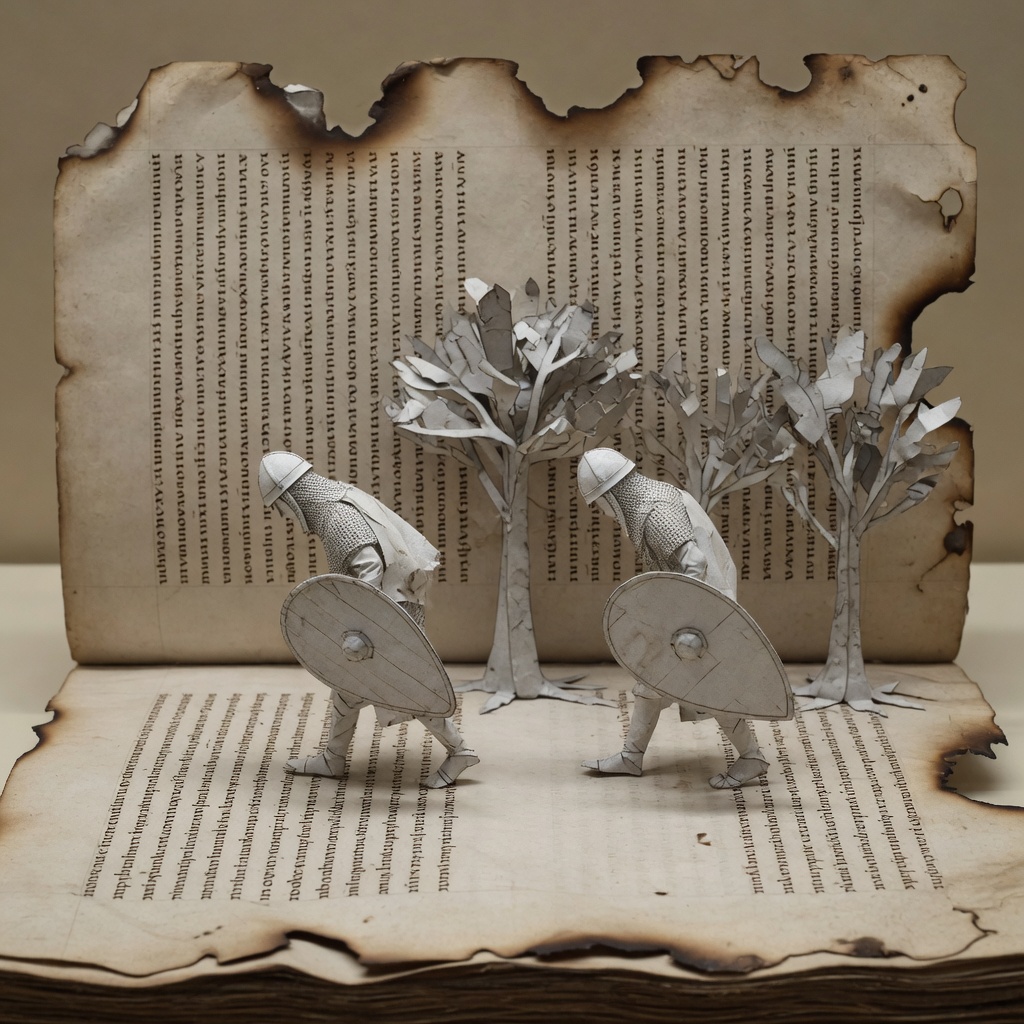
Hêht þâ þät heaðo-weorc tô hagan biódanup ofer êg-clif, þær þät eorl-weorodmorgen-longne däg môd-giômor sät,bord-häbbende, bega on wênumende-dôgores and eft-cymesleófes monnes. Lyt swîgodeniwra spella, se þe näs gerâd,ac he sôðlîce sägde ofer ealle;"Nu is wil-geofa Wedra leóda,"dryhten Geáta deáð-bedde fäst,"wunað wäl-reste wyrmes dædum;"him on efn ligeð ealdor-gewinna,"siex-bennum seóc: sweorde ne meahte"on þam aglæcean ænige þinga
Then he ordered that the battle’s outcomebe announced at the camp, up over the sea-cliff,where the troop of earls had sat all morning,sick at heart, expecting both things —the end of his days, or his coming back,their beloved lord. He who rode to the headlanddid not stay silent long about the news,but told everyone the truth: “Now the giver of wishesto the Weder people, the lord of the Geats,is fastened to his death-bed, lies in that slaughter-restthrough the dragon’s deeds;beside him lieshis mortal enemy, sick from knife-wounds —with his sword he could not, by any means,
"wunde gewyrcean. Wîglâf siteð"ofer Biówulfe, byre Wihstânes,"eorl ofer ôðrum unlifigendum,"healdeð hige-mêðum heáfod-wearde"leófes and lâðes. Nu ys leódum wên"orleg-hwîle, syððan underne"Froncum and Frysum fyll cyninges"wîde weorðeð. Wäs sió wrôht scepen"heard wið Hûgas, syððan Higelâc cwom"faran flot-herge on Fresna land,"þær hyne Hetware hilde gehnægdon,"elne geeodon mid ofer-mägene,"þät se byrn-wîga bûgan sceolde,"feóll on fêðan: nalles frätwe geaf
inflict any wound at all on that monster.Wiglaf sits over Beowulf, son of Weohstan,one earl over the other, lifeless now;he keeps, weary at heart, a head-watchover the beloved and the hated both.Now the people can expect a time of war,once the king’s death becomes widely knownto the Franks and the Frisians. That hostility was forged hardagainst the Hugas, once Hygelac came sailingwith his fleet into Frisian lands,where the Hetware defeated him in battle,brought it about, with greater strength,that the mail-clad warrior had to fall,sank amid his troop; he gave no treasure then
"ealdor dugoðe; ûs wäs â syððan"Merewioinga milts ungyfeðe."Ne ic tô Sweó-þeóde sibbe oððe treówe"wihte ne wêne; ac wäs wîde cûð,"þätte Ongenþió ealdre besnyðede"Hæðcyn Hrêðling wið Hrefna-wudu,"þâ for on-mêdlan ærest gesôhton"Geáta leóde Gûð-scilfingas."Sôna him se frôda fäder Ôhtheres,"eald and eges-full ond-slyht âgeaf,"âbreót brim-wîsan, brýd âheórde,"gomela ió-meowlan golde berofene,"Onelan môdor and Ôhtheres,
to his followers; ever since,the Merovingian king’s mercy has been denied us.Nor do I expect any peace or good faith at allfrom the Swedish people;it was widely knownthat Ongentheow took the life of Haethcyn,son of Hrethel, near Ravenswood,when out of pride the Geatish peoplefirst attacked the War-Scylfings. Straightawaythe wise father of Ohthere, old and terrible,struck back, cut down the sea-king,rescued his wife, the aged woman,mother of Onela and mother of Ohthere,
"and þâ folgode feorh-genîðlan"ôð þät hî ôðeodon earfoðlîce"in Hrefnes-holt hlâford-leáse."Besät þâ sin-herge sweorda lâfe"wundum wêrge, weán oft gehêt"earmre teohhe andlonge niht:"cwäð he on mergenne mêces ecgum"getan wolde, sume on galg-treówum"fuglum tô gamene. Frôfor eft gelamp"sârig-môdum somod ær-däge,"syððan hie Hygelâces horn and býman"gealdor ongeâton. Þâ se gôda com"leóda dugoðe on lâst faran.
stripped of her gold, and then pursuedhis mortal enemies until they escaped,with great difficulty,lordless, into Ravenswood. Then he besieged,with a huge army, those left of the sword,weary with wounds; he promised harmthe whole night long to that wretched troop,said in the morning he would kill them with sword-edges,some on the gallows-tree, for the amusement of birds.Comfort came again to those sorrowful in spirit,at daybreak, once they heard Hygelac’s hornand trumpet sound, when the good man camefollowing on their trail with the flower of his troop.
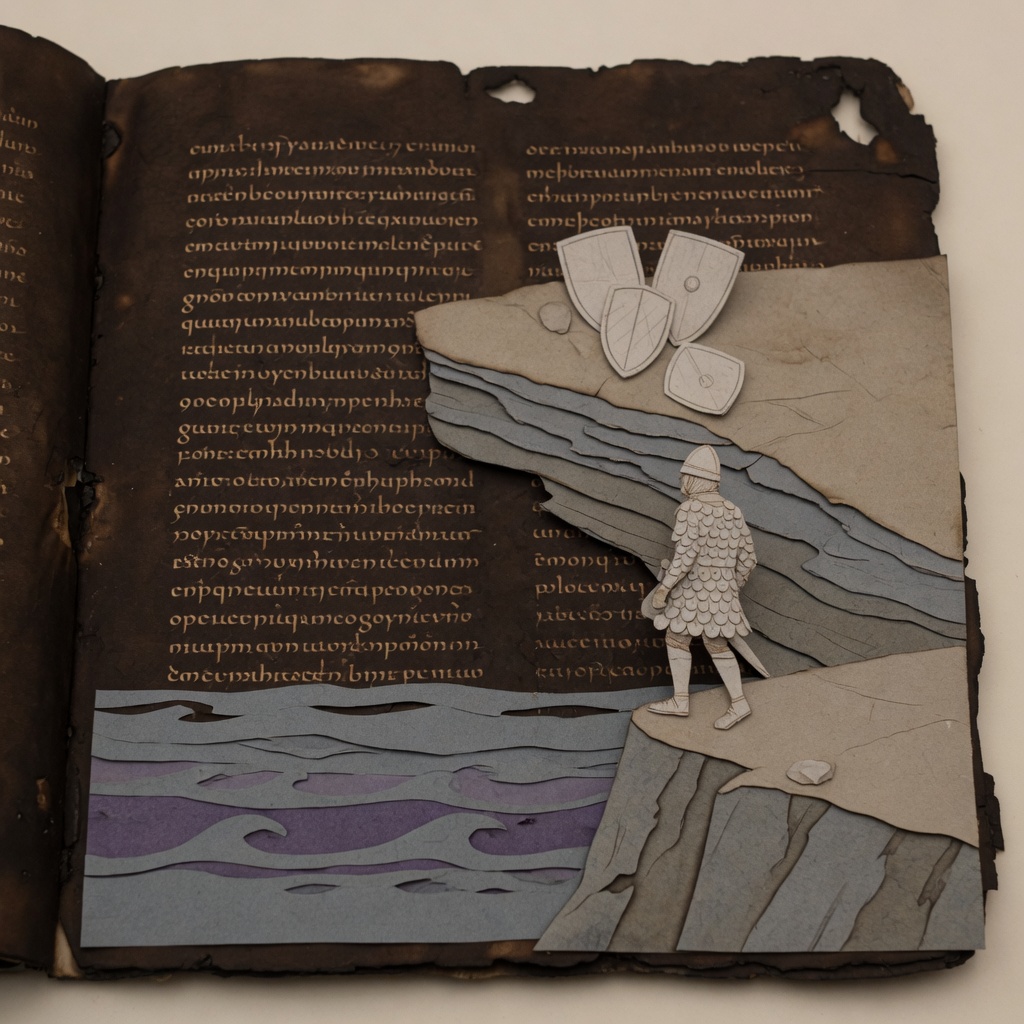
"Wäs sió swât-swaðu Sweona and Geáta,"wäl-ræs wera wîde gesýne,"hû þâ folc mid him fæhðe tôwehton."Gewât him þâ se gôda mid his gädelingum,"frôd fela geômor fästen sêcean,"eorl Ongenþió ufor oncirde;"häfde Higelâces hilde gefrunen,"wlonces wîg-cräft, wiðres ne trûwode,"þät he sæ-mannum onsacan mihte,"heáðo-lîðendum hord forstandan,"bearn and brýde; beáh eft þonan"eald under eorð-weall. Þâ wäs æht boden"Sweona leódum, segn Higelâce."Freoðo-wong þone forð ofereodon,"syððan Hrêðlingas tô hagan þrungon."Þær wearð Ongenþió ecgum sweorda,
“The blood-trail of Swedes and Geats, the death-rush of warriors,was widely seen, how those two peopleshad stirred up feud between them.Then the good man set out,with his kinsmen, old, deeply grieving, to seek out a stronghold,Earl Ongentheow turned away further inland;he had learned of Hygelac’s battle-skill,that proud one’s war-craft,did not trust that he could resistthe seafarers, defend his hoard against those hardened raiders,his wife and his children; so he turned back from there,old, behind the earth-wall. Then pursuit was offeredto the people of the Swedes,Hygelac’s banner going before them;they overran that peace-enclosure, once the Geatshad pressed on to the stronghold. There Ongentheow
"blonden-fexa on bîd wrecen,"þät se þeód-cyning þafian sceolde"Eofores ânne dôm: hyne yrringa"Wulf Wonrêding wæpne geræhte,"þät him for swenge swât ædrum sprong"forð under fexe. Näs he forht swâ þêh,"gomela Scilfing, ac forgeald hraðe"wyrsan wrixle wäl-hlem þone,"syððan þeód-cyning þyder oncirde:"ne meahte se snella sunu Wonrêdes"ealdum ceorle ond-slyht giofan,"ac he him on heáfde helm ær gescer,"þät he blôde fâh bûgan sceolde,"feóll on foldan; näs he fæge þâ git,"ac he hyne gewyrpte, þeáh þe him wund hrîne,"Lêt se hearda Higelâces þegn
was driven to bay by the edges of swords,that grey-haired man, so that the king had to submitto Eofor’s judgment alone: Wulf, son of Wonred,struck at him furiously with his weapon,so that from the blow the blood sprang out in streamsfrom under his hair. He was not afraid, even so,that old Scylfing, but quickly repaidthat wound-stroke with a worse one in return,once the king of the people turned toward him;the brave son of Wonred could not give the old mana blow back, for he had already sheared throughhis helmet first,so that, stained with blood,he had to bow down, fell to the ground;he was not doomed yet, though — he recovered,though the wound had touched him. Then Hygelac’s hardy thane
"brâdne mêce, þâ his brôðor läg,"eald sweord eotonisc, entiscne helm,"brecan ofer bord-weal: þâ gebeáh cyning,"folces hyrde, wäs in feorh dropen."Þâ wæron monige, þe his mæg wriðon,"ricone ârærdon, þâ him gerýmed wearð,"þät hie wäl-stôwe wealdan môston."Þenden reáfode rinc ôðerne,"nam on Ongenþió îren-byrnan,"heard swyrd hilted and his helm somod;"hâres hyrste Higelâce bär."He þâm frätwum fêng and him fägre gehêt"leána fore leódum and gelæste swâ:"geald þone gûð-ræs Geáta dryhten,"Hrêðles eafora, þâ he tô hâm becom,"Jofore and Wulfe mid ofer-mâðmum,
let his broad sword, once his brother lay there,an old giant-made blade, an ancient helmet,break through the shield-wall: then the king gave way,the shepherd of his people, struck to the heart.Then there were many who bound up his kinsman,quickly raised him up, once room was made for them,so that they could hold that battlefield.Meanwhile one warrior stripped the other,took from Ongentheow his iron mail-coat,his hard hilted sword and his helmet too;carried the old man’s gear to Hygelac.He took that treasure,and promised him rewardsfairly before the people, and kept his word:the king of the Geats repaid that war-rush,Hrethel’s heir, once he came home,
"sealde hiora gehwäðrum hund þûsenda"landes and locenra beága; ne þorfte him þâ leán ôðwîtan"mon on middan-gearde, syððan hie þâ mærða geslôgon;"and þâ Jofore forgeaf ângan dôhtor,"hâm-weorðunge, hyldo tô wedde."Þät ys sió fæhðo and se feónd-scipe,"wäl-nîð wera, þäs þe ic wên hafo,"þe ûs sêceað tô Sweona leóde,"syððan hie gefricgeað freán ûserne"ealdor-leásne, þone þe ær geheóld"wið hettendum hord and rîce,"äfter häleða hryre hwate Scylfingas,"folc-ræd fremede oððe furður gen"eorl-scipe efnde. Nu is ôfost betost,"þät we þeód-cyning þær sceáwian"and þone gebringan, þe ûs beágas geaf,
gave to Eofor and to Wulf treasures beyond measure,gave each of them a hundred thousandin land and linked rings; no man on earthneeded to reproach him for those rewards,once they had won such glory; and to Eofor he gavehis only daughter, an honor for his house,as a pledge of his favor. That is the feud,the enmity, the deadly hatred of men,that I expect will bring the Swedish people against us,once they learn that our lord is lifeless,he who earlier held, against attackers,hoard and kingdom, after the fall of heroes,the brave Scylfings, worked for the good of the people,or did still greater deeds of heroism.Now haste is best, that we go and look upon the king,and carry him, the one who gave us rings,
"on âd-färe. Ne scel ânes hwät"meltan mid þam môdigan, ac þær is mâðma hord."gold unrîme grimme geceápod"and nu ät sîðestan sylfes feore"beágas gebohte; þâ sceal brond fretan,"äled þeccean, nalles eorl wegan"mâððum tô gemyndum, ne mägð scýne"habban on healse hring-weorðunge,"ac sceall geômor-môd golde bereáfod"oft nalles æne el-land tredan,"nu se here-wîsa hleahtor âlegde,"gamen and gleó-dreám. Forþon sceall gâr wesan"monig morgen-ceald mundum bewunden,"häfen on handa, nalles hearpan swêg"wîgend weccean, ac se wonna hrefn"fûs ofer fægum, fela reordian,
to the funeral pyre. Not just a portionshall melt away with that brave man,but there is a hoard of treasure,gold beyond counting, grimly bought,and now, at the very last, bought again with his own life;all this the fire shall devour,the flame shall cover it over,no warrior shall wear a jewel in his memory,no fair maiden shall have a ring-ornamentaround her neck, but, sad in spirit,stripped of gold, she shall often, not just once,have to walk in a foreign land, now that the leader of the armyhas laid aside laughter, mirth and joy.Therefore many a spear, cold in the morning,shall be gripped, lifted in hand; no sound of the harpshall wake the warriors, but the dark raven,
"earne secgan, hû him ät æte speów,"þenden he wið wulf wäl reáfode."Swâ se secg hwata secgende wäslâðra spella; he ne leág felawyrda ne worda. Weorod eall ârâs,eodon unblîðe under Earna näswollen-teáre wundur sceáwian.Fundon þâ on sande sâwul-leásnehlim-bed healdan, þone þe him hringas geafærran mælum: þâ wäs ende-däggôdum gegongen, þät se gûð-cyning,Wedra þeóden, wundor-deáðe swealt.Ær hî gesêgan syllîcran wiht,wyrm on wonge wiðer-rähtes þærlâðne licgean: wäs se lêg-draca,grimlîc gryre-gäst, glêdum beswæled,
eager over the doomed, shall have much to say,shall tell the eagle how he fared at the feast,when he, with the wolf, went plundering the slain.”So that bold man went on speaking hateful tidings;he did not lie much, in fact or in word.The whole troop rose up; they went, unhappy,under Eagles’ Ness, with welling tears,to look on that wonder. They found there on the sand,holding his death-bed, lifeless now,the one who had given them rings in earlier days;then the death-day had come for that good man,so that the war-king, prince of the Weders,died a wondrous death. But first they sawa stranger creature,a worm lying opposite on the field,hateful to look at: that fire-dragon was
se wäs fîftiges fôt-gemearces.lang on legere, lyft-wynne heóldnihtes hwîlum, nyðer eft gewâtdennes niósian; wäs þâ deáðe fäst,häfde eorð-scrafa ende genyttod.Him big stôdan bunan and orcas,discas lâgon and dýre swyrd,ômige þurh-etone, swâ hie wið eorðan fäðmþûsend wintra þær eardodon:þonne wäs þät yrfe eácen-cräftig,iú-monna gold galdre bewunden,þät þam hring-sele hrînan ne môstegumena ænig, nefne god sylfa,sigora sôð-cyning, sealde þam þe he wolde(he is manna gehyld) hord openian,efne swâ hwylcum manna, swâ him gemet þûhte.
a terrible, grim spirit, scorched with its own flame;it measured fifty feet in lengthas it lay there. It had once held joy of the airby night, then turned back down againto seek its den; it was fast in death now,had made its last use of those earth-caverns.Beside it stood cups and vessels, dishes lay thereand precious swords, eaten through with rust,just as they had rested there in the earth’s embracefor a thousand winters; that enormous legacy,gold of men long past, was bound about with a spell,so that no man at all could touch that ring-hall,unless God himself, the true King of victories —he is mankind’s protector — granted itto whomever he wished to open that hoard,to whichever man seemed fitting to him.
Þâ wäs gesýne, þät se sîð ne þâhþam þe unrihte inne gehýddewräte under wealle. Weard ær ofslôhfeára sumne; þâ sió fæhð gewearðgewrecen wrâðlîce. Wundur hwâr, þonneeorl ellen-rôf ende gefêrelîf-gesceafta, þonne leng ne mägmon mid his mâgum medu-seld bûan.Swâ wäs Biówulfe, þâ he biorges weardsôhte, searo-nîðas: seolfa ne cûðe,þurh hwät his worulde gedâl weorðan sceolde;swâ hit ôð dômes däg diópe benemdonþeódnas mære, þâ þät þær dydon,þät se secg wære synnum scildig,hergum geheaðerod, hell-bendum fäst,wommum gewitnad, se þone wong strâde.
Then it became clear that the venture had not gone wellfor the one who had wrongfully hidden treasure within,under that wall. The guardian had earlier killeda few men;that feud was then avengedin a terrible way. It is a wonder wherea man strong in courage will reach the endof the life allotted to him, when he can no longer,among his kinsmen, dwell in the mead-hall.So it was for Beowulf, when he sought outthe barrow’s guardian, that treacherous conflict;he himself did not know through what meanshis parting from the world would come about.So the powerful princes who had set that curse therehad solemnly sworn, until the day of judgment,that whoever plundered that place would be guilty of sin,
Näs he gold-hwät: gearwor häfdeâgendes êst ær gesceáwod.Wîglâf maðelode, Wihstânes sunu:"Oft sceall eorl monig ânes willan"wræc âdreógan, swâ ûs geworden is."Ne meahton we gelæran leófne þeóden,"rîces hyrde ræd ænigne,"þät he ne grêtte gold-weard þone,"lête hyne licgean, þær he longe wäs,"wîcum wunian ôð woruld-ende."Heóldon heáh gesceap: hord ys gesceáwod,"grimme gegongen; wäs þät gifeðe tô swîð,"þe þone þeóden þyder ontyhte."Ic wäs þær inne and þät eall geond-seh,"recedes geatwa, þâ me gerýmed wäs,"nealles swæslîce sîð âlýfed
shut up among idols, bound fast in hell’s chains,tormented with plagues — yet he had not, even so,been eager for gold; he had rather already looked closelyat the owner’s favor, before all of that.Wiglaf spoke, son of Weohstan:“Often must many a man suffer hardshipbecause of one man’s will, as has happened to us.We could not persuade our beloved lord,guardian of the kingdom, by any counsel at all,that he should not attack that gold-guardian,let him lie where he had long been,stay in his dwelling until the world’s end.He held to his high destiny;the hoard has been looked upon,grimly won; that fate was too strongwhich drew that prince there. I was inside,
"inn under eorð-weall. Ic on ôfoste gefêng"micle mid mundum mägen-byrðenne"hord-gestreóna, hider ût ätbär"cyninge mînum: cwico wäs þâ gena,"wîs and gewittig; worn eall gespräc"gomol on gehðo and eówic grêtan hêt,"bäd þät ge geworhton äfter wines dædum"in bæl-stede beorh þone heán"micelne and mærne, swâ he manna wäs"wîgend weorð-fullost wîde geond eorðan,"þenden he burh-welan brûcan môste."Uton nu êfstan ôðre sîðe"seón and sêcean searo-geþräc,"wundur under wealle! ic eów wîsige,"þät ge genôge neán sceáwiað"beágas and brâd gold. Sîe sió bær gearo
and looked at it all, the furnishings of that chamber,once I was given passage — by no means graciouslyallowed entrance under that earth-wall. I hastily seized,with my hands, a great burden, a mighty loadof hoard-treasures,carried it out here to my king;he was still alive then, conscious and clear-minded;the old man spoke a great deal in his grief,and told me to greet you, asked that you build,in memory of your friend’s deeds, a high and mighty barrowat the place of burning, since he was, of all men,the most honored warrior throughout the wide earth,while he was allowed to enjoy the wealth of his stronghold.Let us now hurry, go there a second time,to see and to seek out that store of wonders,those treasures under the wall! I will guide you,
"ädre geäfned, þonne we ût cymen,"and þonne geferian freán ûserne,"leófne mannan, þær he longe sceal"on þäs waldendes wære geþolian."Hêt þâ gebeódan byre Wihstânes,häle hilde-diór, häleða monegumbold-âgendra, þät hie bæl-wudufeorran feredon, folc-âgendegôdum tôgênes: "Nu sceal glêd fretan"(weaxan wonna lêg) wîgena strengel,"þone þe oft gebâd îsern-scûre,"þonne stræla storm, strengum gebæded,"scôc ofer scild-weall, sceft nytte heóld,"feðer-gearwum fûs flâne full-eode."Hûru se snotra sunu Wihstânesâcîgde of corðre cyninges þegnas
so that you may see enough of them, close up,rings in plenty, and broad gold. Let the bierbe made ready quickly, once we come out,and then let us carry our lord, that beloved man,to where he shall long remain,under the Ruler’s protection.” Then the son of Weohstangave orders that it be announced, that brave battle-warrior,to many men, to the heads of households,that they should fetch firewood from far away,those in charge of the people, for the good man’s funeral:“Now the flame shall devour — the dark fire shall grow —the leader of warriors, who often enduredthe iron-shower, when the storm of arrows,driven by the bowstring, shot over the shield-wall,when the shaft did its duty, hurried on, feathered,followed close behind the arrowhead.” Then the wise son of Weohstan
syfone tôsomne þâ sêlestan,eode eahta sum under inwit-hrôf;hilde-rinc sum on handa bäräled-leóman, se þe on orde geóng.Näs þâ on hlytme, hwâ þät hord strude,syððan or-wearde ænigne dælsecgas gesêgon on sele wunian,læne licgan: lyt ænig mearn,þät hi ôfostlice ût geferedondýre mâðmas; dracan êc scufun,wyrm ofer weall-clif, lêton wæg niman,flôd fäðmian frätwa hyrde.Þær wäs wunden gold on wæn hladen,æghwäs unrîm, äðeling boren,hâr hilde-rinc tô Hrones nässe.
called out from the troop the king’s own thanes,seven together, the best of them;he went, one of eight, in under that hostile roof;one of the warriors carried in his handa burning torch, the one who went first.It was not decided by lot who should plunder that hoard,once the men saw any part of it lying there,unguarded in that hall, rotting away;little did any of them grieve, hastily carryingthe precious treasures out; they pushed the dragon tooover the cliff-wall, let the waves take him,the flood embrace the guardian of that treasure.Then twisted gold was loaded onto a wagon,more than could be counted, and the noble one was carried,the grey-haired warrior, to Whale’s Ness.
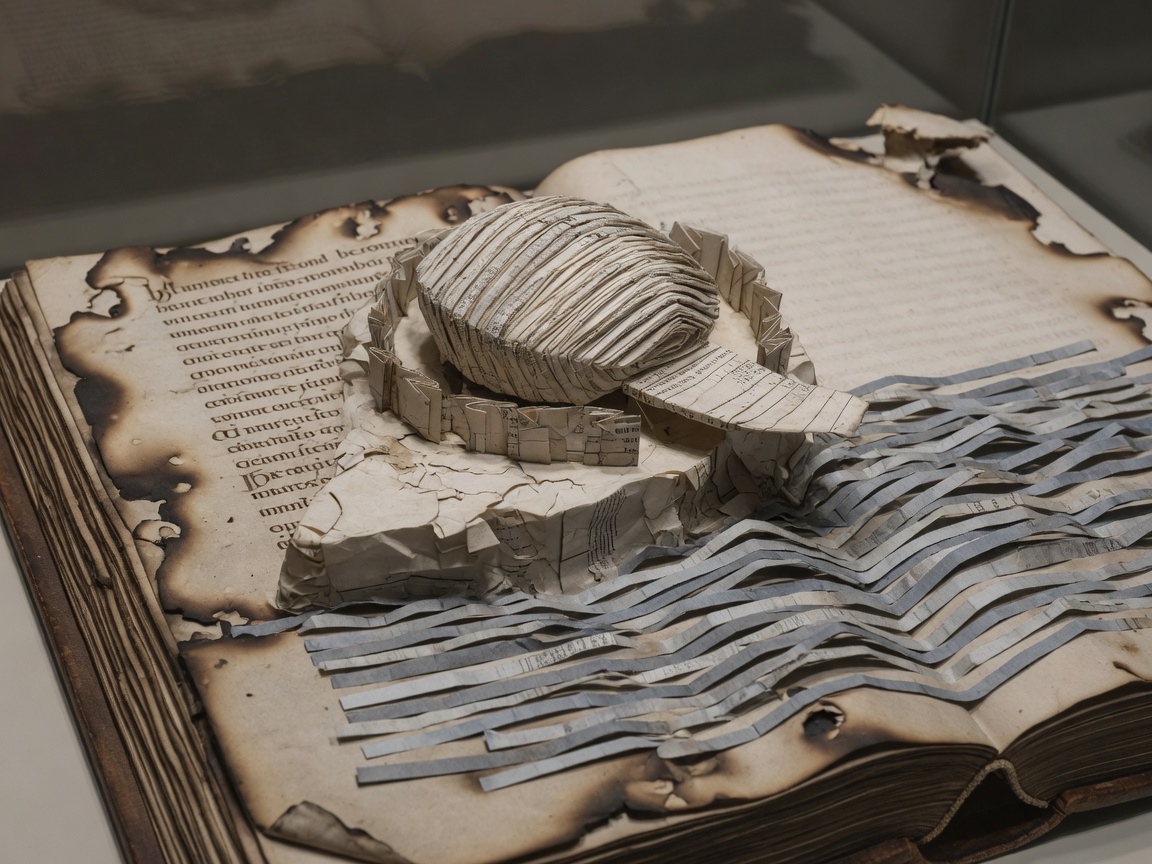
Him þâ gegiredan Geáta leódeâd on eorðan un-wâclîcne,helmum behongen, hilde-bordum,beorhtum byrnum, swâ he bêna wäs;âlegdon þâ tô-middes mærne þeódenhäleð hiófende, hlâford leófne.Ongunnon þâ on beorge bæl-fýra mæstwîgend weccan: wudu-rêc âstâhsweart ofer swioðole, swôgende lêg,wôpe bewunden (wind-blond geläg)ôð þät he þâ bân-hûs gebrocen häfde,hât on hreðre. Higum unrôtemôd-ceare mændon mon-dryhtnes cwealm;swylce giômor-gyd † lat . con meowle. . . . . wunden heorde . . .serg (?) cearig sælde geneahhe
For him then the people of the Geats made readya funeral-pyre on the earth, no mean one,hung with helmets, with battle-shields,bright mail-coats, just as he had asked;they laid him down, in the middle, that famous prince,warriors mourning, their beloved lord.Then the warriors began to kindle, on the barrow,the greatest of funeral fires; the wood-smoke rose up,black over the burning, the roaring flame,mingled with weeping — the wind’s tumult settled —until it had broken apart that bone-house,hot at the heart. Troubled in spirit,they mourned their heart’s grief, the death of their lord;and a grieving woman too — her hair bound up —sorrowful, said again and again,that she — hard
þät hio hyre . . . . gas hearde. . . . . ede wälfylla wonn . .hildes egesan hyðohaf mid heofon rêce swealh (?)Geworhton þâ Wedra leódehlæw on hliðe, se wäs heáh and brâd,wæg-lîðendum wîde gesýne,and betimbredon on tyn dagumbeadu-rôfes bêcn: bronda betostwealle beworhton, swâ hyt weorðlîcostfore-snotre men findan mihton.Hî on beorg dydon bêg and siglu,eall swylce hyrsta, swylce on horde ærnîð-hydige men genumen häfdon;forlêton eorla gestreón eorðan healdan,gold on greóte, þær hit nu gen lifað
— the multitude of the fallen, feared —the terror of battle, harrying,the sky —swallowed with heaven's smoke —Then the people of the Weders built a moundon the headland, one that was high and broad,visible far off to seafarers, and in ten daysthey finished that battle-brave man’s beacon;they built a wall around the remains of the burning,as worthily as the wisest of mencould devise it. They placed in the barrow rings and jewels,all such ornaments as those bold-hearted menhad taken earlier from the hoard;they let the earth hold the wealth of earls,gold in the ground, where it still remains now,
eldum swâ unnyt, swâ hit æror wäs.Þâ ymbe hlæw riodan hilde-deóre,äðelinga bearn ealra twelfa,woldon ceare cwîðan, kyning mænan,word-gyd wrecan and ymb wer sprecan,eahtodan eorl-scipe and his ellen-weorcduguðum dêmdon, swâ hit ge-dêfe bið,þät mon his wine-dryhten wordum hêrge,ferhðum freóge, þonne he forð scileof lîc-haman læne weorðan.Swâ begnornodon Geáta leódehlâfordes hryre, heorð-geneátas,cwædon þät he wære woruld-cyningmannum mildust and mon-þwærust,leódum lîðost and lof-geornost.
as useless to men as it ever was.Then, around the mound, warriors rode,sons of nobles, twelve of them together,who wished to voice their grief, mourn their king,speak a word-song, and speak of that man;they praised his lordship, and honored his deeds of courage,weighed his valor with high esteem —just as it is fitting that a man should praise his friendly lordin words, love him in his heart, when he must be ledout of his body, away into what lies beyond.So the people of the Geats, his hearth-companions,mourned the fall of their lord; they said that of allthe kings of this world he was the gentlest of men,and the most fair-minded, the kindest to his people,and the hungriest for glory.